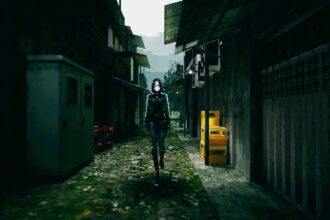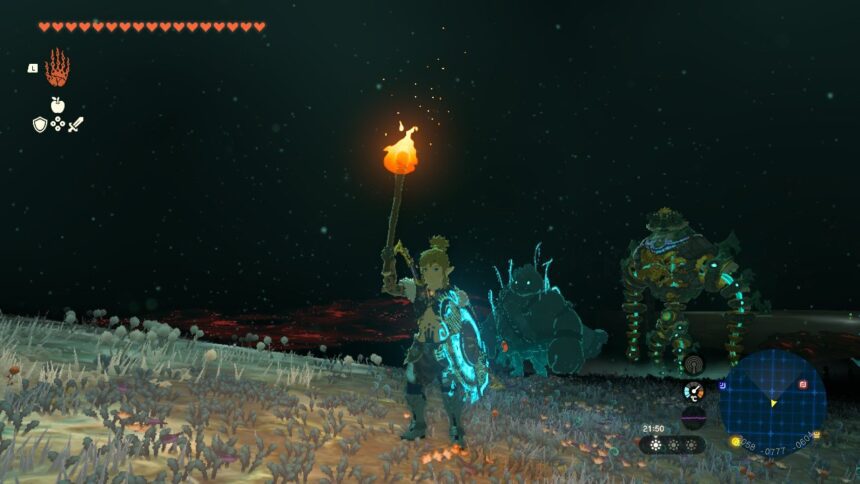
One might ponder why Zelda continues to garner acclaim for its abundance of features, while Ubisoft, when employing a similar strategy, seemingly only amasses a tally of canceled pre-orders, with Star Wars | Outlaws serving as a prime illustration.
Indeed, there are fans who will purchase anything and detractors eager to criticize everything. However, delving deeper, what constitutes the fundamental “difference” in the approaches between Zelda titles and other contemporary open-world games?
It appears that the essence lies in the “freedom of action within the game world,” or more succinctly, in the “open-world subgenre.” What results is a game like Zelda, a sandbox where players choose their destinations, activities, and the order in which to proceed.
Modern open worlds, on the other hand, resemble simulators for ticking off tasks on a map, to such an extent that without it, navigating the open world becomes a puzzle of what, where, when, and why. Consider how long it has been since you’ve played a game like Spider-Man with purpose, that is, without relying on a map, hints, or a compass. When was the last time you attempted to explore a game’s world “personally,” engaging with it directly without guidance?
Even if there are players who resist, the games themselves discourage such behavior. Indeed, one might not be required to use a map and compass, but the game is inherently designed for their use. It is explicitly integrated into the gameplay; without these tools, completing the game becomes nearly impossible.
Discussing “actions” in modern games often reveals a grim picture. Everything is rigidly scripted, with little to no autonomy for the player; one might be fortunate to encounter a choice mid-game or at its conclusion, though it likely has minimal impact. Is this the standard we’ve settled for?
The once-great open-world genre—a hallmark of RPGs—is now in a sorry state. This decline is due to the mass market’s consumption patterns and developers’ growing complacency, resulting in a lack of innovation and the failure to deliver a well-developed gameplay experience, even if not expansive, in the open world.
What is the point of this entire tirade? In these games, there weren’t countless quests that took a million hours; instead, there was a simple compass that didn’t guide you to an item or an NPC down to the millimeter.
Indeed, these games required thought, not just the mindless pressing of the “Forward” and “Action” buttons. This was part of their allure—the level of immersion and the freedom of action were significantly greater, allowing you to play your own game, not just follow a scripted path.
Games like Zelda, Kingdom Come | Deliverance, and similar titles offer a unique experience. Indeed, they have their flaws—consider the level of numerous quests, which even Ubisoft could criticize. Yet, the sense of freedom and possibility they provide is invaluable.
It’s important to recognize that this sense of liberation isn’t granted effortlessly. It requires dedication and active engagement in the game, rather than a passive approach of lounging and pressing a single button.
In conclusion, the most iconic and cherished open-world games are those of the old school. In 10-20 years, these will be the games people reminisce about, while the modern ‘map question simulators’ will be regarded merely as a dark chapter in the history of this grand genre. Or perhaps it will be the reverse? What are your thoughts on this matter?
We’ve outlined just the core concept of the idea. If you’re knowledgeable, kindly list as many game examples from both categories in the comments to ensure the comparison is as objective as possible. Your thoughts on this subject would be greatly appreciated.