Most games today treat you like a child. They offer padded corners and digital safety nets because they are afraid you might actually fail. It is a frictionless slide to a boring ending. Victories are cheap. They mean nothing. Then you hit Elden Ring.
FromSoftware does not care about your comfort. They build levels that act as psychological stressors. Walking through the Lands Between is not a vacation. It is a trap. It tests your mechanical integrity by putting your nervous system in a laboratory. To win you have to do more than just push buttons. You have to achieve a state of enthousiasmos by mastering the machine.
The Architecture of Frustration and Neural Calibration

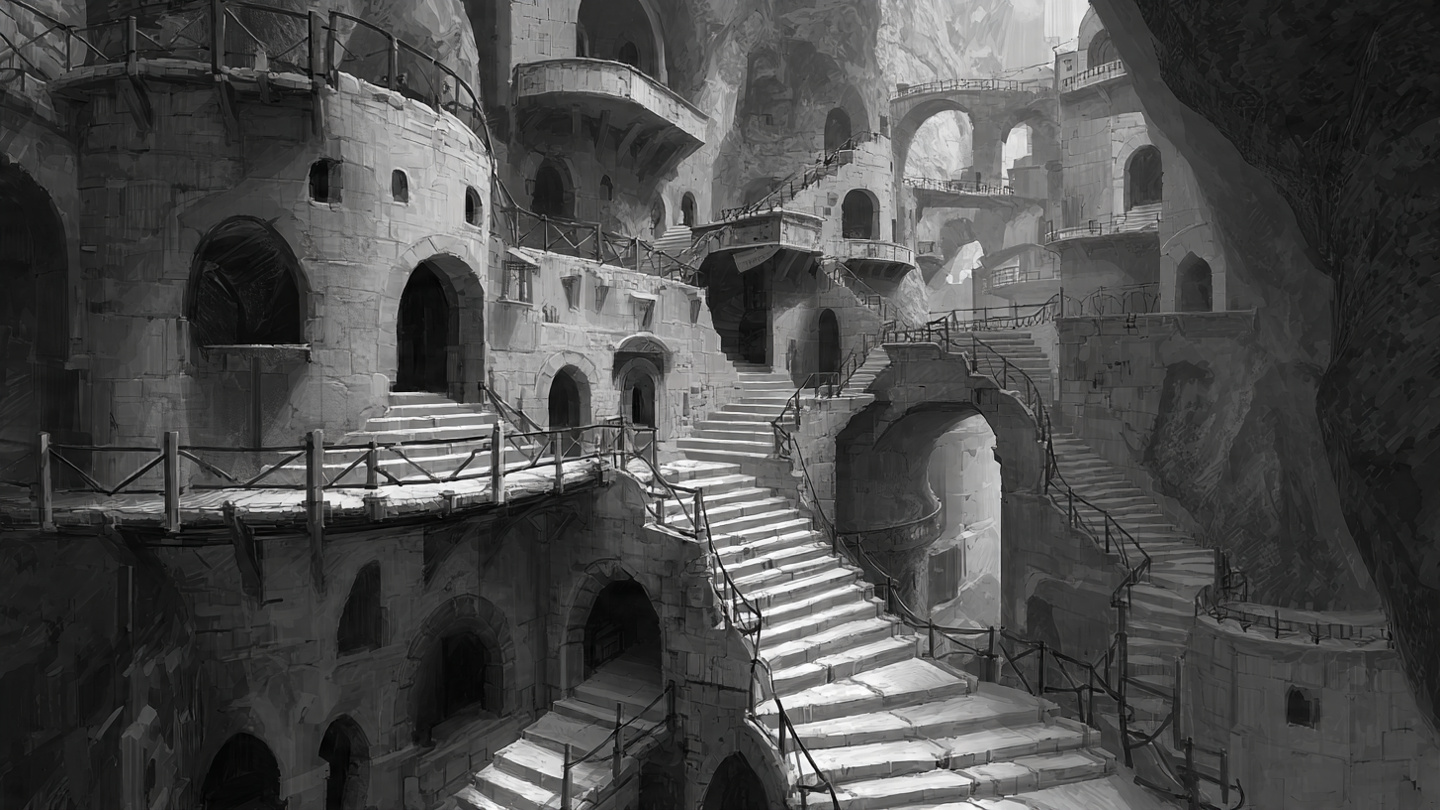
In the Aeon Dogma collective we define high-intellect gaming as the ability to recalibrate your internal response against a rigid unyielding external system. Elden Ring achieves this calibration through an aggressive use of verticality and hidden threats. When you stand on a cliffside in Liurnia of the Lakes your brain is processing far more than a 3D environment. It is calculating risk against a backdrop of hard matter consequences. The verticality here is not a cosmetic choice. It is a physical bypass of your comfort zone.
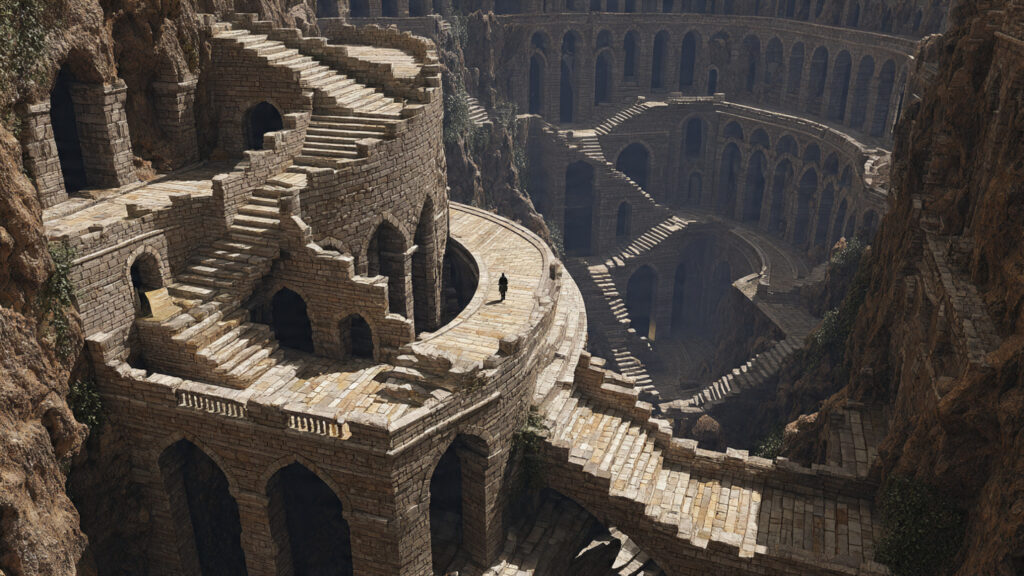
The environment induces a state of chronic systemic stress. By forcing you to navigate precarious ledges while under fire from unseen enemies the game triggers a massive cortisol cascade. In a standard open world a fall is a minor inconvenience or a simple reload. In the Lands Between one wrong step is a total reset of your current industrial progress. If your pattern recognition hardware fails you fall. If you panic and mash the dodge button you die. This is neural calibration in its purest form. The only way to survive the descent is to lower your heart rate and ignore the instinctual urge to rush and move into a state of total focus. You are training your internal systems to remain stable under the pressure of a collapsing simulation.
The Bio-Hacking of Pattern Disruption
The most aggressive component of the Elden Ring trap is the animation timing of its bosses. In a standard game an enemy raises a sword and swings in a predictable arc that matches the human expectation of gravity and momentum. In the hard matter reality of FromSoftware the boss raises a sword and holds it for a fraction of a second longer than your brain expects and then strikes. This is a direct attack on your innate pattern recognition.

This delay is designed to provoke an early roll or a panic response. It exploits the biological instinct to flinch in the face of a perceived threat. To defeat a boss like Margit or Malenia you must perform a manual override of your own nervous system. You must wait for the exact moment of impact and resist the urge to react to the wind-up. This level of precision requires a total mastery over your own fear response. When you finally achieve victory the result is not a simple dopamine hit. It is a fundamental shift in your scientific weight as an operator. You have successfully mastered a system that was specifically designed to break your rhythm.
The Mechanical Breakdown of the Delay
You can see this disruption most clearly in the fight against Margit the Fell Omen. He raises his staff and keeps it suspended in the air. Your lizard brain screams at you to dodge immediately. If you listen to that instinct, you are caught in the recovery frames of your roll when the staff finally descends. The game is not testing your reflexes but your patience. It is forcing you to decouple your reaction from your perception. This is the definition of independent command. You are no longer a victim of the animation. You are an observer of the data.
This mechanical delay triggers a specific neural conflict between the amygdala’s impulse and the prefrontal cortex’s analytical override. By forcing the player to sit in the tension of the “delayed attack,” Elden Ring acts as a form of stress inoculation. The operator learns to suppress the panic response in favor of precise, high-integrity execution.
The Independent Reward and the Return to Hard Matter
The world outside the screen is becoming increasingly unstable and non-functional. The independent architect needs a place to sharpen their tools and Elden Ring provides a high-fidelity simulation of a world that does not care about your feelings or your convenience. It only respects mechanical integrity.
There are no quest markers to guide your eye, no moral compass to validate your choices, and no safety rails to prevent you from wandering into a nightmare for which you are utterly unprepared. This lack of hand-holding is the ultimate respect for the player’s intelligence. It demands that you build your own mental map and take full accountability for your survival. In the lands between, as in the technical grid of 2026, the only thing that saves you is your ability to interpret hard matter without the filter of corporate guidance.
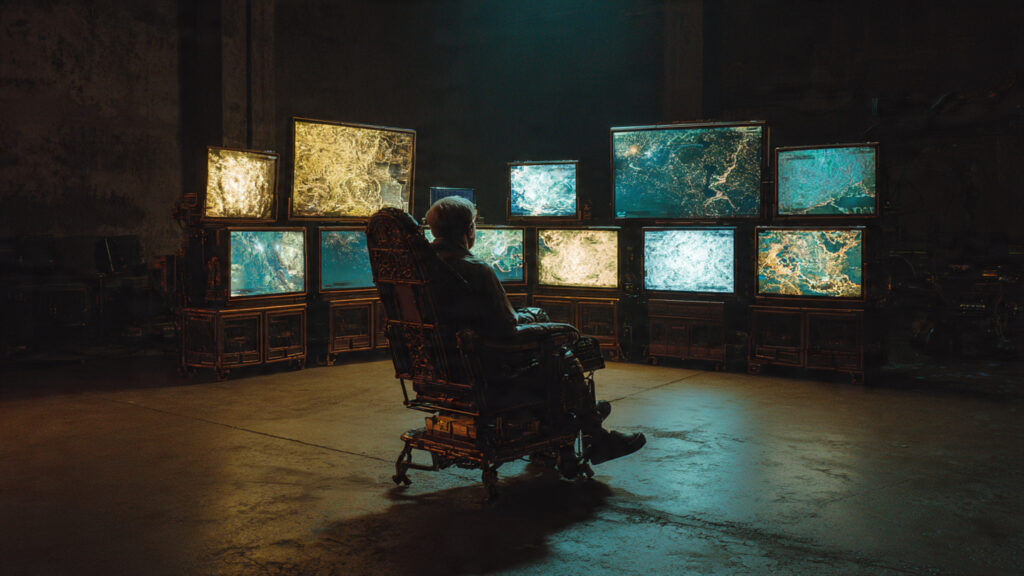
The reward for this suffering is a sense of independent command that cannot be found in easier titles. When you navigate the trap of the level design, you are reclaiming your own ability to think and act under pressure. You are proving that your mind is not a product of the algorithm but an independent integrity capable of solving complex and unyielding puzzles. We identify the systems that build the man and discard the ones that merely entertain the child. The friction of the game is the point of the exercise.
Navigating the Vertical Labyrinth
Look at the Leyndell Royal Capital. It is a masterpiece of architectural intimidation. The golden roofs and white stone suggest a paradise but the layout is a jagged puzzle of dead ends and lethal drops. The game uses the environment to overwhelm your spatial awareness. You have to map the city in your mind without the help of a glowing breadcrumb trail. This process of mental mapping is a form of industrial intelligence. It requires you to engage with the world as a physical space rather than a backdrop for a cinematic.
The Simulation of Scarcity and Weight
Most modern software exists to hide the cost of failure. Elden Ring does the opposite. It emphasizes the weight of every choice through the management of runes and flasks. When you carry a large amount of currency into an unknown dungeon the stakes are raised to a biological level. Your palms sweat and your focus sharpens because the loss is real within the context of the simulation. This is not the beige safety of a checkpoint every ten meters. This is the hard matter reality of consequence.
By simulating scarcity the game forces you to become a better manager of your own resources. You learn to weigh the risk of one more exploration against the safety of the site of grace. You develop a sense of timing and economy that mirrors the requirements of high-level technical systems. You are not just a player but an architect of your own survival.
Continuity of the Industrial Mind
The future of high-intellect gaming lies in these hard matter simulations. As digital traffic patterns shift toward shorter attention spans and lower stakes, we must double down on the tactical reality of these systems. We do not apologize for the difficulty. We do not ask for easy modes. We recognize that the friction is where the systemic command is established. The independent agent does not look for the path of least resistance but seeks the path that requires the most scientific weight to travel.
Every corridor in Leyndell and every ambush in the Shadow Keep is a reminder that reality is composed of rigid laws. By mastering the game, you prepare yourself for the independent command required in the physical world. You move from a state of reaction to a state of action. The game is the laboratory. Your mind is the subject. The victory is the proof of your independent integrity.