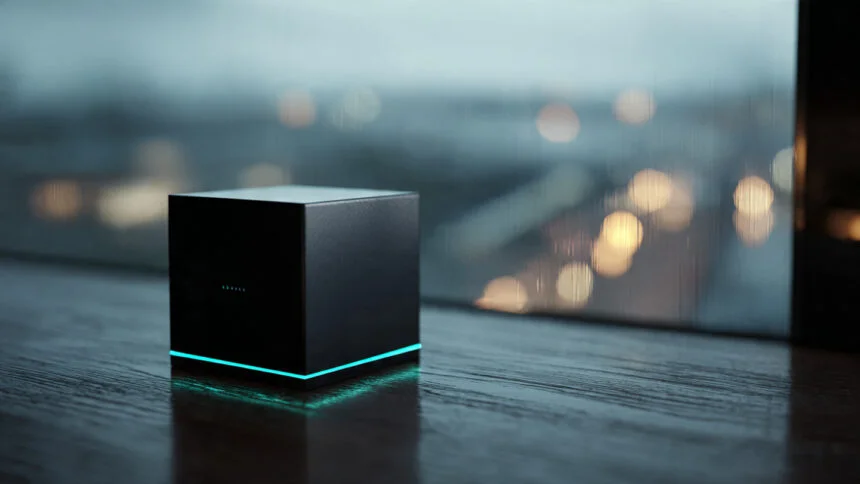
The year 2026 feels like a fever dream for anyone who spent the last decade chasing the bleeding edge of silicon performance. While the chatter across the grid revolves around the impending launch of the PlayStation 6 and the next iteration of the Xbox, Valve has quietly dropped a small, unassuming cube into the arena. It is a 3.8 liter unit that looks more like a high end router or a piece of minimalist industrial equipment than a world beating gaming machine.
On paper, the specifications appear almost insulting to the enthusiast crowd. It sports a hexa-core processor, an 8GB graphics card, and 16GB of RAM. The marketing promises 4K at 60 frames per second only with the help of FSR. In an age where people are screaming for native 8K and path tracing, this box looks like a joke.
But the joke is not on Valve. The company has spent years observing the habits of millions through the Steam Hardware Survey, and they have realized something that the giants in Tokyo and Redmond seem to have forgotten. The high end market is a loud, expensive bubble. The vast majority of people are not playing on RTX 5090 cards or liquid cooled monsters. They are playing on hardware that the enthusiasts call outdated. Valve has stopped dreaming of pleasing the small percentage of flagship owners and has instead built a machine for the real world. This is not a failure of ambition. It is an accurate, cold calculation of where the market actually sits.
The Mathematics of the Mass Market Standard
Critics look at a six core processor in 2026 and see a bottleneck. Valve looks at the numbers and sees the absolute norm. Almost 28 percent of all Steam users are currently running six core CPUs. When you add the people still clinging to four core systems, you realize that nearly half the global PC gaming population is residing in this exact bracket. Valve did not choose six cores because they were being cheap. They chose them because that is the architecture developers are currently targeting for the widest possible reach. If you build a machine that significantly exceeds this, you are charging users for power they will rarely utilize in a meaningful way.
The graphics situation tells a similar story. The 8GB VRAM limit is the primary point of contention for those who live on hardware forums. They call 12GB the new minimum. Yet, the data shows that 32 percent of gamers are using 8GB cards. If you include everyone with 8GB or less, you are looking at 65 percent of the total market. Valve is building a bridge for the majority, not a ladder for the elite. By staying within these parameters, they ensure that the Steam Machine remains affordable and power efficient while still outperforming seventy percent of the PCs currently connected to their servers. This is the law of the mass market. It is about the average person having a predictable, high quality experience without needing a degree in system administration.
The resolution debate follows the same logic. While 4K monitors are becoming more common in the living room, 53 percent of gamers are still perfectly happy at 1080p. Another significant chunk plays at resolutions even lower than that. For these people, the Steam Machine is a massive upgrade. The inclusion of 4K at 60 frames with FSR is not a compromise for them. It is a nice bonus that allows them to eventually upgrade their display without the machine becoming obsolete overnight. Valve has essentially packaged the most popular components in the world into a tiny, optimized chassis and called it a day.
From the Handheld to the Living Room Hub
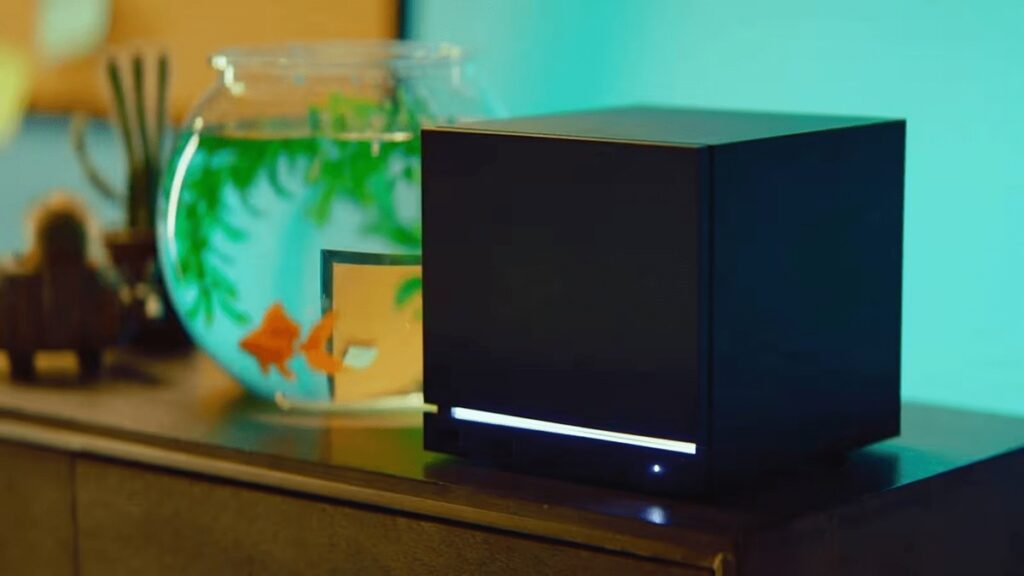
The philosophy of this new Steam Machine did not appear out of thin air. It is the direct evolution of the Steam Deck. When Valve launched the Deck, they were testing more than just a portable form factor. They were testing an ecosystem. They discovered that ten to fifteen percent of Deck users have their devices connected to an external display at any given time. These people are using a handheld as a desktop or a console. They found that the experience was great but lacked the clarity and punch needed for a 65 inch television.
The new cube is the answer to that specific feedback. It is a device designed from the ground up to live under a television or on a crowded desk. It is roughly six times more powerful than the original Deck, providing that extra headroom needed to push higher resolutions on large screens. This creates a frenzied, seamless ecosystem. You can take your Deck on a train or a flight, arrive home, and move your progress to the Steam Machine instantly.
One of the most interesting features is the return to physical media in a quirky, modern way. Valve has leaned into the use of high speed SD cards. You can take the card out of your Deck and slide it into the Machine to continue your session. There are no downloads required and no waiting for cloud syncs to verify, although those systems are still running in the background. It feels like the cartridges of the nineties but with the capacity of a modern hard drive. It is a tactile, reliable way to move a massive library between devices without relying on the often spotty infrastructure of the modern web.
The Freedom of an Open Enclosure
The most significant advantage Valve holds over the traditional console manufacturers is the lack of a walled garden. Sony and Microsoft want you locked into their stores and their subscription services. Valve does not care what you do with the hardware once you buy it. Under the hood of the Steam Machine is a full installation of Linux, specifically using the KDE Plasma desktop environment. From the moment you turn it on, it feels like a console. You get the big picture interface, background updates, and full gamepad control. But if you want to dig deeper, the flag is in your hands.
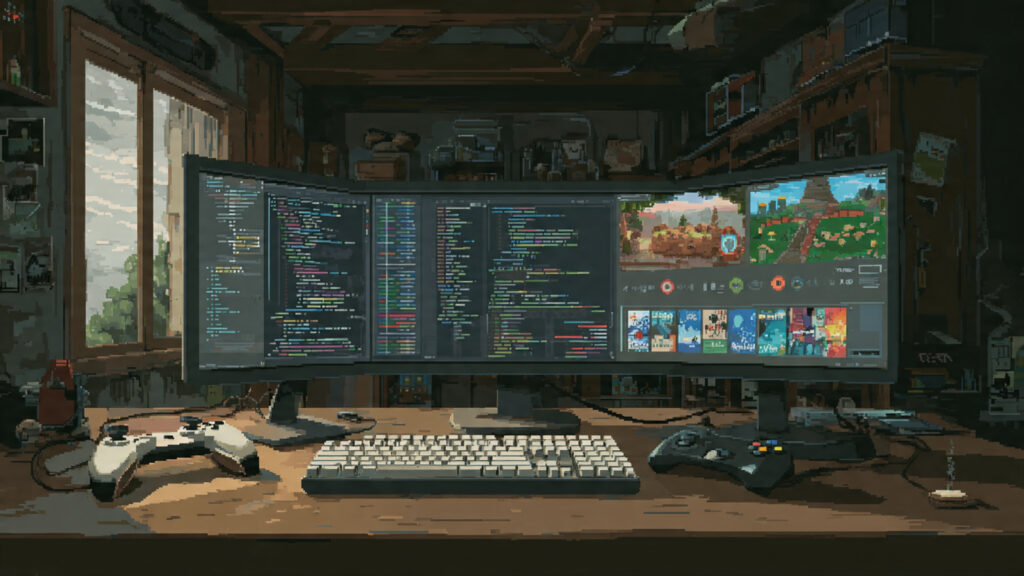
You can drop out of the gaming interface and have a full desktop computer. You can install the Epic Games Store, run specialized productivity software, or even wipe the drive and install Windows if you have a specific reason to do so. This openness is central to the philosophy that Gabe Newell has pushed for years. He believes that the user should own the computer, not the other way around. If you want to hook up an Oculus Quest or run a niche emulator from twenty years ago, the machine will not stop you. This stands in stark contrast to the locked down nature of the PlayStation 6, which is increasingly becoming a service based terminal rather than a personal device.
This open nature also solves the problem of driver management. On a traditional Windows PC, keeping your system optimized is a constant battle against bloatware and telemetry. SteamOS handles all of that in the background. It is a lean, mean operating system that allocates every possible cycle of the processor to the game itself. You get console style convenience without the PC limitations. You are not fighting the OS for control of your hardware.
Price Realities in the Silicon Crisis
The conversation inevitably turns to the cost. We are living through a period where the price of building a PC has increased significantly due to a global RAM crisis and the high demand for silicon in other industries. Initial leaks from European retailers suggest a price point between nine hundred and one thousand dollars. While that sounds high compared to a traditional console, it is important to remember what you are getting. This is not just a gaming box. It is a high performance, small form factor PC with a pre-configured, optimized operating system.
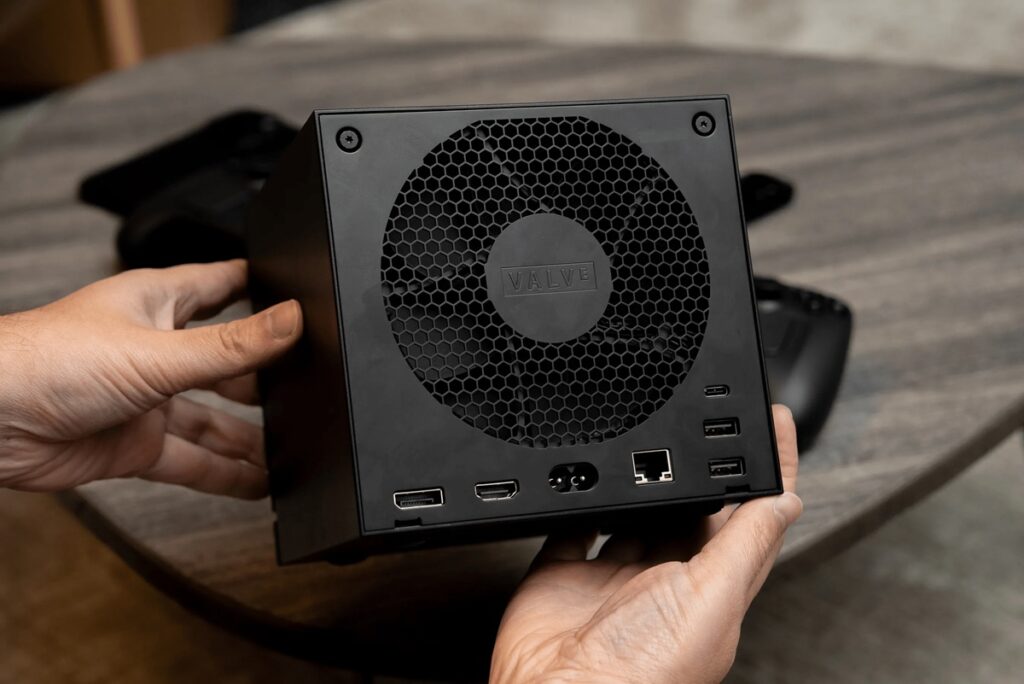
Trying to compare the Steam Machine to a PlayStation or an Xbox based price alone is a mistake. Its direct alternative is the pre-built entry to mid range gaming PC. In that arena, Valve wins on almost every front. Most pre-built PCs in this price range are bloated with unnecessary software and housed in cheap, oversized cases. Valve has engineered a custom thermal solution for a 3.8 liter chassis that runs quietly while maintaining high clock speeds. They have integrated a seamless hybrid system with the Steam Deck that no other company can match.
While Sony is releasing PS Portal, a satellite device for streaming from the PS5, the owner of the Deck + Machine bundle gets a fully autonomous hybrid system, where you simply move from device to device on an SD card.
Who Actually Needs the Steam Machine?
There is a growing exhaustion among gamers when it becomes to the constant need for more power. We have reached a point of diminishing returns where the difference between a high end game and an ultra high end game is barely noticeable to the human eye during actual gameplay. Valve has recognized this fatigue. They are betting that millions of people are tired of the two year upgrade cycle. They are betting that people want a machine that works, stays quiet, and plays every game in their existing library without any friction.
This device is not for you if you upgrade your graphics card every two years or consider native 4K/60 without upscaling to be a must have minimum. If your power supply costs as much as this entire machine, you are not the target audience.
The Steam Machine is for millions who play in Full HD and have no plans to switch to 4K. It is for those who want a simple console experience on a PC in front of a TV, or those who dream of a Deck for their home but with a power reserve for years to come. It is for the user tired of Windows complexities, drivers, and the friction of the modern desktop. Valve is not chasing ultimate power. The company creates a bridge for the widest audience, proving that the future belongs to hybrid, open, and user experience oriented ecosystems. If the Steam Deck has already revolutionized the portable market, the Steam Machine has a good chance of doing the same in the living room.
If the Steam Deck revolutionized the portable market by proving that Linux could be a viable gaming platform, the Steam Machine is poised to do the same for the living room. It challenges the idea that a console must be a closed, proprietary box. It proves that the future belongs to open, hybrid ecosystems that prioritize the user experience over raw numbers on a spec sheet. As we move deeper into 2026, the noise of the console wars will continue, but Valve will be sitting in the corner, quietly serving the millions of players who just want their games to work.
The industry is shifting. The era of the high end, locked down console is hitting a wall of its own making. Between the rising costs of game development and the astronomical prices of flagship hardware, a gap has opened. Valve has filled that gap with a cube that is exactly as powerful as it needs to be. It is a machine that respects your time, your wallet, and your intelligence. It is not the fastest box on the planet, but it might be the smartest one.