The current landscape of modern gaming often centers on the pursuit of the perfect speedrun or the most efficient combat build. Most players engage with the world of Faerûn by trying to save it, or perhaps by ruling it with an iron fist. A Redditor going by the handle Longwinter1641 decided that the standard narrative paths were insufficient for their specific brand of digital expression. They spent a massive portion of their playthrough turning the Temple of Bhaal into a repository for nearly every unique life form in the simulation.
By the time the project reached its conclusion, 850 bodies were laid out in the Lord of Murder’s sanctuary. It is a display of dedication that blurs the line between high effort gaming and a performance art piece about digital finality.
The Logistics of a Necrotic Performance
Moving a single body across the three acts of a sprawling roleplaying game requires patience. Moving 850 of them requires a total suspension of the game’s internal physics. The total weight of the collection surpassed 45 tons, a figure that would cause any standard character in the engine to collapse instantly. To bypass these limitations, the player utilized a mod for infinite carrying capacity. This allowed them to act as a cosmic vacuum, sucking up the remains of every friend and foe encountered since the opening moments of the first act.
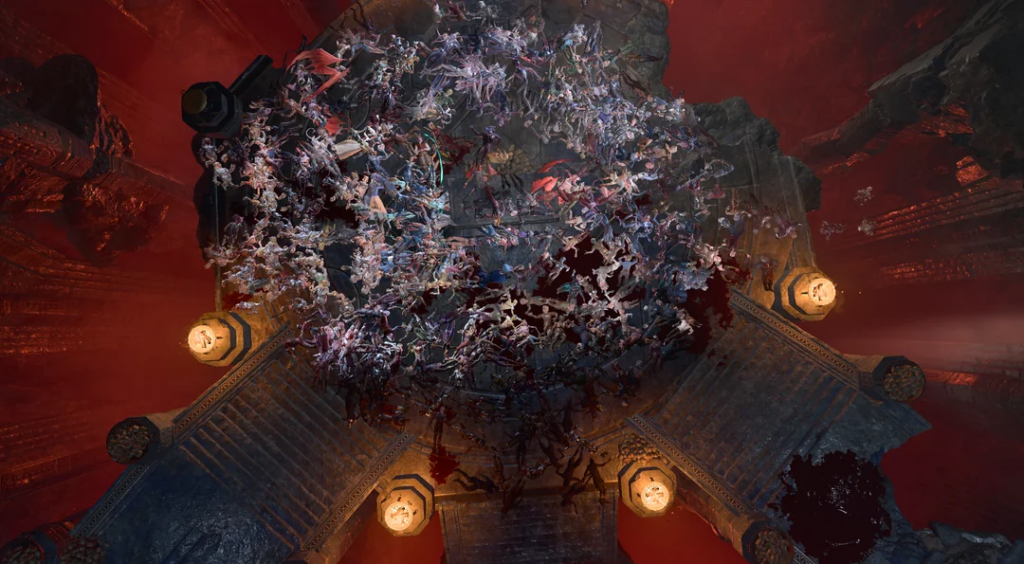
The technical hurdles were not limited to weight. As the collection grew, the hardware behind the screen began to protest the sheer amount of data being rendered in a single location. Most consumer electronics are not designed to process the physics and textures of 850 unique corpses piled onto a single floor. The player noted that the frame rate dropped into the single digits as they approached the Temple of Bhaal. Every time a new body was added to the pile, the simulation threatened to crash under the weight of so much stored entropy.
Curating the Guest List for a Murder God
This was not a random pile of generic goblins. The artist focused on unique non player characters, ensuring that the collection felt like a comprehensive history of their journey. High profile villains like the devil Raphael and the vampire lord Cazador Szarr were placed at the heart of the display. Even characters with deep emotional ties to the player’s party were not spared. The tragic figures of Shadowheart’s parents were included, marking a dark conclusion to one of the game’s most poignant storylines.
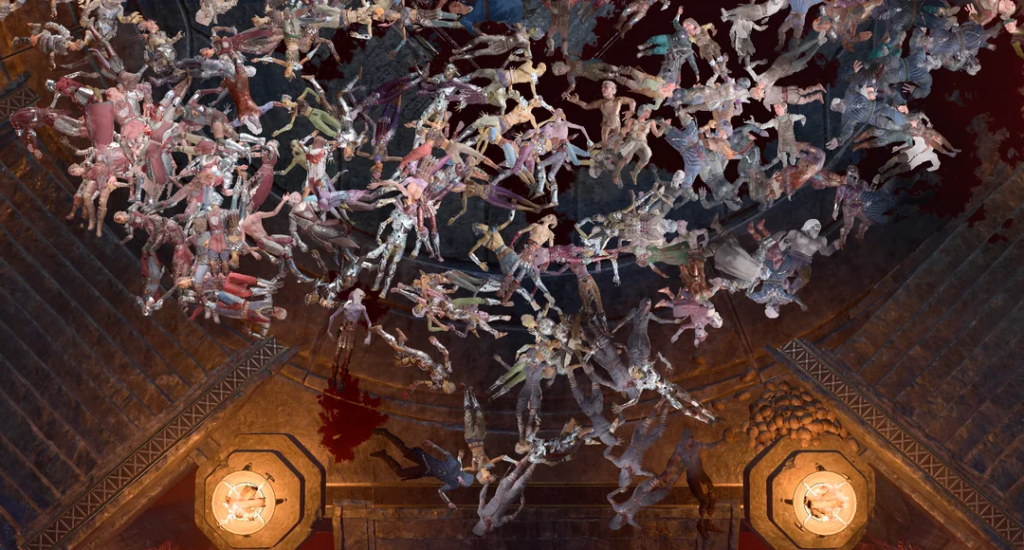
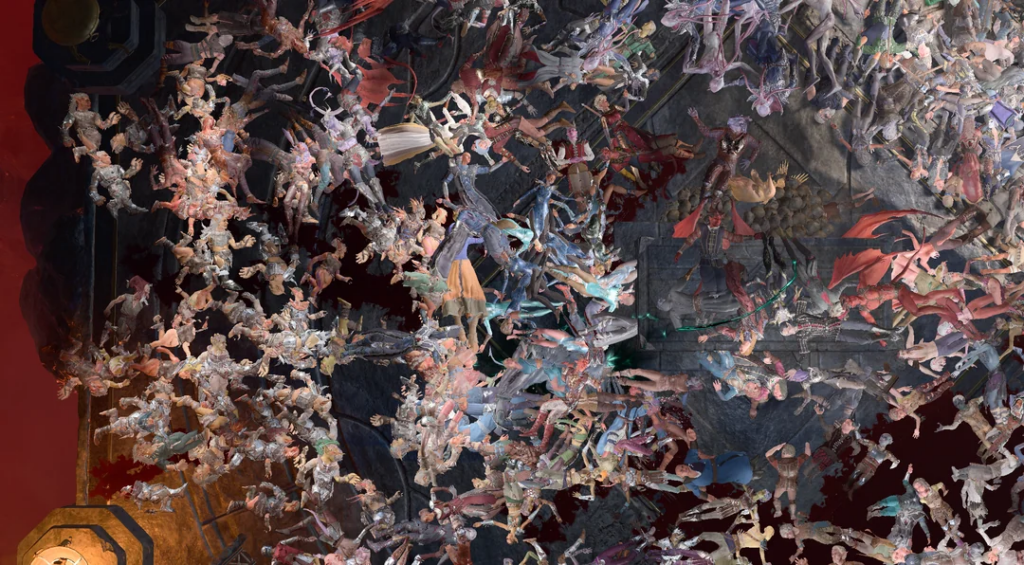
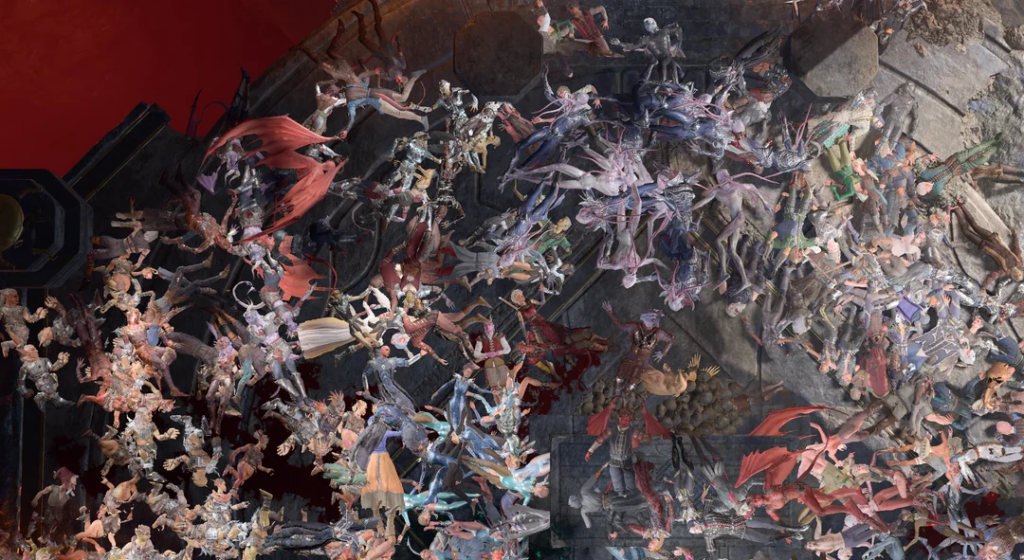
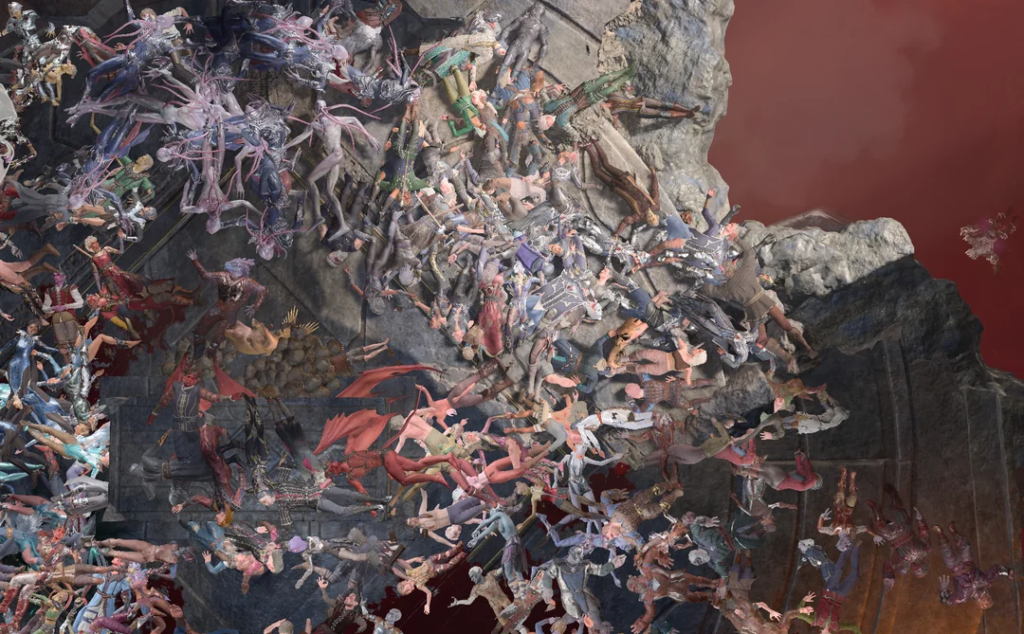
The selection process was methodical. Each body was conclusion to a specific story arc, carefully preserved in a travel chest until it could be delivered to the grand finale. The sight of these characters lying together creates a strange visual synergy. In the world of Baldur’s Gate 3, these individuals would never occupy the same room. Under the influence of Longwinter1641, they were unified in silence. The Lord of Murder, Bhaal, is a deity who demands blood, but even the god of slaughter might find this level of organization slightly unsettling.
Why the Digital Void Applauds
The community reaction to this project has been a mixture of awe and genuine concern. Many users found themselves wondering about the tactical potential of such a pile. The primary question circulating through the forums involves the spell Corpse Explosion. If a player were to detonate a cluster of 850 bodies in the center of the temple, the resulting chain reaction would likely be enough to delete the save file entirely or perhaps melt a modern graphics card.
The humor in the community often hides a deeper appreciation for the freedom provided by the Larian Studios engine. The fact that the game allows for this level of object manipulation is a testament to its complexity. Most games would despawn bodies the moment a player left the area to save memory. Baldur’s Gate 3 treats every object as a persistent piece of the world. This persistence is what allows for such bizarre experiments. It turns the game from a linear story into a sandbox where the only limit is the player’s willingness to haul 45 tons of digital meat across a continent.
The Future of Organized Necromancy
The project is apparently just the beginning for this particular player. In recent updates, the author stated that they have already started a new run. This time, the objective is efficiency. They are aiming for a speedrun that culminates in a more organized and sorted collection. The idea of “organized necrotic sorting” sounds like something pulled from a dystopian corporate manual, yet it perfectly captures the spirit of this specific subculture.
We are seeing a shift in how players interact with their favorite titles. It is no longer enough to just beat the boss. Players want to own the boss, literally, and place them on a shelf. As the hardware of 2026 continues to evolve, the scale of these digital installations will only grow. Today it is 850 bodies. Tomorrow it might be the entire population of a digital city, all neatly stacked in a single basement. The age of the fastidious ritualist has arrived, and the grid will never be the same.