
While the network is obsessed with the latest gold plated shovels from Nvidia, a strange structural silence has fallen over the entry level market. Jensen Huang and his team have pivoted so hard toward the data center that the average player has been left standing in a digital wasteland. This is a supply side famine that nobody predicted back when the first RTX cards launched. We are seeing a total disappearance of the sub three hundred dollar graphics card, a segment that used to be the lifeblood of the global gaming community. In this void, the blue corporation has a chance to execute a maneuver that could rewrite the hierarchy of the grid.
Intel is sitting on a stockpile of potential while the competition is distracted by the high margin allure of AI training clusters. The market has been cleared of budget options not because people stopped wanting them, but because the manufacturing capacity for consumer memory and silicon has been redirected to build the brains of the new machine intelligence. This has created a vacuum. For the first time in decades, the biggest player in the semiconductor world finds itself in the position of the underdog rebel. They have the inventory, they have the architecture, and most importantly, they have a reason to fight for the scraps that the greens and reds have abandoned.
The Ghost of the 2004 Cross Licensing Pact
To understand why Intel is currently holding a winning hand, we have to look back at the corporate genetics of the early two thousands. In 2004, Nvidia and Intel entered into a massive cross licensing agreement that changed the trajectory of both companies. The greens wanted access to the Front Side Bus patents to create their nForce chipsets, which were the gold standard for motherboard performance at the time. In exchange, Intel gained the legal right to use Nvidia graphics patents. This was a strategic trade that gave Intel the blueprint for everything that followed in their integrated graphics department.
The dynamic shifted in 2009 when Intel moved to the Nehalem architecture and killed the FSB entirely. Suddenly, the document Huang signed lost its practical value for the greens, but the blues kept their access to the graphics foundations. This legal maneuver allowed Intel to capture nearly seventy four percent of the total GPU market by simply bundling basic graphics into every processor they sold. They played the long game, slowly building a massive install base of low power users while refining their understanding of how a graphics pipeline actually functions on a hardware level.
This history proves that the blue corporation is not a newcomer trying to learn the ropes. They are a veteran of the industry that has been hiding its true ambitions behind a wall of office computers and low end laptops. The jump from the basic HD Graphics of the Skylake era to the sophisticated Iris Pro modules showed a linear, almost cosmic leap in capability. They demonstrated that they could produce top tier integrated solutions that could rival dedicated mobile chips. When the licensing agreement with Nvidia finally expired in 2015, the rapid growth paused, but the internal knowledge didn’t vanish. It just went underground to wait for the right market conditions.
The Myth of the Elite Gamer and Steam Reality
The current marketing machine wants you to believe that if you aren’t running an ultra high end card, you aren’t a real participant in the culture. They push the narrative of the thousand dollar GPU as the entry fee for modern entertainment. This is a corporate lie designed to inflate margins. If you look at the Steam hardware survey, the truth of the grid is much more grounded. The vast majority of the world is still playing on hardware that the enthusiasts would call ancient.
Massive titles like Baldur’s Gate 3, Red Dead Redemption 2, and even Hogwarts Legacy are designed to be played on machines that the industry has tried to forget. The GTX 1050 Ti remains a legendary piece of silicon because it represents the reality of the global player base. People want to play games without taking out a second mortgage. Publishers know this, which is why they continue to optimize for low power GPUs. There is a massive demand for a card that costs two hundred dollars and just works, but Nvidia and AMD have decided that this demographic is no longer worth their time. They are chasing the AI dragon, leaving the most loyal part of the gaming community in the dirt.
The Failure of the Modern Integrated Solution
There was a hope that integrated graphics would eventually grow powerful enough to kill the budget discrete card entirely. That hasn’t happened. Instead, we have a structural imbalance where the most powerful iGPUs are locked inside the most expensive flagship processors. It is a logical paradox. If you have the money to buy a top tier i9 or a high end Ryzen chip, you almost certainly have the money for a dedicated graphics card. The people who actually need high performance integrated graphics, the budget builders, are stuck with the weakest modules because they can only afford the entry level CPUs.
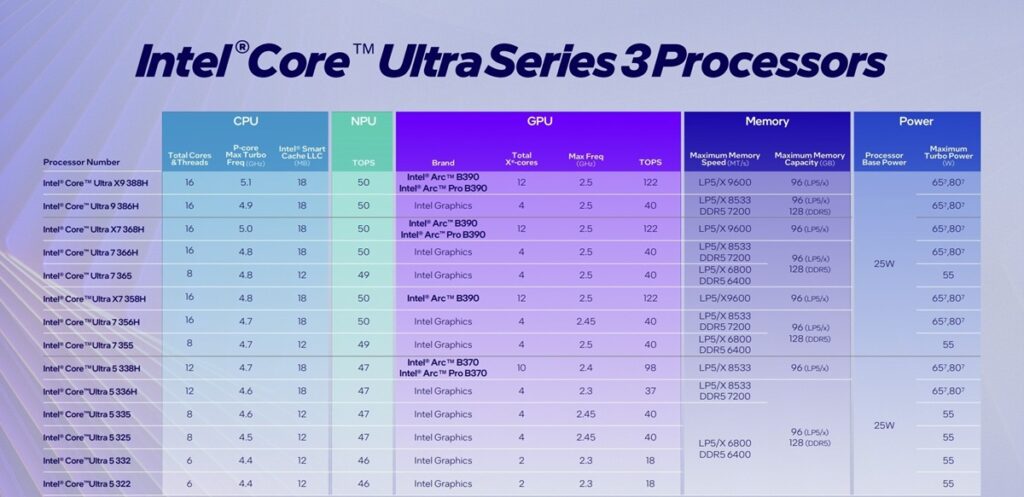
This disconnect has left the budget segment without a home. The integrated graphics do not intersect with the needs of the modern player who wants sixty frames per second at ten thousand and eighty pixels. The demand for a dedicated, affordable board is at an all time high, but the supply has been throttled by a pivot toward enterprise solutions. This is where the Aeon Dogma of hardware comes into play. We are seeing a move away from specialized gaming hardware toward a homogenized silicon landscape where everything is an AI accelerator first and a gaming tool second.
The Death of the Two Hundred Dollar Bracket
Today, the concept of a budget video card is a moving target that feels increasingly out of reach. Nvidia’s lowest current offering often sits at a price point that would have bought a mid range card five years ago. They try to justify this with inflation, but that logic falls apart when you compare it to other components. A basic i3 processor has maintained a stable price point for a decade despite global shifts. The difference is that the processor isn’t being sold as a specialized shovel for the AI gold rush.
The market for a four hundred dollar total system build has been effectively erased. You can no longer buy a card for a hundred and ten dollars that provides a meaningful upgrade over a basic office machine. This is a deliberate abandonment. The greens and reds have calculated that it is more profitable to sell one five thousand dollar AI card than fifty small gaming cards. They have abandoned the volume play in favor of the margin play. This leaves a massive opening for anyone brave enough to manufacture for the people instead of the data center.
Memory Scarcity and the AI Pandemic
The biggest hurdle for any manufacturer right now is the global memory shortage. Every modern chipmaker has repurposed their facilities to feed the data center market. VRAM is being sucked into a black hole of high performance computing. Nvidia was the first to realize that they could make an order of magnitude more profit by putting their memory chips on a server board instead of a retail graphics card. This trend has been supported by the entire supply chain.
When a corporation looks at their inventory, they see two paths. Path one is selling a discrete card to a teenager in a bedroom. Path two is selling a massive rack of servers to a cloud provider. The decision takes seconds. This is the silicon famine of 2026. The production facilities are running at a hundred percent, but none of that output is headed for the shelves of your local electronics store. The “shovels” for corporations have become the only priority, leaving the consumer market to starve for components.
The Strategy of Inventory and Long Term Planning
In this chaotic environment, the companies that survive are the ones with the best inventory management and the longest contracts. We see this with Sony and the PlayStation 5. Despite global interruptions, they managed to keep their hardware pricing relatively stable because they sign multi year supply deals and maintain massive warehouse reserves. They are the samurai of the supply chain, using their scale to smooth out market shocks.
Intel has similar, if not greater, capabilities. They are a massive corporation with a history of supplying server equipment to almost every major computing center on the planet. But there is a secret to their current advantage. Recently, the demand for blue server solutions has been cannibalized by the surge in Nvidia AI hardware. This sounds like a failure, but for the gaming market, it is a massive opportunity. It means Intel has memory reserves and silicon capacity that aren’t being swallowed by the AI pandemic. They have the parts, they have the fabs, and they don’t have a backorder list of a million H100s to fulfill before they can help the average gamer.
The Impending Price Spike and the Blue Knight
As the memory shortage continues to tighten, the cost of manufacturing discrete video cards is going to skyrocket. The law of supply and demand is about to hit the PC market with the force of a wrecking ball. We saw this during the mining boom, and we are about to see it again. The fewer cards that exist on the market, the more the price will climb, regardless of the actual cost of the silicon.

This is where Intel can step onto the stage as a savior. They are the only corporation left with the manufacturing infrastructure to produce graphics cards for the masses without needing to pivot away from a more profitable AI business. They have been dumping their Arc solutions for years now, offering a price to frame ratio that the competition cannot match. In the coming months, as Nvidia and AMD prices move further into the atmosphere, Intel’s stable pricing will make them the only logical choice for anyone building a budget rig.
We are looking at an alignment of the stars. The blue corporation needs a win to prove their relevance in the graphics space, and the market needs a card that doesn’t cost a month’s rent. By focusing on the “last chance” of the budget gamer, Intel can secure a massive chunk of the market share that the competition has arrogantly thrown away. They aren’t trying to build the most powerful card in the world. They are trying to build the card that actually exists on the shelf.
Digital Independence and the Right to Play
The move toward expensive, AI-focused hardware is a threat to independent command. If only the wealthy can afford to participate in high-fidelity digital worlds, the culture of gaming becomes an elite enclave rather than a public town square. By providing affordable hardware like the Arc B580, Intel is providing the infrastructure for a rebellion against corporate gatekeeping. They are giving the independent agent the tools required to maintain a digital estate without being tethered to predatory hardware cycles or the RTX 5090 price ceiling.
This is the core dogma of the new gaming intelligence. We shouldn’t have to choose between a digital prison and a high entry fee. The existence of the Intel Arc line is a signal that the entry level market is still worth fighting for. It is a pushback against the bloat and the hyper optimization that has defined the last decade of hardware. We are looking for the hand of the artist in the silicon, the intentional choice to build something that serves the user rather than the shareholder.
The Final Shift in the Grid
The next twelve months will determine the fate of the entry level GPU. If Intel can successfully launch their Battlemage architecture at a price point that remains accessible, they will become the de facto king of the budget segment. They will have rescued a generation of gamers from the silicon famine. The competition will be too busy counting their AI billions to notice that they have lost the foundation of their community.
The rebellion isn’t about stopping the progress of AI. It is about demanding that progress doesn’t come at the expense of the average person. We want a world where the graphics card is a tool for joy and discovery, not just a data set for a machine learning model. The blue corporation is positioned to be the architect of this new reality. They have the parts, they have the history, and they have the vacancy in the market. It is time for them to become great again by making gaming affordable again.