Microsoft is attempting to execute a mass-market deception to coincide with the anniversary of the Xbox brand. The corporation is using industrial inertia to push a project that lacks a functional kernel. During the January 2026 Developer_Direct presentation the world was shown a curated illusion. It was a semi-finished product wrapped in the aesthetic of a fairy tale.
The gap between the marketing chatter and the telemetry on the screen suggests a catastrophic disconnect. Fans are being groomed for a second coming that is actually a digital car crash. There is zero evidence that Fable is ready for a 2026 deployment. The data suggests a project in the middle of a systemic collapse.
Fable 2026 Systemic Failure Foreseen?
| Telemetry Parameter | Projected Final State | Reference Baseline (Cyberpunk 2077) |
| Mechanical Integrity | Non-functional at launch. | 27-month input lag delta. |
| Input Fidelity | High latency. Ghosting evident. | Raw frame data instability. |
| Physics Engine | Scripted animations mask lack of collision. | 48-minute gameplay deep dive (Real). |
| Render Quality | Texture clipping. Variable clock-states. | High-fidelity vertical slice. |
| Developer Trust | Zero. Conveyor belt production history. | Peak pre-release sentiment. |
The Microsoft Anniversary Illusion
The corporate strategy for 2026 is built on dust and mirrors. Big Tech suits are desperate to validate the existence of their internal studios after years of high-profile disappointments. They need a flagship to anchor the anniversary celebrations. Fable has been chosen as the sacrificial lamb for this narrative. The reboot of the series is the most anticipated event for the brand but the reality of the development cycle tells a different story. We are seeing a pattern of behavior that mirrors the lead-up to previous failures like Redfall and Halo Infinite.

There is a specific type of industrial overhead that occurs when a corporation prioritizes a marketing deadline over mechanical integrity. The presentation showed several internal projects but the stir around Fable was manufactured. Specialized channels are performing their duties as outsourced PR arms. They react with admiration to 38 seconds of footage that contains zero continuous gameplay. In tech hubs where we analyze raw code and silicon lottery outcomes the skepticism is high. We do not look at the shiny armor. We look at the frame-time variances in the background.
The Fable 2026 Presentation Telemetry
The January 22 demonstration was labeled as a deep dive. In reality it was a shallow puddle. Out of the nearly 40 seconds of footage approximately half was dedicated to panoramic views of static locations. These are effectively high-quality screenshots with a moving camera. They tell us nothing about the kernel-level stability of the world. Another significant portion of the time was spent on credits and text descriptions. The actual demonstration of mechanics was limited to roughly eight seconds.

Within these eight seconds the cracks in the facade are visible to anyone with an eye for technical debt. The character movement is fundamentally flawed. A male avatar was shown walking with the skeletal animation set of a female model. This indicates that the animation rigging is not yet individualized for character models. It suggests a rush to assemble a trailer from disparate assets. We also witnessed objects in the background failing to load. Floating geometry is a sign of a struggling streaming budget within the engine.
The most concerning telemetry involves the FSR ghosting. The implementation of upscaling is currently generating massive artifacts. When the hero moves through the grass the trailing edges of the character model are blurred and distorted. This is a sign of a poorly optimized render pipeline. If the game is struggling to produce a clean image in a controlled trailer environment the performance on retail hardware will be non-functional.
Analyzing the Chicken Mechanic as a Red Flag
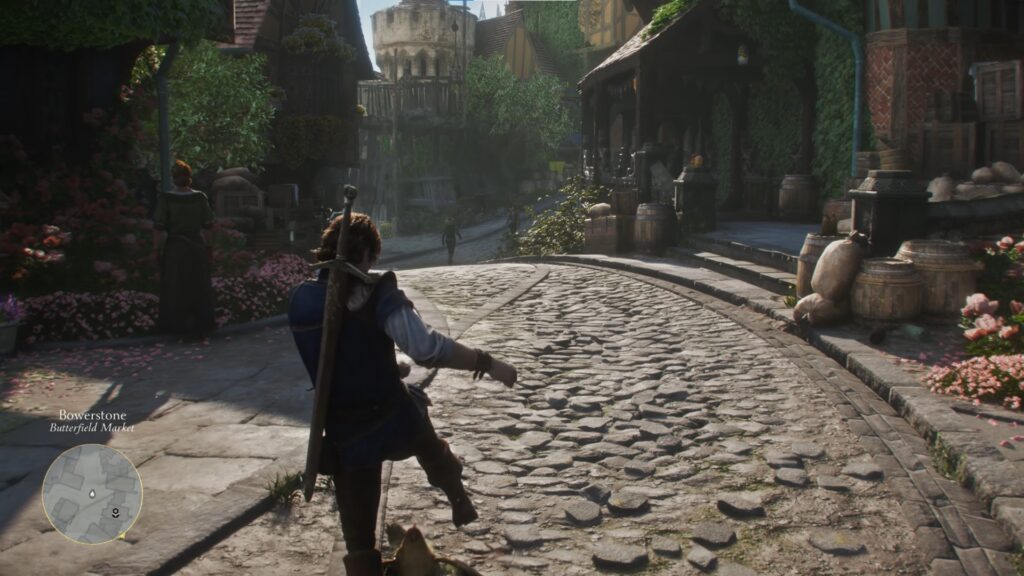
Microsoft has decided that kicking a chicken is the core symbol of the Fable brand. It appeared in the 2020 teaser and again in the 2023 Dave and Hero trailer. In the 2026 deep dive it was given a full presentation with an achievement pop-up. This is a classic diversion tactic. By focusing on a legacy meme they are avoiding a demonstration of actual RPG mechanics.
When the hero kicks the bird in the latest footage the physics engine fails. The chicken does not react to the impact point of the foot. Instead it follows a pre-defined script and flies away at a fixed angle. This is scripted animation masking a lack of a real physics collision system. In a game launching in 2026 this level of technical laziness is unacceptable. It shows that the mechanical integrity of the world is non-existent.

The bird even clips through the textures of a nearby stone wall as it flies. If they cannot fix a clipping bug in a 40-second promotional clip the rest of the game is likely held together by digital tape.
Technical Debt and the Texture Clipping Crisis
The scenery in Albion is beautiful on the surface. But a deeper look at the telemetry reveals a world that is not physically solid. During the flirtation mechanic demonstration the character models moved through each other. Shoulders and arms clipped into the surrounding environment. The world looks like a collection of 3D assets that have not been assigned collision hulls.
The faces of the NPCs are another point of failure. They have been described as lifeless dolls. The glass eyes and lack of sub-surface scattering on the skin suggest an unfinished look. Facial animation is currently in the “uncanny valley” where the lack of subtle micro-expressions makes the characters look like animated corpses. This is a common symptom of development crunch. High-fidelity facial capture requires months of polish that this project clearly has not received.

The lack of impact from weapons in the combat snippets is also glaring. When the hero strikes an enemy there is no feedback. The enemy model does not flinch or react to the force of the blow. The combat looks floaty and disconnected. It feels like the ForzaTech engine is being forced to do something it was never designed for. Playground Games is trying to build a complex RPG on the foundation of a racing simulator. The overhead of this engine translation is likely dragging the entire project down.
The Ghosting of FSR and Technical Obfuscation
The decision to rely heavily on FSR in the trailer is a confession of poor optimization. Upscaling should be a tool for reaching higher resolutions not a crutch for a failing frame rate. The 2026 footage showed clear signs of stuttering. Even in a 30fps container the motion was not fluid. This points to inconsistent frame pacing at the engine level.
Microsoft is using technical obfuscation to hide the state of the game. They show panoramas because those are easy to render at high quality. They show scripted kicks because those don’t require AI logic. They avoid showing a full mission because a full mission would reveal the broken state of the systemic AI and quest triggers. The “Deep Dive” was a curated set of frames designed to trick the silicon lottery of public opinion.
Playground Games and the Conveyor Belt Crisis
The developer behind Fable has a reputation for high-quality production but zero experience in the genre. Playground Games is a factory for Forza Horizon. They excel at making beautiful landscapes and fast cars but those are predictable systems. A “fairy tale adventure” requires a different set of technical standards. It requires branching narratives and reactive AI and complex physics.
The studio has spent years in a conveyor production mindset. They are used to making incremental changes to an existing formula. Fable requires a ground-up reconstruction of their entire design philosophy. The evidence suggests they are simply shoveling existing assets and code from Forza into a new setting. There is zero trust in a studio that has never delivered a creative narrative experience. The lack of an in-depth gameplay demonstration is a silent admission that the studio is out of its depth.
The Independent Verdict on Fable 2026
Digital autonomy requires the player to be an active participant in a functional system. Fable 2026 is shaping up to be a passive terminal of bugs and broken promises. We are looking at a project that has been in development since 2020 but has nothing to show except for five short videos. The inputlag of the development cycle is now massive. If they had a game they would show it.
The most likely scenario is another delay. But if Microsoft is desperate enough to hit the anniversary deadline they will release a semi-finished product. They will rely on day-one patches and seasonal updates to fix the systemic failure. This is an anti-consumer practice that we must reject. We have seen this before with Cyberpunk 2077 but at least the Poles showed 48 minutes of gameplay. Microsoft is showing eight seconds of a chicken.
The mechanical integrity of the Xbox brand is at stake. If Fable fails it will be the final confirmation that the corporation’s internal studios are incapable of delivering on their promises. The anniversary will not be a celebration. It will be a funeral for the brand’s credibility. The independent architect should look elsewhere for their digital adventures. Albion is currently a ghost town populated by lifeless dolls and clipping poultry.
Every technical indicator suggests a resounding failure. The clock-states are not being reached. The telemetry is showing red across the board. The silicon lottery has not been kind to Playground Games. We are witnessing the slow-motion collapse of a flagship. The only question remains whether the public will see through the technical obfuscation before they hand over their money.

The future of gaming in 2026 should be about digital autonomy and high-intellect systems. It should not be about kicking a scripted bird in a world that is literally falling through the floor. We demand more than panoramic views. We demand a game that functions at a kernel level. Until Microsoft can show a ten-minute uninterrupted mission with combat and dialogue the project should be considered non-functional.