The modern gamer has a specific nervous twitch in the left hand. It is a reflex honed over decades of exposure to the safety net. A finger hovers over the F5 key. It is ready to anchor the current reality before stepping into a room of unknown variables. If the battle goes sideways or if the dialogue choice feels wrong, the player simply reaches back through the folds of time. They click the load button and erase the failure. This mechanism is a comfort. It is also a fundamental betrayal of the medium. We have become addicted to the digital time machine of the save state. In doing so, we have stripped the gear teeth from the machines we claim to love.
In the earliest days of the personal computer, the struggle was the point. When we first loaded the original Doom, the five difficulty levels were a gauntlet of intent. At the highest level, the game was a nightmare of relentless pressure. The developers gave us an out. We still remember the IDDQD and IDKFA codes by heart. These strings of characters granted invulnerability and infinite ammunition. They effectively turned the player into a god. Even as children, we understood that playing with these codes turned the experience into a hollow shell. Defeating a monster that cannot hurt you is a chore rather than a victory. Most players used cheats for research or for a momentary burst of chaotic power. They always returned to the struggle. They chose the third difficulty because a victory without the possibility of loss is neurologically inert.
The Mathematics of Satisfaction
There is a specific mathematics to satisfaction. If you are playing a simulator, the optimal zone for engagement sits around a six to four ratio. You should win six times for every four times you lose. This balance keeps the brain wired into the feedback loop. If you win ten times out of ten, the challenge dissolves. You are no longer interacting with a system. You are going through the motions of a victory lap. The save-load mechanic is the ultimate disruptor of this ratio. By allowing players to replay every failed encounter until they achieve a flawless result, the game transforms the protagonist into a Mary Sue. They become a character too strong and too perfect to be interesting. We stop worrying about them because we know the time machine is always in their pocket.
We have reached a point where we need to discuss the games that effectively cannot be experienced in their true form if the safety net remains active. True mastery of high intellect gaming requires a rejection of the crutch. It requires a return to mechanical resilience and the acceptance of the scar. The legacy of the industry makes this transition difficult. In the Fallout 2 era, saving was a necessity born of linear design and technical instability. That game took thirty hours to finish. A single bad encounter in the first hour could end a run for a novice. Replaying the same three hours of dialogue just to get back to the point where a giant ant killed you is a special kind of hell. In that context, the save button was a lesser evil. It protected the player from the boredom of repetition. As design has evolved, the lesser evil has become a dominant philosophy that holds the player’s hand until their grip atrophies.
The Beauty of the Smoldering Ruin
Today, we see a shift toward games that refuse to be played this way. These are the titles that demand independent command from the user. Consider RimWorld. It is widely considered one of the finest simulations of the decade. While the game allows for traditional saving, it is designed to be played in Ironman mode. In this mode, only a single automatic save exists. This changes everything. When a raid sets fire to your canteen and kills half your colonists, it is not a reason to quit. It is the beginning of a story. The most compelling narratives in gaming do not come from the times everything went perfectly. They come from the desperate reconstruction after a systemic tragedy.

In a world without the quick load button, failure is not the end of the run. It is a trajectory shift. If your base is overrun and you have to flee with three starving survivors into a frozen tundra, the game does not stop. It becomes a different game. You might build your next base inside a mountain. You might pivot to animal husbandry because you no longer have the resources for high tech farming. This nonlinearity is the soul of the experience. By save-scumming, you delete the most interesting parts of your own history. You trade a legendary tale of survival for a boring report of consistent success.
The Humility of the Highway
We see a similar tension in Kingdom Come Deliverance. It is a grounded and often brutal roleplaying game. It forces the player to inhabit the skin of a peasant who knows nothing of combat. Early on, a group of bandits on a highway can easily end your life. However, the game includes mechanics for losing that do not involve a game over screen. You can surrender. You can be robbed and left for dead. You can spend time in a jail cell. These are all valid outcomes that lead to more gameplay. The player who saves every five minutes never sees these branches. They never experience the humility of a character who has been stripped of their pride and must crawl back to the top. They are playing a flat and safe version of a world that was designed to have edges.
This brings us to the grand strategy titles from Paradox Interactive such as Crusader Kings 3. These games are effectively massive machines of consequence. You are not just controlling a character. You are managing the fate of a dynasty over centuries. In the first few dozen hours, it is reasonable to use saves as a training tool. You use them to test a tactic or see how a specific law change affects your vassals. Once the mechanics are understood, the safety net becomes a cage. Running a state is only interesting when the threat of a lost war is real.

Real history is a mess of defeats and narrow escapes and sudden collapses. If you can simply reload the moment your heir dies or a crusade fails, you are not playing a strategy game. You are playing a coloring book. You are just filling in the map with your own color until the timer runs out.
High Intellect Gaming and the Tragedy of History
The true experience is found when you lose your primary title. You find yourself reduced to a lowly count. You have to spend the next three generations plotting your way back to the throne. That is high intellect gaming. It is a story worth telling. The industry often tries to shield the general public from this kind of strain. Modern blockbusters are designed to keep the dopamine flowing without ever challenging the player’s sense of security. They fear that if a player loses progress, they will turn off the console and never come back. This is a patronizing view of the audience. It assumes that we are incapable of handling friction. Friction is exactly what creates the heat of engagement. When you remove the risk, you remove the reward.
We are advocating for a return to independent command. This means owning your failures as much as your victories. It means recognizing that the save-scumming protocol is a barrier to technical maturity. There are games that should not be played with the intent to win at all costs but with the intent to see what happens when the simulation breaks. The goal is to observe the reaction of the system to failure, rather than forcing a sanitized outcome through a digital time machine.
The Aeon Dogma ecosystem is a hub for those who want to push the boundaries of their own technical and psychological limits. We look for the industrial texture of a machine that might break under pressure. By rejecting the safety nets of modern game design, we reclaim the high-integrity experience of being an active operator in an uncompromising world.
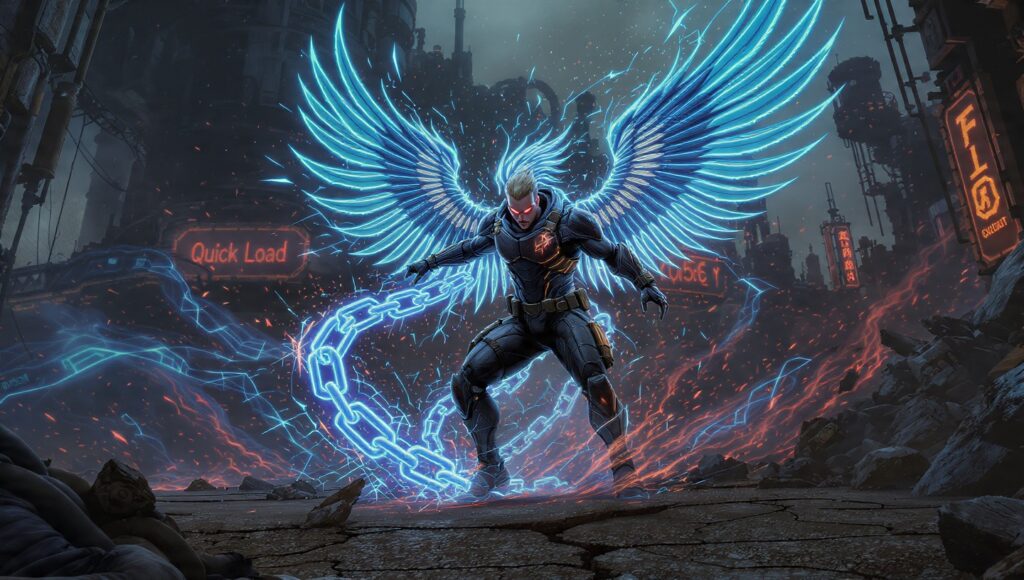
We value the mechanical soul of a game that respects the player enough to let them fail. If a game is linear and buggy, keep a save on hand to protect against a crash. If a game is a living system, step away from the F5 key.
Unlearning the Reflex
The transition to playing without saves is a process of unlearning. It requires you to sit with the discomfort of a bad decision. It forces you to find creative solutions to problems you would normally just erase. This is where the real fruit of the medium lies. It is in the bitter root of defeat that we find the sweetness of the eventual triumph.
Independent command is the primary currency of the modern era. This extends to how we consume entertainment. If you are constantly rewinding time, you are not the independent master of your own experience. You are a passenger in a simulation that has been neutered for your comfort. Reclaiming the weight of your actions is the first step toward technical and biological command.
Break the cycle. Delete the old saves. Start a new run in Ironman mode and accept whatever the silicon throws at you. Whether it is a bad roll of the dice in a dark dungeon or a strategic blunder that costs you an empire, let it stand. The scar on your save file is a mark of a life lived within the machine rather than a perfect and sterile record of a ghost who never truly struggled. The future of gaming is not just about higher resolutions or faster frame rates. It is about the depth of the interaction. It is about the weight of the choice. As we move into 2026, the demand for high intellect systems is growing. People are tired of the hand holding. They want to feel the weight of the steel and the coldness of the vacuum. They want games that cannot be conquered by just clicking a button to try again. They want a challenge that demands everything they have.
The Final Stand of the Passive Consumer
Stop downloading games just to treat them like a movie you can pause and rewind. Download them to test your mettle. Download them to build a history that belongs only to you. This history should be composed of both the glorious peaks and the devastating valleys. This is the only way to truly possess the digital experience. Anything else is just temporary access to someone else’s safe and boring dream. We are entering the era of the active operator. The world is getting faster but our reactions are getting slower because we are too used to the pause button.
In the hyper-connected grid of 2026, where every action is logged and every failure is visible, the only way to maintain systemic command is through the authenticity of your own struggle. If your digital legacy is a series of perfect and replayed moments, it is a technical lie. If it is a jagged line of survival, it is a manifesto of independent command.
The games we discuss here are the tools we use to sharpen our technical intent. They are the testing grounds for a reality where there is no quick load. When you finally turn off the machine at the end of the night, you should feel the mechanical weight of what you did. You should feel the loss of the characters you could not save and the triumph of the ones who made it through against the odds. That is the price of admission for independent command. Pay it gladly.
The mechanical resilience of the player is the ultimate hardware upgrade. No amount of teraflops can compensate for a lack of resolve. When you strip away the saves, you are left with the raw code and your own intuition. This is the industrial core of the hobby. It is the place where the machine and the human meet without intermediaries. In this space, every victory is earned and every defeat is a lesson etched into the motherboard of your mind.
The industry will continue to push for more comfort and more accessibility. They will tell you that losing progress is a design flaw. They are wrong. Losing progress is the only thing that gives technical progress any meaning. If you cannot lose what you have built, you never truly owned it in the first place. This is the fundamental truth of the 2026 digital age. Independent command is not given. It is taken through the process of enduring the system.
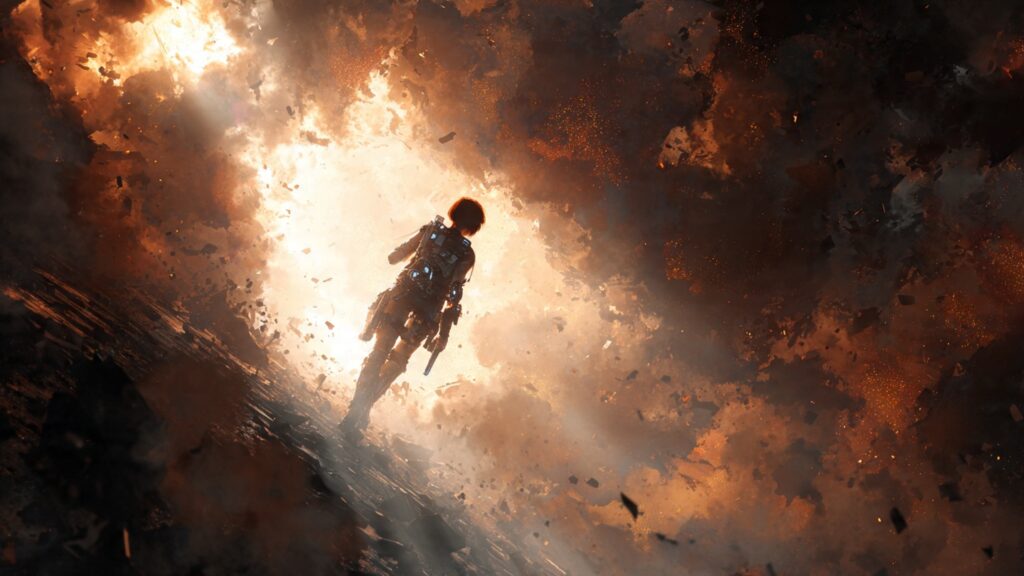
As the lines between the virtual and the physical continue to blur, the habits we form in our simulations will bleed into our physical lives. If we train ourselves to always look for the exit or the reload button, we will do the same when the stakes are real. By embracing the finality of the game state, we train ourselves for the finality of reality. We become operators who can make a decision and live with the fallout. We become people who can stand in the middle of a smoldering ruin and start rebuilding without waiting for a prompt to tell us it is okay. This is the high intellect path. It is the only path worth walking in a world that is increasingly built on shadows and illusions. Turn off the safety. Enter the gauntlet. Let the chips fall where they may.