The information field is currently vibrating with a frequency that suggests something big is coming from the Japanese giants. As we drift further into 2026, the question of when the next hardware cycle begins has moved from a niche concern to a global obsession.
While enthusiasts on the grid argue about teraflops and ray reconstruction, the reality of the situation is buried under layers of market shifts and a very specific security disaster that occurred just as the clock struck midnight on the new year.
Twelve Years of the Old Guard
The fourth iteration of the PlayStation line was released in 2013. By all traditional logic, it should have been buried in a landfill years ago. Instead, it became a zombie that refused to die. It survived for twelve years because it hit a sweet spot of being enough for the average human. Developers spent a decade refining their optimization techniques to ensure that even a low power gadget could deliver visual masterpieces.
Standard cycles usually hover around seven years. The industry treats this number like a magical constant, but history shows a much more chaotic pattern. Hardware changes because the market demands it, not because a chart says it is time. The Nintendo Switch 2 arrival proved this perfectly. The tech was ready years ago, but the release waited for the precise moment when the sales of the original finally hit a plateau. Sony is currently facing a similar crossroad where the old hardware still serves millions while the current generation is still finding its feet in the budget sector.
Diminishing Returns and Silicon Fatigue
We are witnessing the slow death of rapid progression. In the early 2000s, the jump between graphics cards was an order of magnitude. A chip from 2005 was twenty times slower than one from 2013. That gap has shrunk significantly. The move from the 3080 to the projected 6080 in 2027 shows a much smaller leap in raw computing power.

There is no longer a technological abyss that opens up every seven years. To achieve the same kind of visual shock we experienced moving from the third to the fourth generation, we would likely need two decades of development. Gamers today demand perfection, but the hardware is hitting a wall where more power mostly translates to more heat and higher electricity bills rather than a fundamentally different experience.
The Financial Weight of Perfection
Developing a game in the modern era is a marathon that leaves most studios exhausted and broke. GTA 4 took three years to build. GTA 6 has been in the oven for a decade. Every increase in hardware capability adds another layer of work for the artists and engineers. A single project that once cost eleven million dollars now costs ninety million or more.
No corporation is going to launch a new console for every individual game release when those games take ten years to finish. The cost of launching a new platform is astronomical. Sony spent roughly ten billion dollars to get the fifth generation out the door. They had to raise the price of games to seventy dollars just to keep the lights on. Moving to a sixth generation requires a massive incentive, and right now, the only real incentive is the noise from investors who want to see a new box on the shelf.
Steam Machines and the Mid Range Reality
The announcement of the new Steam Machine in November 2025 changed the conversation. Some critics claimed Valve’s new toy was too weak to matter, but the data suggests otherwise. It is more powerful than seventy percent of the computers currently registered on the Steam network. Gabe Newell understands that for the next five years, this level of performance is exactly what the mass market needs.
Valve is positioning itself to capture the middle ground while Sony and Microsoft fight over a high end audience that is shrinking due to the rising costs of living. If a cheaper, less powerful device can run the most popular session based games, the pressure to release a PlayStation 6 purely for power reasons starts to vanish.
Encryption Key Disaster on New Year’s Eve
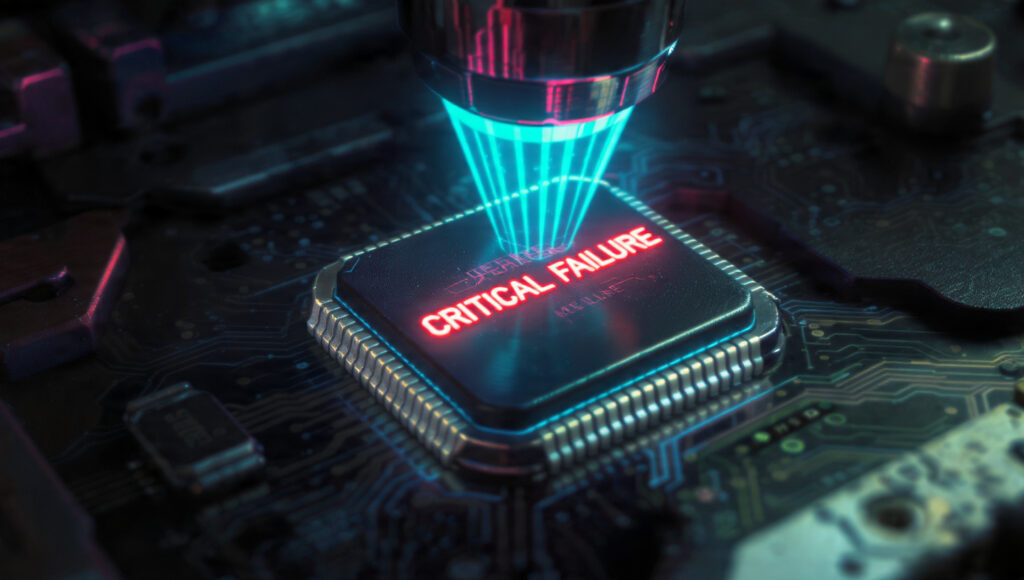
Everything changed on December 31, 2025. The unthinkable happened when the master encryption keys for the PlayStation 5 were leaked to the network. This is not a software bug that can be patched with a quick update. One key is unique to each processor, but the second key was a closely guarded secret that Sony held in its private vault.
By combining these two, hackers can gain absolute control over the hardware. There are roughly ninety million devices on the market that are now potentially vulnerable to a class of exploits that cannot be fixed. From a financial perspective, this is a total system failure. The security wall has been breached, and the only way to lock the door again is to move to an entirely new architecture.

This leak is the most objective reason for an accelerated launch of the PlayStation 6. Sony may not want to release a new console because of market trends or graphics, but they might have to do it to save their ecosystem from a total piracy meltdown. As we move deeper into 2026, the silence from the Japanese headquarters is becoming deafening. The samurai are deciding whether to stay the course or burn the current grid to the ground and start fresh.
The Orion Protocol | Hardware Defenses in the Post-Leak Era
The shadow cast by the January 1st encryption leak is long, and Sony’s response is already taking shape in the form of the rumored “Orion” chipset. For years, the security of the PlayStation ecosystem relied on keys burned into the silicon of the APU. Now that those keys are public, the PS6 is not just a performance upgrade; it is a defensive necessity. To move past the current vulnerability, Sony is expected to abandon the static security models of the past in favor of a more dynamic, “living” hardware architecture.
Neural Arrays and Real-Time Cryptographic Rotation
At the heart of the Orion chip, rumors point toward dedicated “Neural Arrays.” While these are marketed as tools for AI upscaling and smarter NPCs, their secondary function is likely security. These arrays can potentially handle complex, real-time cryptographic checks that are far more difficult to reverse-engineer than traditional static ROM keys.

By shifting the “Root of Trust” from a fixed string of code to a dynamic system that requires an AI handshake between the hardware and Sony’s servers, the PS6 could effectively kill off the possibility of a “coldboot” jailbreak. If the hardware requires a unique, AI-generated signature for every boot cycle, a single leaked key becomes worthless.
The Physical Isolation of Radiance Cores
Another layer of the rumored spec includes “Radiance Cores.” These are primarily designed to double the ray tracing performance of the current generation, but they also offer a way to isolate critical system tasks. By segregating the security functions into a physically distinct portion of the 3nm die, Sony can create a “black box” environment.
In the PS5, the vulnerability was found in the BootROM, which sits close to the main processing flow. In the PS6, we expect to see a total separation where the graphics and gameplay processors have zero access to the cryptographic engine. This hardware-level wall ensures that even if a game is compromised, the attacker cannot hop over into the system’s root.
Universal Compression as a Data Shield
The inclusion of “Universal Compression” tech is the final piece of this defensive puzzle. By encrypting and compressing data as it moves between the 40GB of GDDR7 RAM and the GPU, Sony is making it exponentially harder for hackers to “sniff” the data lines. In previous generations, capturing data as it moved across the motherboard was a common entry point for modders. With Orion, the data is essentially gibberish until it is safely inside the encrypted confines of the processor, leaving the “grid” outside the chip completely dark to intruders.
The Architect’s Prep: Hardware for the Transition
While we wait for the Orion chipset to reset the grid, the elite player must secure their current environment. These components are the 2026 standards that will form the backbone of your future station.
Disclosure
This section contains Amazon affiliate links. As an Amazon Associate, the site earns from qualifying purchases.

Samsung 990 Pro SSD 2TB with Heatsink
A high‑speed NVMe drive delivering up to 7,450 MB/s throughput, engineered for large‑scale assets and the escalating file sizes of the post‑leak era.

SteelSeries Arctis Nova Pro Wireless
A flagship wireless headset with active noise cancellation and a dual hot‑swap battery system for uninterrupted spatial awareness during extended sessions.

DualSense Edge Wireless Controller
A modular pro‑grade controller featuring hardware‑level remapping and replaceable stick modules for sustained precision under competitive load.