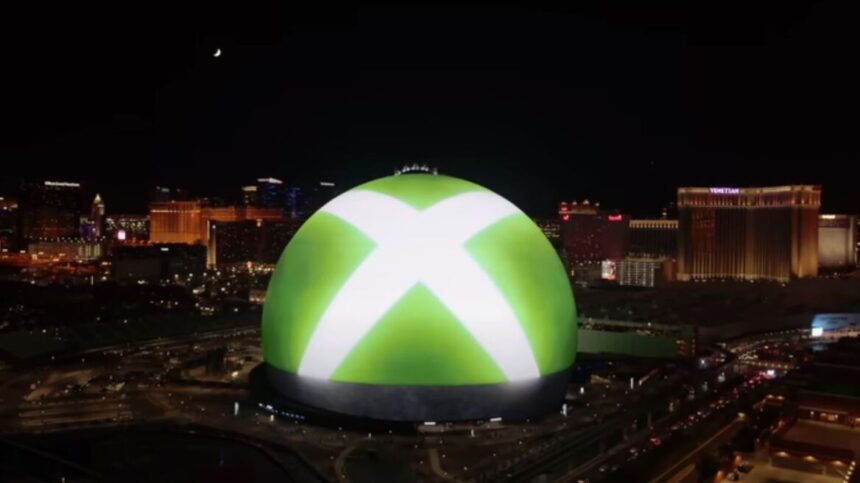
Since 2023, the “Las Vegas Globe” has graced the skyline of the “city that never sleeps,” serving as both a technological marvel and a captivating new landmark. Officially known as the MSG Sphere, it is more than just an entertainment venue with the world’s largest LED display; it is also the world’s largest spherical structure.
It’s also one of the best billboards in the world – with a construction cost of $2.3 billion. Thanks to her, huge brands, companies and franchises have been advertised, such as PlayStation with Spider-Man 2, Microsoft with Xbox Series X|S, Meta for Meta Quest 3, Nickelodeon with SpongeBob, the NFL for the Super Bowl and the NBA. Even the legendary band U2 has made a unique impression on it, while Darren Aronofsky has screened the documentary specially filmed for the Las Vegas Sphere, titled “Postcard From Earth”. What is hidden behind the colossal sphere and can show all these spectacular shows?
Through a special blog post of Nvidia it is revealed that the well-known manufacturer of chips and graphics cards, NVIDIA, is the supplier and the one that set up the infrastructure behind the LED sphere. The 115-meter-high and 157-meter-wide sphere consists of 16x16K screens arranged in a spherical configuration inside, while the outer part, called the Exosphere, consists of 1.2 million programmable LED panels.
Nvidia’s RTX A6000 graphics cards are indeed impressive. They are used in workstations to stream content created by Sphere Studios, capable of displaying three layers of 16K resolution at 60 FPS. To address latency issues, Nvidia’s Rivermax media streaming software is employed, which transfers data directly to the graphics card, effectively reducing jitter and optimizing performance across numerous screens.
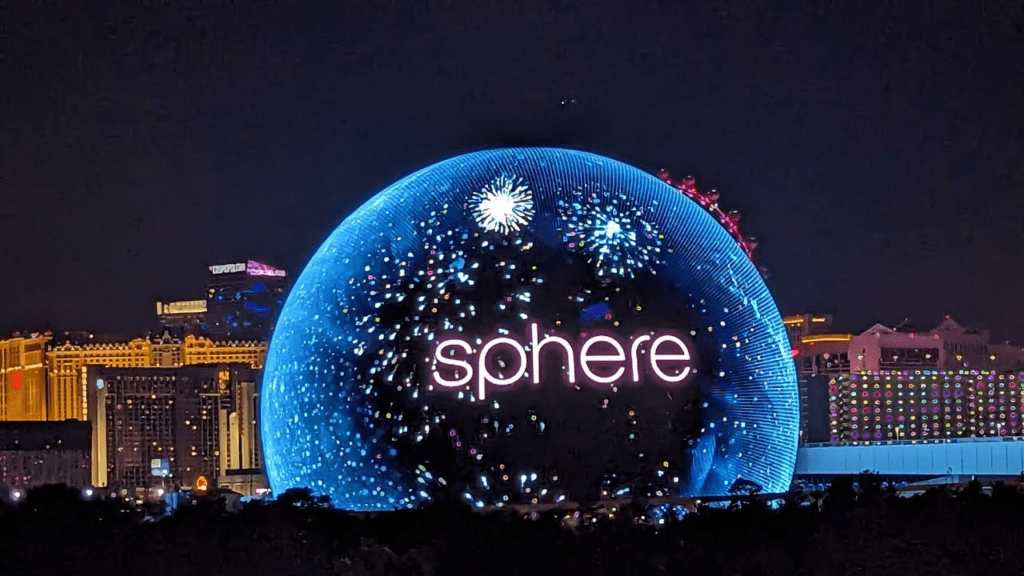
Behind these millions of LED panels are 150 NVIDIA RTX A6000 graphics cards, which project everything both inside and outside. These are not the typical graphics cards you can put in a personal computer, as they are not designed for gaming.
These GPUs, built with Nvidia’s Ampere architecture, are intended for professional use, featuring 48GB of GDDR6 memory and a retail price of $6,800 each. Simple calculations show that the total cost of the 150 Nvidia GPUs powering the sphere amounts to approximately $1,020,000.
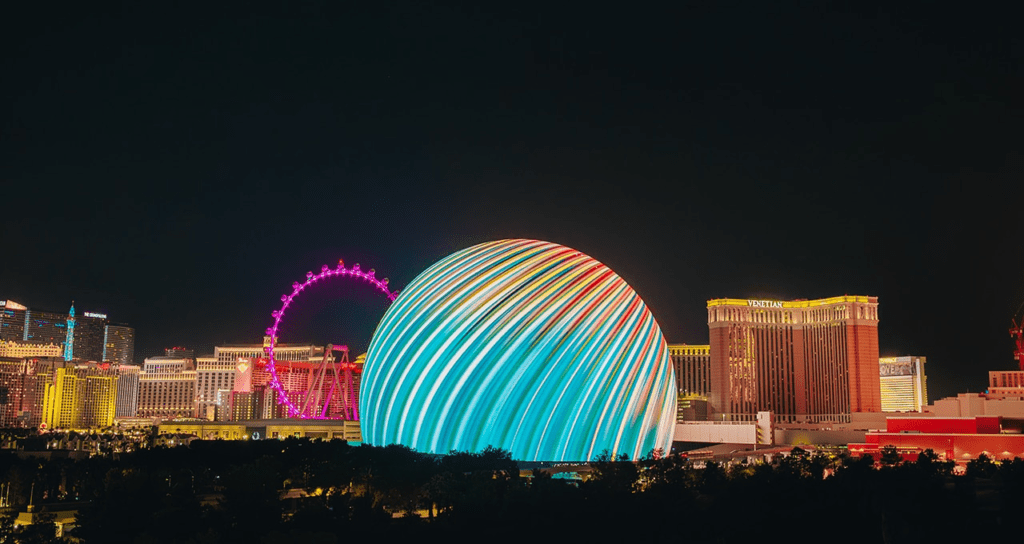
It’s worth mentioning that recent data from campaigns during Super Bowl 2024 shows that a 90-second ad, running intermittently over a week, costs between $1 million and $2 million.