Choosing a TV might seem straightforward, but the complexity becomes apparent once you delve into the details. As you explore their key features, selecting the type of display panel becomes a crucial decision.
The jumble of acronyms like LED, OLED, and QLED can be baffling. We’ll explain the distinctions between these display types and outline their pros and cons, enabling you to make an informed decision and purchase a high-quality television.
What you need to know about LED, QLED, and OLED
When selecting a TV, quality, image clarity, brightness, and color richness are the primary factors we consider. Only after these do we evaluate other features, functions, and additional characteristics. Ultimately, the visual appeal of the picture is paramount. This underscores the importance of understanding the different types of panels used in TVs to avoid future regrets about your purchase.
So, what exactly is a panel? It’s the screen, or more accurately, the core component of its design, responsible for displaying images and overall color transmission. The panel is made up of tiny elements called pixels, which together create the full image on the screen. The most common types of displays currently available are LED, OLED, and QLED, each with its own operational principles, color reproduction, saturation, contrast, and energy efficiency. To help you navigate these modern technologies, it’s advisable to explore each type of panel in detail.
LED TVs
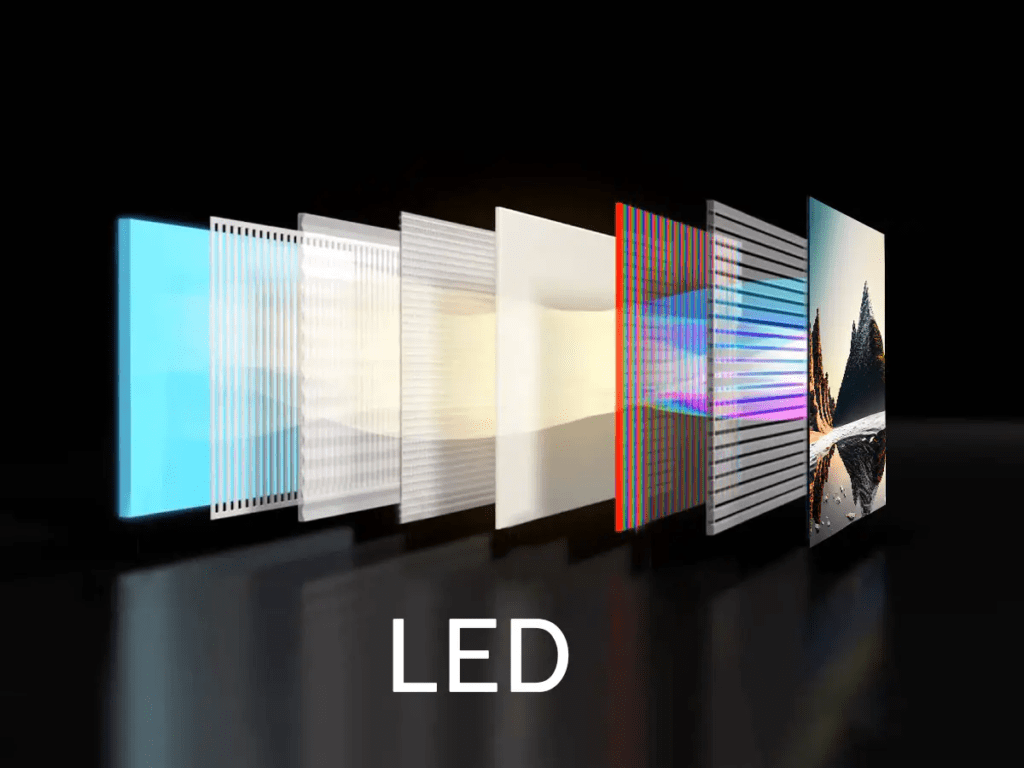
LED TVs are an advanced iteration of the once-popular liquid crystal displays (LCDs). Their panels are backlit by LEDs that may be positioned around the screen’s edge or across its entire surface. The difference in the placement of these light-emitting diodes isn’t immediately noticeable, but it does exist. Is it crucial? Probably not. For most viewers who simply want to enjoy their favorite TV shows, movies, or streams, the difference will be negligible.
Advantages of LED TVs
- Price-wise, these TVs may still be the most affordable option when compared to models featuring OLED and QLED technologies.
- The display boasts excellent color reproduction and detail, resulting in a high-quality image rich in colors and shades.
- HDR support is not a universal feature in LED TV models. However, if high dynamic range video is essential for you, there are certainly models available that offer this technology.
- Durability is a key advantage of LED panels, as they do not fade over time. While fading is uncommon in modern televisions, LED technology remains the least prone to this issue.
- A wide variety of screen sizes is available. You can purchase an LED TV in both compact and substantial dimensions.
Disadvantages
- Black levels and contrast are crucial for display quality, yet not all LED TV models excel in these aspects due to their design features. Consequently, blacks may appear grayish, although this does not necessarily have a significant impact on the overall image quality.
- Panel response speed is a significant factor for console gamers. In video games that demand quick movement and fast reaction times, the panel’s response may not match the performance of OLED and QLED technologies. This is an important consideration for gamers.
- Viewing angle is a critical aspect of LED panels. For instance, a panel may not offer the best angle of view, resulting in noticeable changes in color and contrast when the TV is viewed from an elevated angle.
OLED TVs
It is widely acknowledged that OLED represents the pinnacle of display technology. The distinctive feature of OLED panels is their organic light-emitting diodes, which emit light independently. Consequently, the requirement for additional backlighting, necessary for LED displays, is eliminated. This leads to OLED TVs offering superior color quality, especially in terms of black levels.
Despite its advanced technology and popularity, OLED panels have their advantages and disadvantages that should be considered when selecting equipment.

Advantages of OLED TVs
- OLED technology boasts remarkable color reproduction, utilizing the ability to turn off specific pixels to attain high brightness and “infinite” contrast. Notably, the black displayed on these panels is a true black, free from glare, flare, and other common visual artifacts associated with screen image display.
- With a wide viewing angle both vertically and horizontally, you can enjoy crisp and vibrant visuals from any position in your room.
- High response speed is a substantial advantage of OLED panels. The immediate pixel response eliminates ghosting or trailing effects behind fast-moving objects on the display.
- OLED TVs implement HDR technology to a high degree, allowing you to perceive the picture in full detail and thoroughly enjoy watching your favorite movies and playing games.
Disadvantages
- Price is a consideration, but not necessarily a major disadvantage, as the expense is justified by superior image quality. However, one should be aware that TVs equipped with OLED panels will command a higher price compared to their LED and QLED counterparts.
- Pixel burn-in is an unfortunate reality, as pixels possess a finite lifespan. As time progresses, changes in brightness and color can occur, and persistent images from static graphics such as logos and icons may become visible on the display.
- Choices for screen sizes are limited. Currently, the smallest OLED TVs available are 43 inches, which is the minimum size offered in the market. The 55-inch models are the most popular.
QLED TVs
QLED technology, while not vastly different, stands apart from OLED as its direct competitor. Many modern televisions feature this type of panel, and it’s fair to say they have garnered a substantial following.
The hallmark of QLED screens is the use of quantum dot LEDs, which enable the display of purer primary RGB colors. Like traditional LCD models, QLED TVs incorporate additional lighting. The result of this combination is a screen image that is more vibrant, colorful, and contrast-rich. Indeed, QLED technology surpasses OLED in certain aspects, though not to a degree that redefines quality standards. It is worthwhile to weigh the advantages and disadvantages of this technology to make an informed decision when selecting equipment.

Advantages of QLED TVs
- The display showcases a broad spectrum of colors. As previously mentioned, the color reproduction is outstanding, presenting an image that is both realistic and highly saturated. There are no grounds for complaints in this aspect.
- Pixels do not suffer burn-out. In contrast to OLED panels, QLED displays do not encounter this issue.
- Enjoy your favorite films or play games with HDR compatibility, ensuring impeccable detail and luminosity.
- QLED technology offers a high response speed, which is pleasantly surprising. However, when comparing QLED to OLED technologies, the latter boasts a significantly better response time.
- Viewing angle is a key feature. QLED TVs boast a broad viewing angle, ensuring that the picture retains its color fidelity and detail, no matter where you sit.
Disadvantages
- The depth of transmission is characterized as black. This parameter has been well-implemented in the technology, yet it remains inferior to OLED.
- Price is a significant factor when it comes to TVs, as there is a broad spectrum. You might find a low-cost TV, but it’s improbable that the picture quality will satisfy you. Conversely, if you seek top-notch color reproduction and contrast, expect to pay a price comparable to OLED models.
We have figured out the basic characteristics of different types of panels, now we propose to go through other important parameters.
Comparison of the energy efficiency of TVs with LED, OLED, and QLED panels
The power consumption of modern televisions doesn’t typically reach very high levels. It is influenced by various factors:
- The energy efficiency class is denoted on the product’s packaging and in its documentation, typically marked by a letter such as ‘A’. The greater the number of plus signs following the letter, the lower the electrical consumption of the appliance.
- Screen size
- Brightness
- Resolution (e.g. 4K and 8K TVs will use more electricity)
- Volume Level
- smart TVs with additional features (Wi-Fi, Bluetooth, app recording, etc.).
Additionally, while energy consumption is significantly influenced by human factors, we will focus on the average energy efficiency of 55-inch TVs featuring LED, OLED, and QLED technologies.

LED
The energy consumption of LED TVs depends on the brightness of the display’s backlight. Additionally, the picture’s lighting intensity can be adjusted. On average, an LED panel TV consumes between 70 to 150 watt-hours.
OLED
Currently, OLED TVs are regarded as the most energy-efficient because they offer unparalleled color richness with similar electricity usage. Their efficiency stems from the ability to deactivate individual pixels, resulting in minimal power consumption during the display of programs, movies, or other entertainment content with dark scenes. A 55-inch OLED TV typically uses about 80-150 Wh of power.
QLED
QLED technology elevates color vibrancy significantly. Due to the intensive processing of the image on the screen, these panels tend to consume more energy. On average, a QLED TV’s consumption ranges from 80 to 200 Wh.
Durability and reliability
When purchasing a new TV, everyone desires a long-lasting set that doesn’t cause undue hassle. The longevity of TVs with various screen types differs. Moreover, the operational characteristics of each model play a significant role. Hence, we present the average lifespan data:
- LED – up to 100000 hours
- OLED – up to 30000 hours
- QLED – 30000 to 50000 hours
Observing the significant disparity in screen “longevity,” some might hastily decide against buying TVs with OLED and QLED technologies, which is misguided.
Firstly, the investment is for the superior image quality you receive. Secondly, 30,000 hours is substantial – it equates to nearly three and a half years of non-stop, 24/7 TV usage. When used for 8 hours daily, the lifespan extends beyond 10 years, by which time you would likely opt for an upgrade to a newer model anyway.