We’ve become so accustomed to the summer buzz in the video game industry that no longer watch events in real time; instead, we’re satisfied with snippets from trailers in the news feed. This time was no different — and there are no regrets.

There are questions, a few unmet expectations, and some pleasant surprises, but overall, we’re not disappointed. In this instance, the lack of bad news is indeed very good news. Now, let’s go over the points that really matter.
“Gears of War in our home”
The Gears of War series has taken an unexpected turn, perhaps even a step back. To our surprise, and we’re not alone, the fourth installment caused us to lose interest in the plot and the universe’s lore. The burning questions left by the release of Gears of War 3, which we must acknowledge was a tribute to the writers, remained unanswered. Although the war concluded and the personal tales of Marcus and Dominic found closure, there seemed to be a lack of overarching morality, which was almost within reach. The fourth game began to weave new intrigues right where they were least expected. It was only in the fifth game that the astonishing secret of the Locusts’ origins, the Queen, and the broader universe was unveiled, despite the bold clues planted in the second game. It was a revelation that was worth the wait… or so it seemed.
We now revisit the familiar protagonists and their personal narratives. At the very least, this approach is a win-win. At best, it may offer us a fresh perspective on the world.
My interest in the series has always been from the standpoint of game mechanics | it serves as a benchmark (and currently the only one) for those particular shooters that incorporate rolling and taking cover.
The game has indeed evolved, reaching its zenith in the third installment with features like sprints, bayonet charges, and the ability to rush at cover and yank enemies from their hiding spots. Beyond that, variations began to emerge. The downsizing of the existing arsenal was hardly inspiring, and the new weapons failed to leave a lasting impression. As for the narrative and the game’s world – the inclusion of robots, especially giant robots, seemed odd.
Riding an enemy monster and orchestrating a reverse Invasion Day with the Locusts is one experience; being devoured by a colossal worm, navigating its innards, and slicing your way out is another (Beard’s quip, “I don’t vomit with my own blood… it’s kind of abnormal…” still brings a smile to our face). Then there’s the distinct feeling of burrowing into fur and severing a maw of toothy tentacles with a detached helicopter blade. Indeed, the mood varies significantly.
We are presented with a familiar setting — and anticipate gameplay innovations.
The fairy tale will soon reveal
We appreciate all three installments of Fable, including the third. Over time, we’ve come to recognize its unique positive aspects that weren’t present in its predecessors, and we’ve grown more forgiving of its flaws. After the prolonged anticipation for the new installment, amidst all the cutscenes and debates, learning that the game’s development had silently ceased would have been a relief. The game remains highly controversial, to a significant degree.
Strange visual style
The 2016 remaster of the first installment faced criticism for altering the color palette. Characters and settings, while retaining their doll-like fairytale dimensions, were given dull gray hues, starkly contrasting with the vibrant original game from 2005. Now, we see highly realistic medieval dwellings in vivid, acidic colors.
The character models present another issue. The main character’s controversy is likely to persist, but it’s evident that the developers are aiming for extreme realism, with crooked-toothed peasants donning surprisingly colorful garb. This doesn’t seem to fit the series’ overall aesthetic. The game appears to be the work of a mid-budget studio, an ambitious individual (Bodycam), or professionals from a related field like special effects (Mortal Shell), who aim to astonish players with realistic graphics, yet the gameplay suffers. As some have aptly observed, the game seems to have veered into mockumentary territory, which is not in line with Fable’s essence.
The original trilogy maintained its fairytale essence in both narrative and visuals, even when presenting dark locations and narratives, such as fairies stealing children’s souls to transform them into monsters, while also playfully addressing genre tropes.
The new title makes a complete stylistic turnaround, introducing a kind of meta-humor reminiscent of characters breaking the fourth wall. This might work in a sitcom or pseudo-reality show, but it feels out of place in Fable. Moreover, the trailer left many elements unseen.
Combat is hinted at with individual melee animations, archery, and snippets of magic, but these are merely brief glimpses. A segment of a cutscene is shot from below a character’s knee—hardly impressive.
The trailer lacks the quintessential elements that define Fable | choice and the consequential changes in appearance. Where have these features gone? To be frank, the trailer didn’t even manage to cater to the fans’ expectations.
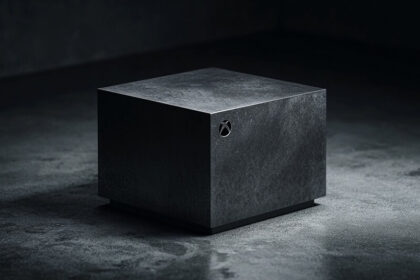
Where is the new Xbox console?
The greatest unfulfilled wish remains, undoubtedly, a portable console. I hold onto the hope that it’s so impressive that Mikey has orchestrated an exclusive presentation for it—if it indeed exists.
We’ve yet to witness a remaster of the trilogy or even a simple reissue of Kettlebells. As PC enthusiasts, we must express our profound disappointment, yet it pales in comparison to the torment endured by those awaiting Silksong. Yet, we remain hopeful.
What is the result?
Indeed, we haven’t covered many games. The industry is undergoing a significant shift from traditional sales to game passes, which may shape distribution strategies for years. Dragon Age has fallen victim to the “purple leprosy,” while DOOM returns with a prequel, neither of which piques our interest.
The Mikes are capitalizing on established franchises, including Indiana Jones, though it’s primarily known from film.
As for Starfield, they’re attempting to mend what’s broken, though not quite successfully. We’re not particularly fond of the “Bethesda RPG” genre, but as Morrowind players, we understand that installing GFM is essential for a smooth gaming experience. Yet, Bethesda seems incapable of properly patching their games without it. Their DLCs tend to expand games superficially, much like adding more cabbage to the soup. If you’re a fan of Starfield as it is, then the expansion might appeal to you. However, we’re open to being proven wrong.
The profitable “chickens” are well-fed in their coop. Nowadays, these are service-based or subscription games. WoW has been expanding for nearly two decades, and Fallout 76 is now following suit, without previous missteps. A game that continues to profit post-purchase cannot be allowed to fail, especially not at launch.
In summary, the presentation appears meticulously crafted and market-savvy. Behind the blockbuster franchises, there’s an indie game about a mouse fixing a house, a third installment of a cooperative zombie survival game, and a PvP shooter with cleverly integrated modifiers.
It’s as if all are valued members of one large, harmonious family.