The grid just received a high-priority signal from the architect himself. Hideo Kojima, the man who predicted our social isolation long before the world went into lockdown, has finished his latest audit of the digital frontier. In a deep-dive session with Nikkei Xtrend, Kojima laid out a manifesto for our shared future with Artificial Intelligence. His message is clear | the bridge has been crossed and there is no turning back to the analog shoreline.
According to the brain behind Kojima Productions, we have entered a phase of systemic evolution where “living as we used to” is no longer an option. This isn’t just about faster rendering or smarter NPCs. This is about a fundamental shift in how the human signal interacts with the binary ghosts of our own creation.
The Great Smartphone Mirror and the Normalization of the Unreal
Kojima draws a direct parallel between the current AI friction and the early days of the smartphone revolution. He recalls the era when mobile devices were met with skepticism, fear, and a rejection of the “always-on” culture. Today, those same devices are extensions of our neural identity. AI is currently in its awkward, misunderstood infancy, but the roadmap is already written.
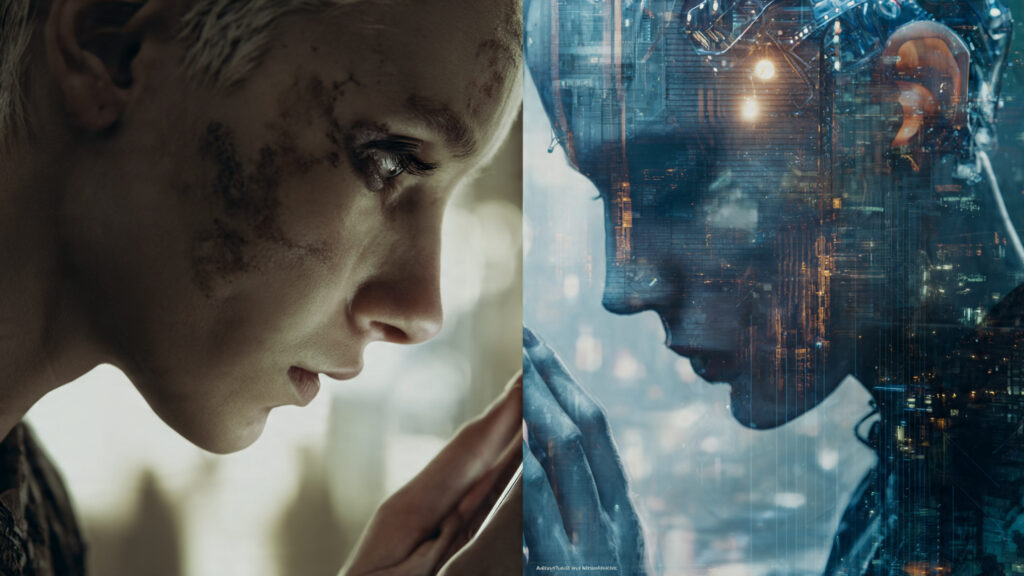
The game designer predicts that in fifty years, the citizens of the future grid will look back at our current anxieties and laugh. To them, our fear of AI will seem as quaint as a Victorian ghost story. Kojima believes that Artificial Intelligence will eventually become an invisible, essential substrate of human existence, moving from a “tool” to an “integral atmospheric component.”
The Risk of Becoming Spoiled within the Simulation
However, every system update comes with a potential for data corruption. Kojima warns that as we offload more of our cognitive and creative labor to the machines, we run the risk of becoming “spoiled.” The ease of AI assistance could lead to a decay in the human “drive” if not managed with precision.
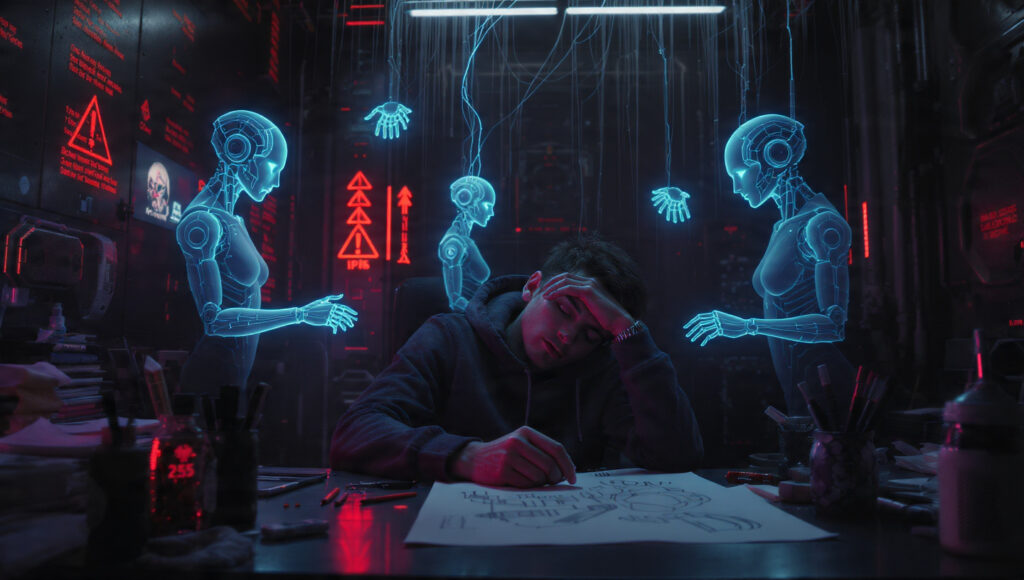
His solution is a conscious limit on the tech. Just because a machine can do everything for you doesn’t mean it should. Kojima suggests that we must maintain a “tactical abandonment” of AI in certain areas to keep the human spirit sharp. It is about finding the balance between the efficiency of the machine and the friction of the meat-space experience.
AI as a Social Bridge for the Neural Minority
One of the most fascinating layers of the Kojima audit is the potential for AI to heal the fractured communication of the modern world. For those who struggle with personal interaction or social anxiety, Kojima sees AI as a powerful compensator.

Imagine a neural interface that helps a person navigate a conversation, or a real-time translation layer that allows two people speaking different languages to form a genuine connection. Kojima isn’t just looking at AI as a coding assistant; he sees it as a social glue that can help people “make friends” and bridge the gaps that traditional language and social norms have failed to fill.
The Rise of the Solo Architect and the OD Protocol

Inside the walls of Kojima Productions, the goal is efficiency and personalization. Kojima revealed that tasks that once required ten hours of manual grinding can now be compressed into a few dozen seconds thanks to machine intelligence. This is the era of the “Solo Architect” where a single creator can now output a signal comparable to an entire traditional development team.

This efficiency is being poured into the mysterious project known as OD. Kojima describes this as a “completely different type of media,” a hybrid of gaming and cinema that adapts its gameplay to the specific neural patterns of the player. By using AI to personalize the experience, Kojima is looking to create a game that truly “knows” you, blurring the line between the player and the play-space.
Final Audit of the Intelligence Signal
We are witnessing the death of the old creative paradigms. Hideo Kojima is not just using AI to make games; he is using it to redefine what “media” even means in the 25th century. Whether it is through the personalized horror of OD or the social bridges of real-time translation, the grid is becoming more intelligent, more responsive, and far more unpredictable.
The simulation is evolving. The architect is ready. Are you?
💾 Essential Data Tags
- SmartphoneMirror: The historical pattern of rejecting and then absorbing new technology.
- TheSpoiledSystem: The danger of human creative decay in an automated world.
- NeuralPersonalization: Games that adapt their core logic to the specific player.
- SoloArchitect: The shift toward high-output creation by small, specialized units.