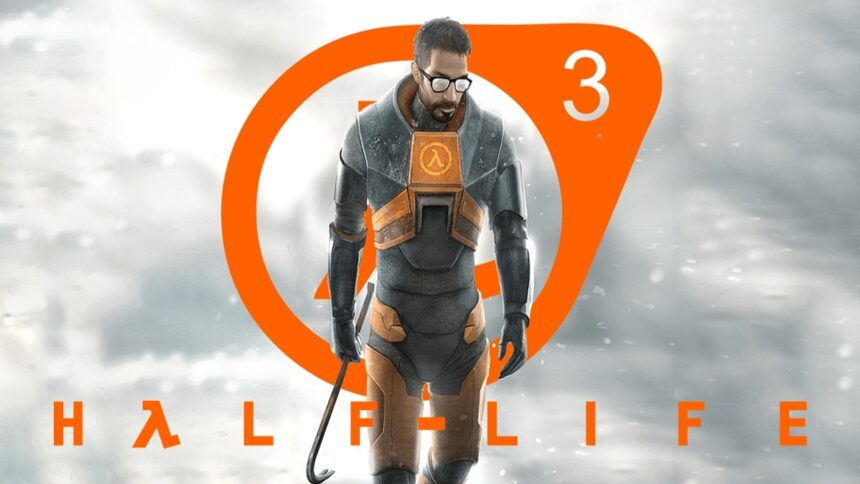
For years, the internet has been buzzing with rumors and supposed “newsbreaks” about Valve, the beloved gaming company behind iconic franchises like Half-Life, Portal, and Left 4 Dead. Headlines like “Valve is now making Half-Life 3” or “Valve is announcing Half-Life 3 tomorrow” pop up periodically, igniting hope among fans who have been yearning for a continuation of the Half-Life saga for well over a decade.
The Half-Life series, unlike some of Valve’s other franchises such as Portal or even Metal Gear Solid (a non-Valve title that wrapped up its core narrative), remains tantalizingly unresolved in terms of its plot. Gordon Freeman’s story feels like it’s hanging in limbo, with no definitive conclusion in sight.
When Valve dropped the bombshell announcement of Half-Life | Alyx in 2019, it came out of nowhere. A fully-fledged VR title set in the Half-Life universe, it was a bold move that reignited excitement among fans. However, despite this unexpected release, I remain deeply skeptical about the prospects of a traditional Half-Life 3. This skepticism isn’t born out of cynicism but rather a pattern of evidence—Valve’s long history of canceled projects and the current state of their flagship titles. In this discussion, we’ll walk you through the facts, focusing on the last decade or so of Valve’s abandoned endeavors. We’ll steer clear of digging into the 2000s, a time when Valve was still churning out successful releases like Half-Life 2 and Portal, as those years feel less relevant to the modern context.
Let’s dive into some of the projects Valve has shelved over the years, starting with one that might not be as well-known but speaks volumes about their development habits | F-STOP.
F-STOP | A Portal Prequel That Never Was
After the massive success of Portal 2 in 2011, Valve began working on a game codenamed F-STOP. This project was envisioned as a prequel to the original Portal, introducing a unique gameplay mechanic centered around a camera. Unlike the portal gun that defined the Portal series, this camera allowed players to zoom in and out of objects, manipulating their scale and interacting with the environment in innovative ways. Imagine a puzzle game where resizing a tiny pebble into a massive boulder could solve a challenge—that was the kind of creativity F-STOP promised.
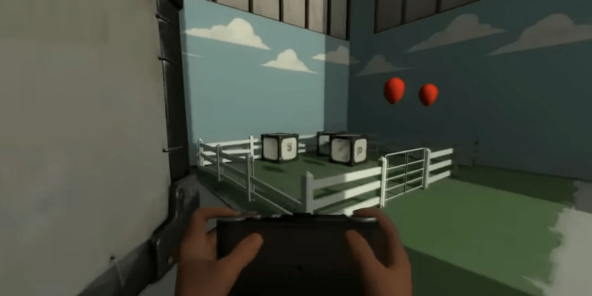
Despite its potential, Valve abandoned F-STOP. The official reason? Playtesters were reportedly unhappy that it didn’t feel like a true Portal game. This feedback seems odd in hindsight, given that Portal 2 had already provided a satisfying conclusion to Chell’s story, tying up the series’ narrative loose ends. One might wonder why Valve didn’t push forward with F-STOP as a fresh spin-off rather than scrapping it entirely. Whatever the reasoning, the project was shelved, leaving its intriguing camera mechanics in the dust.
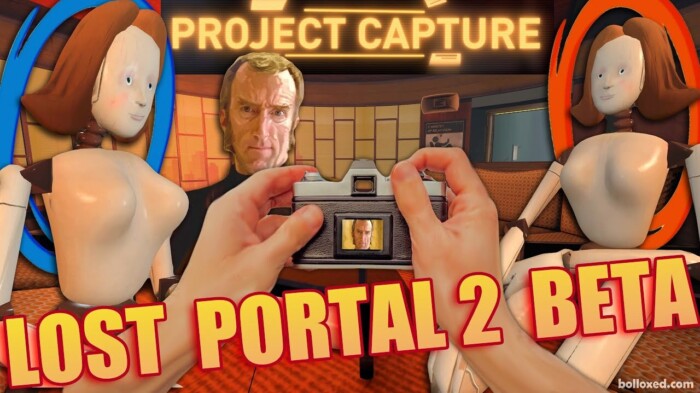
Thankfully, the spirit of F-STOP lives on through the efforts of dedicated fans and indie developers. For instance, there’s a Steam page for a game called Stop the F, which appears to draw inspiration from F-STOP’s concepts. Additionally, one of the most notable fan-made mods is Project Capture, a Portal 2 mod that incorporates similar camera-based mechanics. These efforts are still in development, and while we can hope they’ll see the light of day, their existence underscores a recurring theme | Valve’s abandoned ideas often find new life outside the company, while their own pipeline remains stagnant. So, if you’re holding your breath for Half-Life 3, this might be a sign to exhale—Valve’s track record isn’t encouraging.
Despite its potential, Valve abandoned F-STOP. The official reason? Playtesters were reportedly unhappy that it didn’t feel like a true Portal game. This feedback seems odd in hindsight, given that Portal 2 had already provided a satisfying conclusion to Chell’s story, tying up the series’ narrative loose ends. One might wonder why Valve didn’t push forward with F-STOP as a fresh spin-off rather than scrapping it entirely. Whatever the reasoning, the project was shelved, leaving its intriguing camera mechanics in the dust.
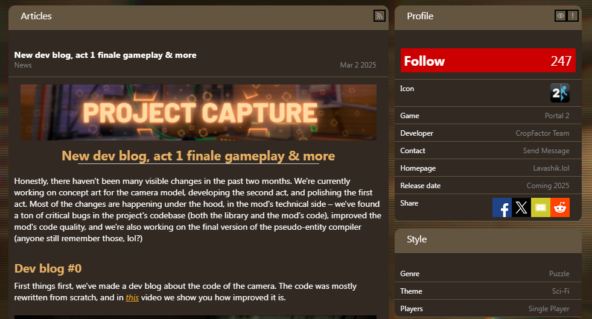
Thankfully, the spirit of F-STOP lives on through the efforts of dedicated fans and indie developers. For instance, there’s a Steam page for a game called Stop the F, which appears to draw inspiration from F-STOP’s concepts. Additionally, one of the most notable fan-made mods is Project Capture, a Portal 2 mod that incorporates similar camera-based mechanics. These efforts are still in development, and while we can hope they’ll see the light of day, their existence underscores a recurring theme | Valve’s abandoned ideas often find new life outside the company, while their own pipeline remains stagnant. So, if you’re holding your breath for Half-Life 3, this might be a sign to exhale—Valve’s track record isn’t encouraging.
Left 4 Dead 3 | An Ambitious Zombie Apocalypse Thwarted
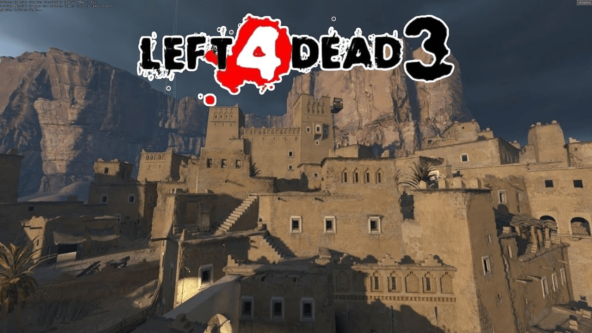
Next up is Left 4 Dead 3, a sequel that once had Valve developers buzzing with excitement in the early 2010s. This project coincided with the development of the Source 2 engine, a significant upgrade from the engine that powered Valve’s earlier hits. Unlike its predecessors, Left 4 Dead 3 wasn’t just going to be another cooperative zombie shooter—it aimed to break new ground. Imagine a four-player co-op experience set in an open-world environment, a concept that was downright revolutionary 10-15 years ago. The setting was slated to shift from the American landscapes of the first two games to the exotic and perilous terrain of Morocco in Africa, adding a fresh twist to the franchise.

So why didn’t it happen? The primary culprit was the Source 2 engine itself, which was still in its infancy and not yet stable enough to support such an ambitious project. At the same time, Valve was juggling other priorities, including the launches of Counter-Strike | Global Offensive (CS:GO) and Dota 2—two titles that would go on to become cornerstones of their modern portfolio. With resources stretched thin, Left 4 Dead 3 was quietly axed. Interestingly, the open-world zombie co-op idea didn’t die entirely; games like Dying Light later brought similar concepts to life with great success. Claims that Days Gone borrowed from Left 4 Dead 3 don’t hold water, though, as that game is a single-player experience, not a co-op one. Still, the cancellation of Left 4 Dead 3 is another nail in the coffin of optimism for Half-Life 3.
A.R.T.I. | Minecraft Meets VR, Then Meets Cancellation
Another fascinating casualty in Valve’s graveyard of games is A.R.T.I., a project that blended voxel-based graphics (think Minecraft) with full environmental destructibility, originally conceived without VR in mind. Later, Valve retooled it for virtual reality, aiming to capitalize on the growing VR market. Picture a sandbox where you could smash and reshape the world around you, all experienced through a VR headset—that was the vision.
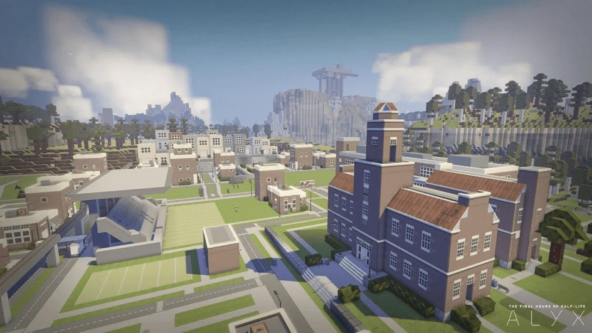
Unfortunately, A.R.T.I. didn’t survive long enough to see release. As detailed in The Final Hours of Half-Life | Alyx, a documentary book about Valve’s VR journey, the project was scrapped, and its developers were reassigned to work on Half-Life | Alyx. It’s a classic case of Valve pivoting away from one promising idea to focus on another, only to leave fans wondering what could have been. The shift to Alyx paid off in terms of critical acclaim, but it’s hard not to mourn the loss of A.R.T.I.’s unique premise.
Portal Spin-Off VR | A Dizzying Misadventure
Speaking of VR, Valve also toyed with a Portal spin-off designed specifically for the medium. In the mid-2010s, as the company prepared to launch the Valve Index headset, they needed a killer app to drive sales. A Portal VR game seemed like a natural fit, given the franchise’s popularity and puzzle-solving roots. However, this wasn’t a direct continuation of the series—Portal 2 had already wrapped up the story, making this a spin-off rather than a sequel.
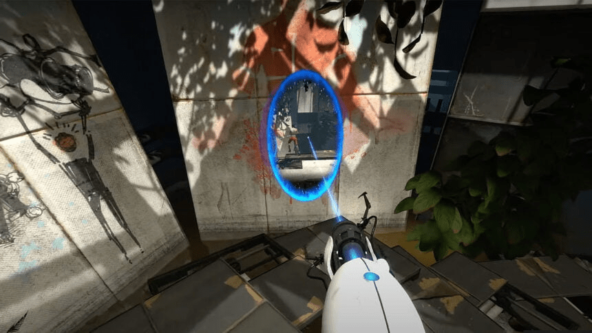
The problem? VR and Portal’s fast-paced, physics-defying gameplay didn’t mix well. Playtesters reported severe discomfort, likely due to the vestibular strain caused by rapid teleportation and perspective shifts in a virtual environment. Even a simplified VR version proved too intense for many, leading Valve to pull the plug. Instead, they shifted focus to Half-Life | Alyx, a VR title that avoided such issues by grounding its gameplay in a more traditional first-person experience.

Fan-made VR mods have since stepped in to fill the void. The Half-Life 2 VR mod team, now part of Orbifold Studios (working on Half-Life 2 | RTX), once planned a VR mod for the original Portal. Meanwhile, Portal 2 already has an open-source VR mod, adapted from a Left 4 Dead VR framework, with gameplay demos available online. Even Half-Life | Alyx itself features a functional Portal Gun, proving that the concept can work in VR with the right execution. These efforts show that Portal in VR is viable—just not under Valve’s official banner.
In The Valley of Gods | An Indiana Jones-Inspired Dream Deferred
Perhaps one of the most bittersweet cancellations is In The Valley of Gods, a project from Campo Santo, the indie studio behind Firewatch. Announced in 2016, this adventure game followed two female archaeologists exploring Egypt in the 20th century, armed with a film camera to record their discoveries. The Indiana Jones vibes were strong, and the premise promised a narrative-driven experience with a unique twist.
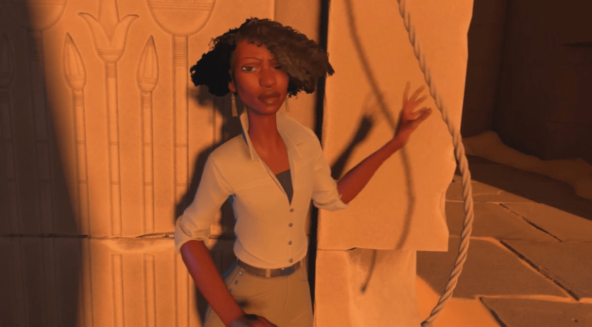
In 2018, Valve acquired Campo Santo, making In The Valley of Gods an official Valve project. However, development stalled as the team was reassigned to assist with Half-Life | Alyx. After Alyx’s release in 2020, key Campo Santo members left Valve, and the game has been in limbo ever since. No updates have surfaced since 2019, and with nearly a decade elapsed since its announcement, it’s safe to assume In The Valley of Gods is effectively dead, a particularly disappointing cancellation.
Half-Life 3 | The Holy Grail That Keeps Slipping Away
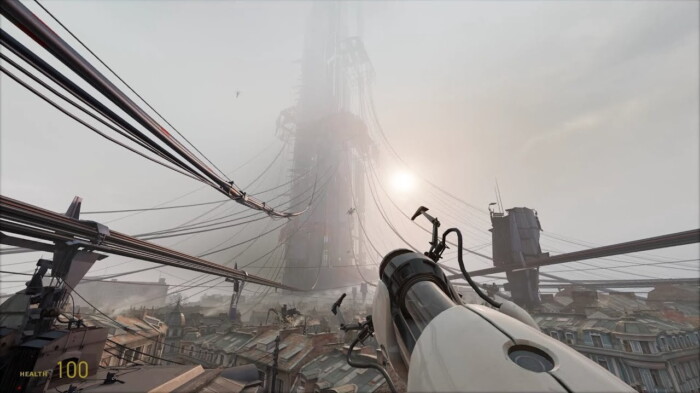
Finally, we come to the elephant in the room | Half-Life 3. Valve has made multiple attempts to craft a sequel to Half-Life 2 | Episode Two, which left fans on a cliffhanger in 2007. The most recent effort, abandoned around 2017, was rumored to take place in an Arctic setting—a chilling new backdrop for Gordon Freeman’s adventures. Beyond that, details are scarce. When that project fell apart, Mark Laidlaw, the writer behind Valve’s Half-Life stories, departed the company and later published what he claimed was the script for Half-Life 3 online. This act of defiance gave fans a glimpse of what might have been, inspiring a wave of fan-made projects like Project Borealis, Dark Interval, and Boreal Alyph. These efforts keep the dream alive, but they’re not official Valve products.
The State of Valve’s Current Lineup
What about Valve’s active games? Dota 2 hasn’t seen a major content update in ages, leaving its community restless. Counter-Strike 2 (CS2), the successor to CS:GO, launched with a slew of bugs and glitches that still haven’t been fully ironed out. Deadlock, Valve’s latest multiplayer venture, remains in a closed beta with no public release timeline in sight. The lack of momentum across these titles doesn’t inspire confidence in Valve’s ability to deliver something as monumental as Half-Life 3.
Conclusion | A Graveyard of Dreams
Valve’s history is littered with canceled projects—F-STOP, Left 4 Dead 3, A.R.T.I., the Portal VR spin-off, In The Valley of Gods, and multiple stabs at Half-Life 3. YouTube is full of 20-minute-plus videos dissecting this graveyard, and it’s heartbreaking to see so many promising ideas left to rot. The pattern is clear | Valve starts ambitious projects, only to abandon them when priorities shift or technical hurdles arise.
So, do you wait and believe in Half-Life 3? I’d argue it’s in vain. I’m not saying this to be a downer—if Valve surprises us with a new Half-Life game, I’ll be thrilled. But the reality, as of March 30, 2025, is sobering. Valve’s focus seems elsewhere, and their track record suggests that Half-Life 3 is more myth than imminent masterpiece. For now, fans might be better off exploring the vibrant world of mods and indie games inspired by Valve’s unfinished legacy. The dream persists, but the wait? It’s a long one.