On April 26, the South Korean action game Stellar Blade will be released, which many players promise to buy simply because of the attractive main character.
The authors frankly admit that seductive shapes and costumes help in advertising the game, but for some reason other modern studios are in no hurry to adopt this simple technique. Let’s figure out how developers have approached the design of female characters in recent years.
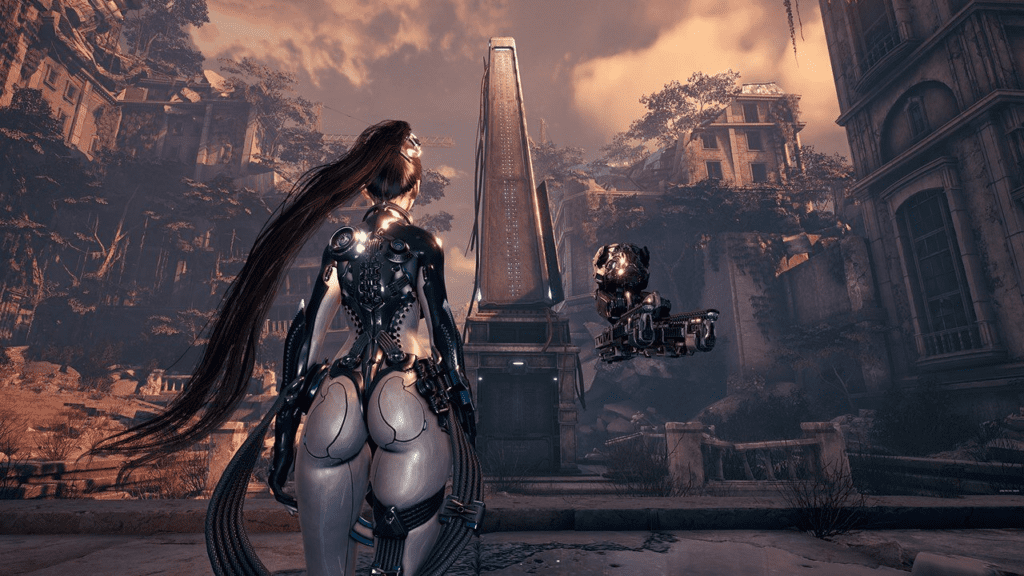
Stellar Blade
In 2016, scientists came to the conclusion that video game heroines have evolved to be less sexualized. Historically, games were predominantly designed for men, necessitating female characters to cater to this audience. Features like prominent breasts, elongated legs, and scant attire were employed to ensure the characters’ appeal from every perspective, making them instantly recognizable icons such as Lara Croft, Chun Li, and Tifa Lockhart.
However, there were exceptions. Bayonetta, for example, was designed by Mari Shimazaki. She admitted that the interests of male gamers were considered, but the goal was to create a modern, attractive character that would also appeal to women. This approach was successful; Shimazaki noted that the creators received numerous positive reviews from female gamers about Bayonetta.
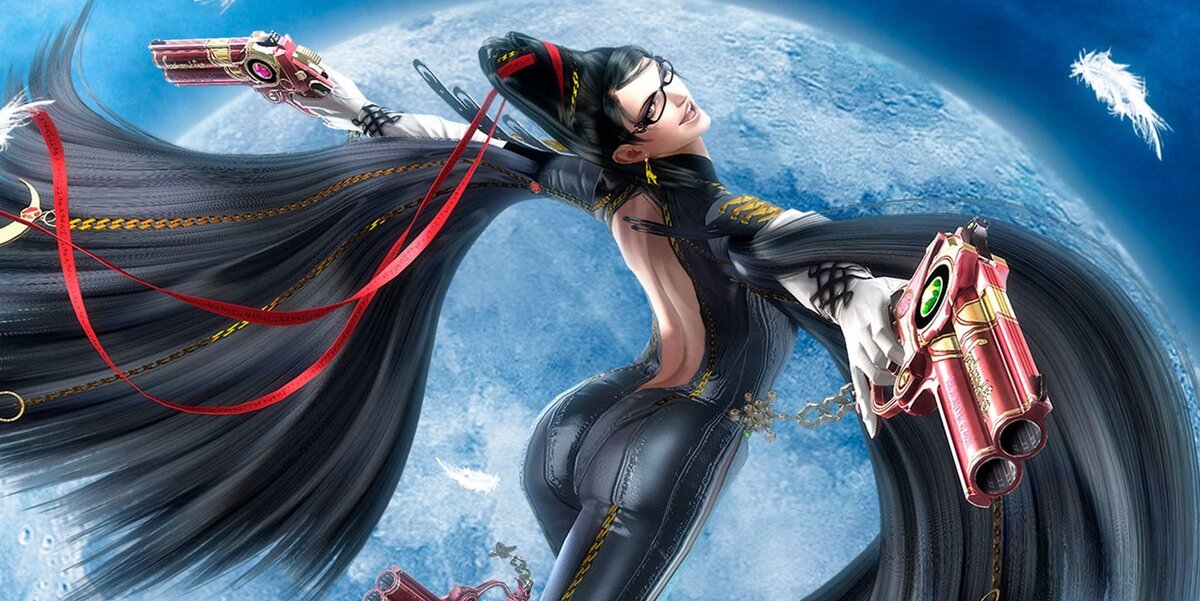
Bayonetta
In recent years, there has been a shift in focus towards inclusivity. Companies are heeding the call for less sexualization and more realistic portrayals of heroines. The trend is moving away from fanservice, with female characters being depicted in less revealing forms and more practical attire.
Take the Mortal Kombat series as an example | the female characters’ costumes have progressively become less revealing. In Mortal Kombat X, scanty outfits were nearly eliminated, and in Mortal Kombat 11, they appeared to be completely gone, only to be reintroduced as paid downloadable content. In the latest installment, Mortal Kombat 1, there are no provocative female costumes, not even as DLC.
Other fighting game developers have followed this trend. This includes the team behind the Dead or Alive series, which was known for its overtly sexualized female characters. Yohei Shimbori, the director of the sixth installment, stated that more conservative costumes are more appropriate for hand-to-hand combat. Additionally, the exaggerated breast physics, which were once a notable feature and could be adjusted in the game’s settings, have been toned down for realism.
During the second testing phase of Zenless Zone Zero, the Chinese studio miHoYo made alterations to some character designs. Nicole’s bust size was reduced, and her physique was modified to minimize movement. Additionally, the character models were updated; Soldier 11 now wears higher stockings that cover her hips entirely, and Nekomata has shorts that are fully covered. Some Chinese artists claim, that the management requires you to create the most explicit design of female characters, which should cause people to be very excited. But China’s strict laws are forcing companies to strike a balance.

Zenless Zone Zero
The creators of the Skullgirls fighting game have issued an update that altered certain images and aspects of the characters’ attire. Although the female characters’ costumes were quite revealing, the developers made minor adjustments, such as substituting torn clothing with intact pieces. However, these changes were not well-received by fans, who expressed their discontent by posting negative reviews on the game’s Steam page, resulting in over 5000 negative reviews within a few days.
However, the developers’ rejection of explicit images upsets not only gamers. While some journalists make fun of the fans, labelling them as “idiots” and “virgins,” actors, celebrities, and even some audacious authors are advocating for the return of sexy characters in fashion.
For instance, Stephanie Joosten, who portrayed and voiced the sniper Quiet in Metal Gear Solid 5 | The Phantom Pain, has addressed the controversy surrounding her character eight years post-release. The actress expressed that she has reviewed diverse opinions about her role, yet maintains that Hideo Kojima’s creative choices were appropriate. Joosten asserts that there is no issue in crafting a visually attractive female character, and it should not be conflated with real-world perceptions.
“I think video games are fantasy worlds where we escape. And I respect the decision to make Quiet look just like that, even if it’s a very revealing one.”
Stephanie Joosten
The actress acknowledged that she still finds Quiet’s costume impractical and was initially embarrassed by the character’s first concept art. Nevertheless, she embraced the role without reservation and reiterated her stance on differentiating video game characters from real-life individuals.
A similar opinion was shared by model Carrie Ann-Hoskins, who played the role of Sonya Blade in Mortal Kombat 3. The actress criticized the last parts of the fighting game for making her character unsexy | she did not like the flattened face and small breasts. Conversely, Ann-Hoskins expressed admiration for the Sonya Blade statue from Iron Studios; despite the figure being fully clothed, she considers the depiction to be more appealing.
Former game designer Mark Kern, known for his work on StarCraft, Diablo 2, and World of Warcraft, criticized Blizzard following the announcement of Diablo 2 | Resurrected. He described the remaster as a “soulless corporate remaster” and criticized its censorship. Kern was particularly displeased with the decision to make the Amazon character less provocative, noting that in 2000, the developers had intentionally designed some female characters to be explicit as part of the game’s atmosphere.
“It’s ridiculous. Diablo 2 has always been grown-up, dark, and a little sexualized. It’s a rough gothic fantasy setting. To change it is to create a different game. Stop buying endless AAA remakes. Switch to indie games»
Mark Kern
Apex Legends writer Tom Casiello created the character Loba, who rapidly gained popularity, particularly in fan erotic art. He explained that, in his view, game developers are often hesitant to create beautiful female characters, which he believes is a form of sexism comparable to the use of provocative clothing.
“I wanted to add a female character who is aware of her sexuality and likes to look good in the morning.”
Tom Casiello
Developers from Japan and Korea have the least problems with sexy characters. For example, the head of the Dragami Games studio, Yoshimi Yasuda, promised that buyers of the upcoming Lollipop Chainsaw remake do not have to worry about the provocative appearance of the main character – she will definitely not be changed. Moreover, the developer promised a new “obscene outfit”, although he did not share the details. In the original, there were almost two dozen costumes, some of which contained the word “sexy”, and among the elements of clothing were short skirts, torn stockings, and tight dresses. Whether they will all make it into the final version is still a mystery.
Capcom also clearly understood how to attract Resident Evil fans. In the advertising of the eighth part, the image of Lady Dimitrescu was actively used – a huge three-meter vampire, who after the first teaser became the heroine of erotic art. Moreover, in the game itself, this character appears, in fact, only in one chapter. However, even three years after the release of Resident Evil Village, Dimitrescu is actively cosplaying, drawing, and making adult videos with her.
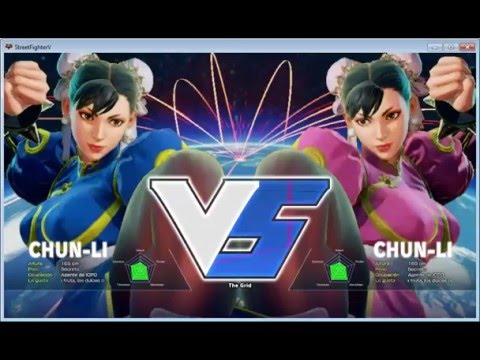
The creators of Street Fighter 6 were not afraid of spicy scenes. The fighting game is full of angles and animations, where the camera focuses on the perfect female form, and later the authors released a collection of classic skins. At the same time, in the fifth part, Capcom still reduced too active chest swaying, which angered fans.
One of the latest instances involves the South Korean studio Shift Up, which centered the marketing of its action game Stellar Blade around an attractive heroine. The debut trailer highlighted her striking chest physics and form-fitting suit, but subsequently, the creators appeared to retreat from this focus. Despite this, there was no significant backlash, allowing the heroine to maintain her initial design.
Kim Hyun-tae, the game director for Stellar Blade, remarked that in recent years, a unique sentiment towards game characters has emerged, with the industry showing reluctance to create aesthetically pleasing characters. He contends that female characters should embody beauty, approaching an ideal, yet their portrayal should still be within appropriate bounds.
“When I play, I want to see someone who looks better than me. I don’t want to see someone ordinary, I want to look at something closer to the ideal. I think that’s very important for gaming as a form of entertainment. At the end of the day, it’s adult entertainment.”
Kim Hyun Tae
The developer even explained why the heroine has such noticeable buttocks. It’s very simple | most of the time the player looks at the girl from behind, so special attention was paid to this part of the body. And the use of fetishism elements in different costumes of the Stellar Blade heroine, according to Hyun Tae, will only have a positive effect. Because it solves two problems at once | it advertises the game and allows players to create an attractive image of a girl to their taste.
Discussions of Stellar Blade are very reminiscent of another game – Nier | Automata. Even after 7 years, her character 2B remains a favorite of cosplayers and erotic gaming videos, although the plot in the game is quite serious and has nothing to do with female sexuality. Yoko Taro, the creator of Nier, has expressed in interviews his appreciation for beautiful girls in provocative outfits, which is reflected in the appearance of his heroines.

Nier | Automata
Observing the remakes of Final Fantasy VII is quite fascinating, as the creators attempt to cater to diverse expectations. Initially, the Final Fantasy VII Remake sparked controversy due to modifications to Tifa’s appearance, including a reduction in breast size, the addition of a black bra beneath her top, and dark shorts under her skirt. Although fans expressed their displeasure, the developers justified the changes by stating that the original design would not translate well into the action sequences of the modern game.
Years later, Final Fantasy VII Rebirth was introduced, featuring an episode where players could outfit female characters in scantier beachwear, providing multiple choices. This move was well-received by both gamers and journalists, who set aside previous concerns about sexualization to commend the depictions of Tifa and Iris on social media.
However, Square Enix managed to provoke fan ire once more. A peculiar patch for Final Fantasy VII Remake, released four years post-launch, introduced more conservative attire for Tifa. The alterations were subtle, adding an extra T-shirt to cover her chest, without focusing on female anatomy. This change, alongside ongoing grievances regarding PC optimization, has left fans particularly frustrated.
In 2022, scientists came to the conclusion that the notion that attractive heroines in video games lead to sexism among gamers has been challenged. Researchers analyzed 18 scientific studies examining the impact of sexualization in games, focusing on aggression towards women, the proliferation of sexist attitudes among men, and the influence on depression and anxiety regarding appearance in the context of beautiful characters. Ultimately, the studies revealed no substantial connection between video games and sexist attitudes.
But even though sexualization is fought zealously, there is still a demand for attractive female images. For instance, the American rapper Doja Cat, who has been nominated for numerous Grammy Awards, readily made an appearance in the well-known game House Party. You can’t sleep with the singer, you won’t even be able to undress her – only stare at her in a revealing outfit. The cost of this collaboration for the authors remains a matter of speculation.

In 2023, Blizzard surprised everyone with a Diablo 4 advertisement featuring Megan Fox. Dressed provocatively, she invited players to capture their characters’ most dramatic deaths. This move was unexpected as the company had previously eliminated any sexual connotations from its games. The campaign was a success, with Diablo 4 quickly becoming Blizzard’s fastest-selling game.
The topic is a recurring one, yet the global situation remains unchanged | some studios forsake erotica, while others fill the emerging void. The gaming industry’s changes tend to be polarizing, but there’s potential for an equilibrium over time that could please both developers and players.