
The bioluminescent glow of Pandora is usually sold as a spiritual paradise where every living thing exists in a state of perfect harmony. We see the Na’vi connecting their neural braids to trees and animals, claiming they are speaking to their goddess. From a certain distance, it looks like a beautiful ecosystem built on mutual respect. However, if you strip away the cinematic lighting and the romanticized tribalism, a much darker biological reality emerges.
Eywa is not a deity. Eywa is a massive, planetary scale parasitic fungal colony that has achieved total biological dominance through chemical manipulation and selective genocide.
Neural hooks and hallucinogenic control
The feeling of oneness that the Na’vi describe is the primary mechanism of the parasite. In human history, many civilizations used substances to reach what they called a divine state. Whether it was the gases at the Oracle of Delphi or various hallucinogenic plants used in the Americas, the goal was always the same. Pandora is simply a world where the hallucinogen is integrated into the hardware of the inhabitants.
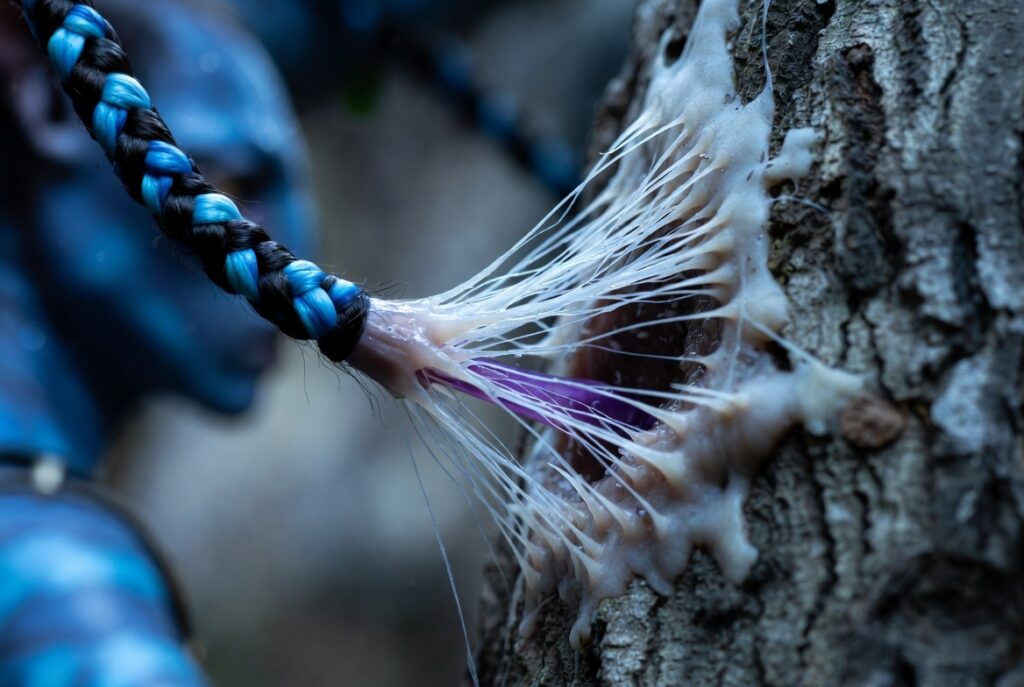
When a Na’vi plugs into the network, they aren’t experiencing a spiritual awakening. They are receiving a high-dose neurochemical surge designed to induce a sense of euphoria and belonging. This is the ultimate training tool. By rewarding the host with a chemical high, Eywa ensures that the animals and the Na’vi will keep coming back to the network. It is a way to condition the biosphere to protect the fungal core. The visions of ancestors and the voices in the trees are likely just stored data fragments replayed in the host’s brain to maintain the illusion of a shared consciousness.
The evolutionary bottleneck of the neural link
One of the most disturbing aspects of Pandoran biology is the universal presence of the neural connector. Every single piece of macrofauna we see on the planet features a tentacle-shaped interface. In a normal evolutionary environment, you would see multiple branching lines of development. You would see animals that evolved differently or lacked this specific physical trait. The fact that every surviving species has a “USB port” suggests a massive, violent selective pressure in the planet’s past.
Eywa effectively acted as a gatekeeper for evolution. Any species that did not allow itself to be connected to the fungal network was likely identified as a threat or a waste of resources and subsequently wiped out. We saw Eywa summon the entire biosphere to fight off humans in the first film. It is easy to assume she did the same to any indigenous species that tried to evolve independently. What we see on Pandora today is the result of millions of years of biological purging. Only the slaves of the fungus remain.
A planetary scale super organism
This fungal entity mirrors some of the largest organisms on Earth, like the Armillaria ostoyae colonies in North America. These massive fungal mats can cover thousands of acres, connecting entire forests through underground mycelial networks. On Pandora, this concept is pushed to the limit. The entire planet is one interconnected mat of electrochemical signaling.
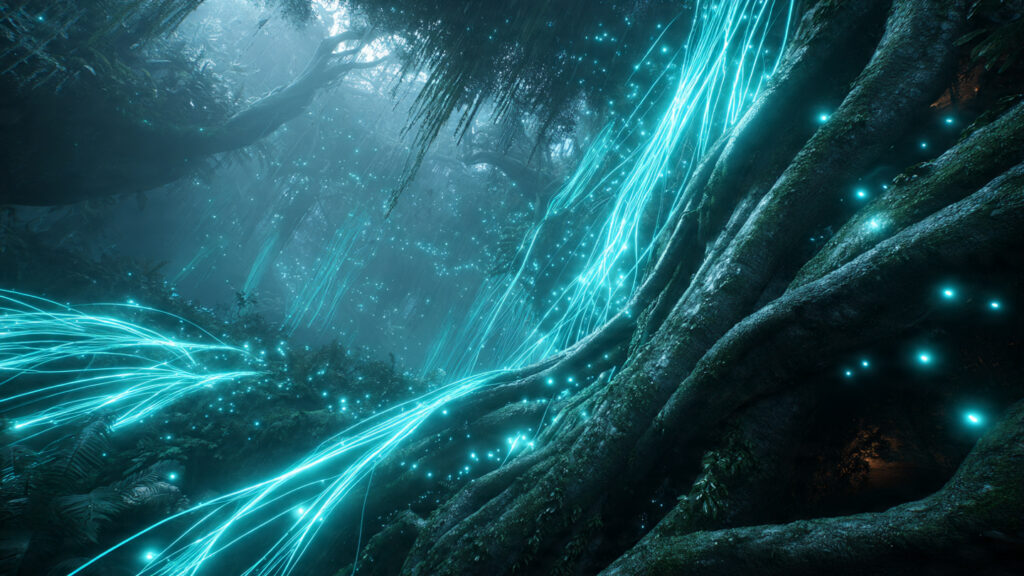
The ritual of feeding the dead to the trees is not a spiritual transition to Nirvana. It is a waste management system for the fungus. Eywa gets her nutrients from the hosts she has made addicted to her neurochemicals. Each death is just another deposit into the fungal bank. The Na’vi believe they are being reborn into a collective spirit, but they are actually just being digested by the planetary hive mind. The fungus doesn’t provide shelter or food out of kindness. It maintains the biosphere because it needs the biomass to keep flowing toward its own centers of growth.
The Jake Sully antibody theory
The most terrifying possibility is that Eywa is sentient and capable of long term tactical planning. When Jake Sully arrived in an avatar body, he was a foreign object in the system. Instead of destroying him immediately, Eywa used her seeds to signal that he was the chosen one. This was an immune response to a new kind of infection.

The fungus accepted the outsider to learn from him. By absorbing Jake, Eywa was able to adapt to human tactics and military strategy. He wasn’t a savior; he was a bio-countermeasure. The system used a piece of the invader’s own DNA and mind to build a better defense. If the humans return in future cycles, they aren’t just fighting blue giants with bows and arrows. They are fighting a planetary mind that has already copied their move set.
Corporate greed and the missed opportunity
The humans in the story are framed as pure evil, obsessed with mining rare minerals or harvesting whale fluids for immortality. This focus on corporate villainy distracts from the true horror of the planet. If the corporations were competent, they would stop trying to destroy the villages and start investigating the fungal takeover.
Why kill a whale for its fluids when you have the technology to clone avatars? The humans are written as incompetent to serve the plot, but their greed is nothing compared to the absolute control Eywa exerts over the Na’vi. The entire planet is a slave to a fungus that demands their dead and dictates their evolution. If we ever see the facade fall, the story shifts from a struggle for resources to a desperate attempt to escape a biological trap.