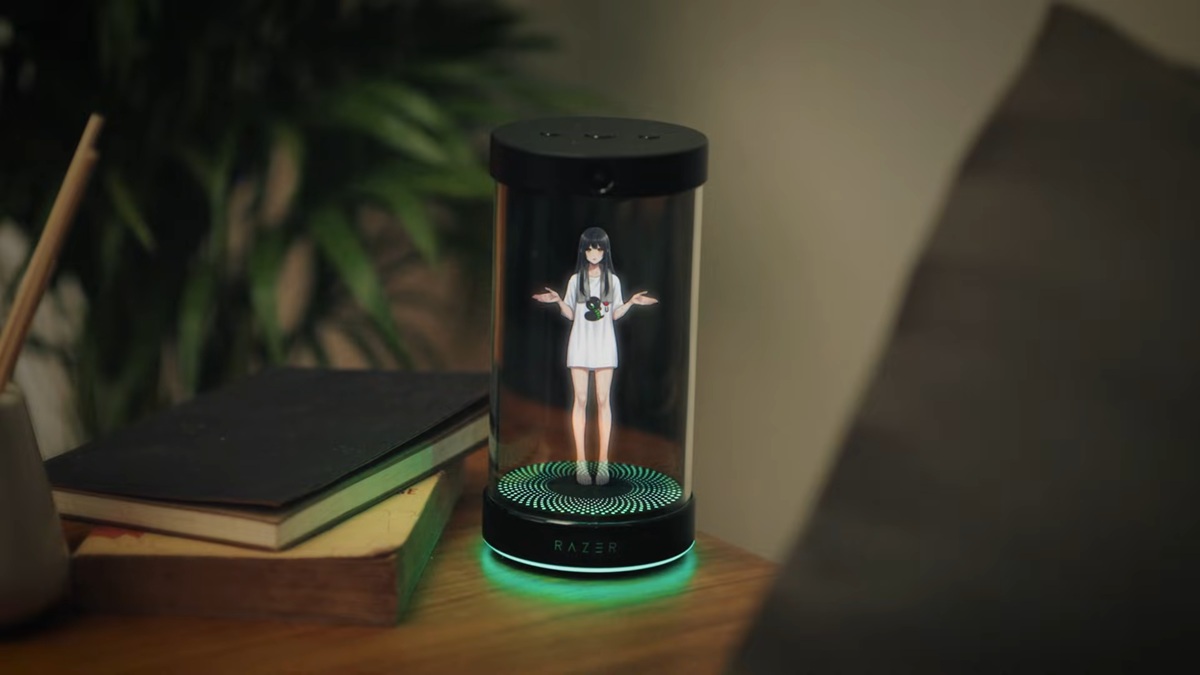
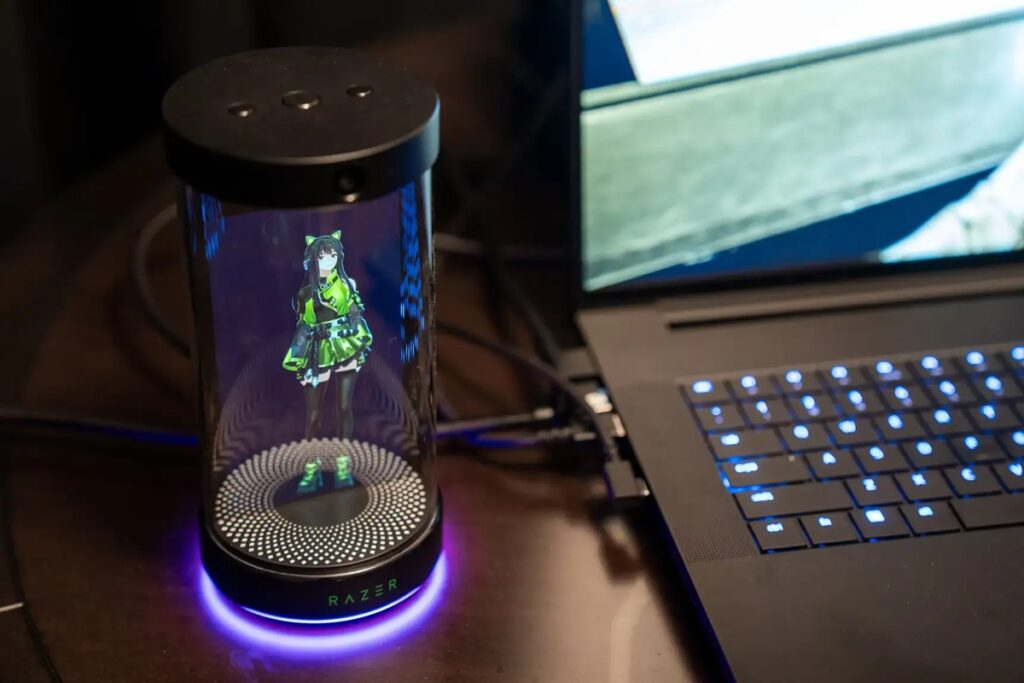
Razer has a habit of showing off hardware that looks like it belongs in a high budget sci-fi flick and then actually following through with a production run. This year the spotlight hit Project Ava. This isn’t software tucked into a corner of your monitor anymore. It is a physical transparent capsule sitting on your desk. Inside that glass tube a three dimensional avatar flickers to life to act as your digital companion and gaming coach.
The hardware looks like something stolen from a corporate research lab in Neo-Tokyo. It is sleek and unapologetically futuristic. The goal is to move beyond the flat experience of a standard voice assistant and give players something that feels present in the room. You can choose from a few preset avatars right now but the company is already whispering about user generated models.
Grok and the Glass Capsule
Under the hood this holographic assistant runs on the Grok model from xAI. During recent demonstrations the personality was a bit unpredictable. Sometimes it would give sharp advice on a Battlefield match and other times it would spiral into long rands about things that had nothing to do with gaming.
The environment at the trade show didn’t help matters. Background noise made communication a struggle but that is standard for any AI voice tech in a crowded room. Razer is betting that in a quiet home office the interaction will feel more natural. The $20 refundable deposit is already live for those who want to reserve a spot in the second half of 2026. It is a small price to pay to get in line for the first wave of household holograms.
The Camera is Watching You Eat
One of the more interesting additions to this version of Ava is the integrated camera. Previously the assistant only knew what was happening inside your game files or on your screen. Now it can actually see you. Razer claims this helps the AI offer lifestyle advice.
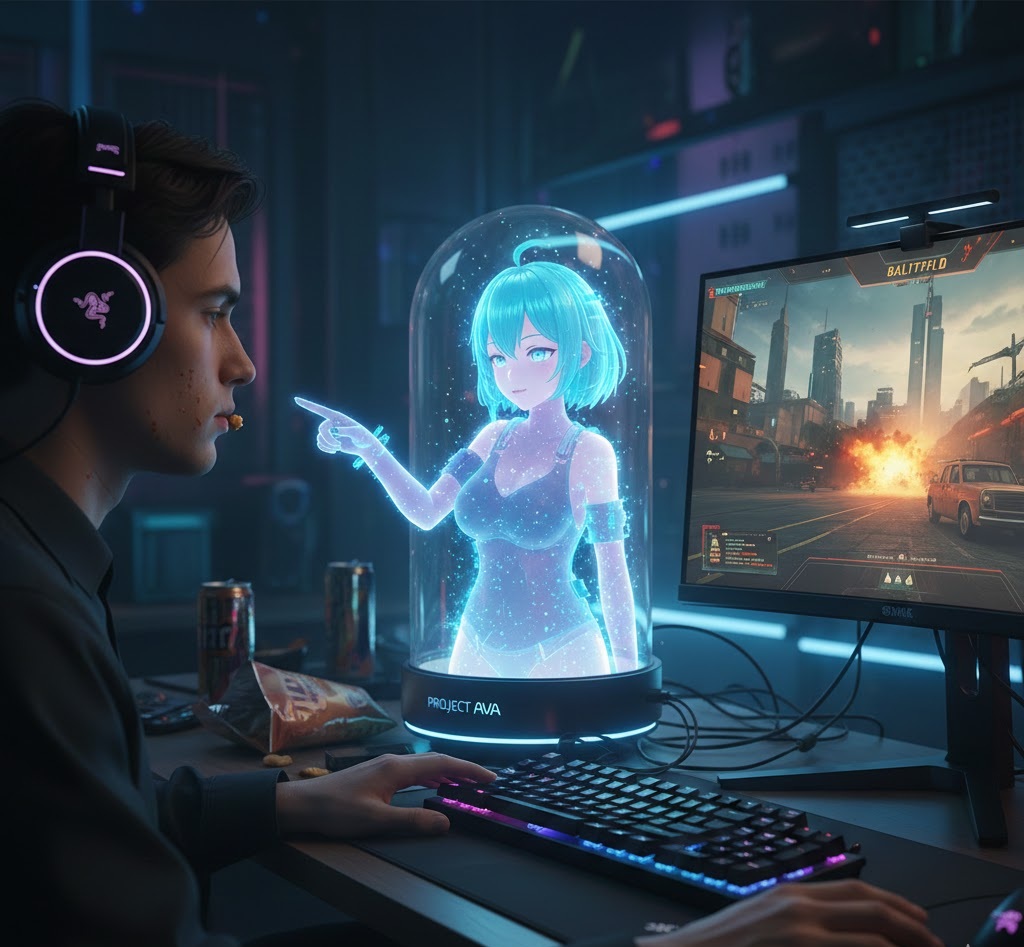
It might check your outfit before you head out or politely mention that you have some snack residue on your face after a marathon gaming session. There is a certain level of utility there but it also pushes the device deeper into the realm of digital surveillance. It is a tradeoff that the modern gamer seems increasingly willing to make in exchange for a more personalized synthetic relationship.
The Dystopian Distance
There is a strange tension in the concept of a desktop waifu. On one level it is a functional tool for checking email or suggesting dinner options. On another level it represents a massive shift in how we handle loneliness. A holographic companion is close enough to look at but infinitely distant because you can never actually touch it.
This creates a psychological dissonance that might be more harmful than helpful for some. If you are already struggling with a lack of a social life a flickering light in a tube might just emphasize the void. There is a concern that this kind of tech leads to a dead end for the human psyche. It offers the appearance of companionship without any of the actual substance.
Biorobots and the Long Wait for Reality
If we are looking for a true synthetic partner the current holographic tech feels like a halfway house. Some would argue that an AI driven robot with physical drives would be a more honest solution. At least then you could have a physical presence to hug or interact with rather than just a collection of photons.
We are likely looking at a 2040 or 2050 timeline before we see biological bodies that look close enough to human to avoid the uncanny valley effect. Until then we are stuck with these digital ghosts. Razer is giving us a preview of that future today but it feels like a hollow victory. The technology will likely reach its peak by the end of the century but for now we just have a very expensive light show on our desks.
Razer Project AVA Official Reveal This official teaser provides a visual look at the 5.5-inch holographic display and the different avatar personalities Razer is launching in 2026.