“The dead don’t quit, they just enter the next development cycle.” — Aeon Dogma Debug Log
The chrono-clocks are ticking down on Total War | Warhammer III. The digital lifespan of the game, a saga fraught with glitches, broken promises, and the desperate energy of developers trying to fix a ship that launched listing, is approaching its final, inevitable shutdown sequence. The final payload—the much-delayed Lords of the End Times DLC featuring the Great Necromancer, Nagash—isn’t a celebration. It’s the game’s own funeral dirge.
This isn’t just another expansion pack. This is the ultimate symbolic echo of failure, a dark mirror reflecting the worst mechanical choices of the series. Creative Assembly (CA) has completed the circle, returning to the very design philosophy that made the 2022 launch of Warhammer III feel like one of the most shameful drops in Total War history.
Let’s jack into the server logs and analyze the chronic instability of this final chapter.
System Failure at Launch | The Original Sin
Remember the winter of 2022? It felt less like a game launch and more like a system crash. Total War | Warhammer III promised to be the triumphant conclusion, the magnificent culmination of a trilogy. Instead, it was delivered half-baked, technically unstable, and worse than its predecessors in nearly every systematic respect. The community stepped in to fix the localization because the main office was clearly debugging its own infrastructure.
The core promise, to improve the classic formula, was not just unmet; it was aggressively reversed. A strange, disjointed narrative campaign, depressing technical stability, and the baffling introduction of the Ogres faction set the tone | This is a new age, and it’s worse than the Old World.
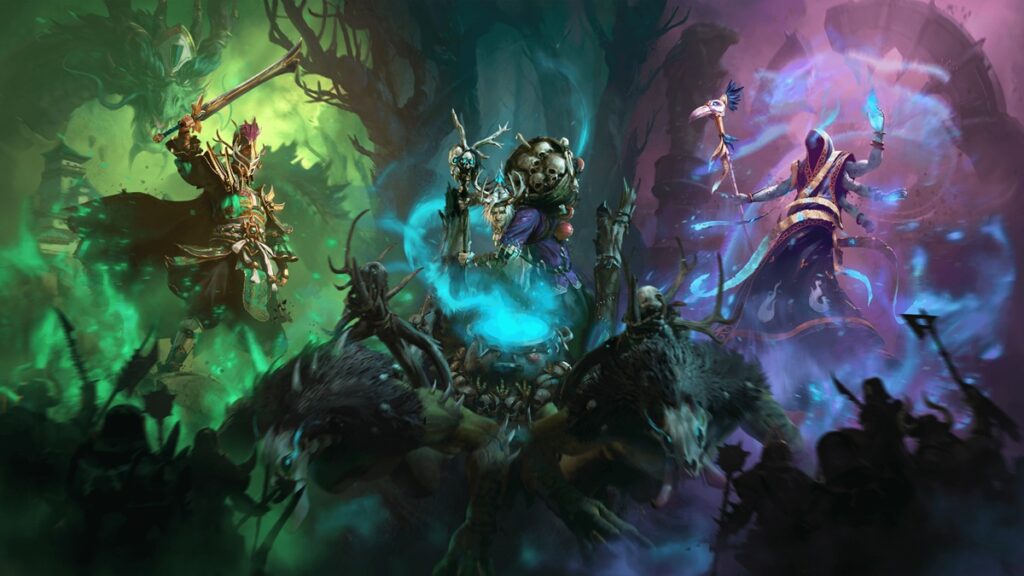
Then came the chaos. Disjointed updates, chronic bugs, and the abysmal Shadows of Change DLC, an expansion so thin and overpriced it felt like a corporate apology dressed in expensive digital silk. Heads rolled, public apologies were issued, and the player base started looking for other servers to inhabit.
The Long Dark Debug Cycle
Credit where it’s due | Creative Assembly Sofia, the team often tasked with salvaging the core product, did not quit. They stabilized the signal, slowly, agonizingly. April 2024 was a critical juncture, bringing the Thrones of Decay add-on and a substantial free update. The most crucial fix? Free access to the Immortal Empires mega-campaign for all previous trilogy owners. This was the lifeline that should have been thrown years earlier.
But the chronic instability persists. The “spaghetti code” issue is legendary—the Sofia team once managed to break fundamental game mechanics with an unrelated patch. Beyond that:
- Siege Battle Brain-Death: The implementation remains dull and unsatisfactory, a heavy legacy carried over from Rome.
- Late-Game Difficulty Spikes: The campaign difficulty is unbalanced, collapsing into tedious, unrewarding slogs rather than tactical masterpieces.
- The Modder Dependency: The community has become the unpaid debug team, providing essential fixes for everything from AI behavior to unit pathing.
The late 2025 Tides of Torment update tried a new payload strategy—three smaller, focused content packs instead of one large one, targeting specific faction reworks (Norsca, Slaanesh, High Elves). This decentralized approach was a smart tactical move to appease niche audiences, finally fixing the nightmarish basic mechanics of factions like the Norscans.
The Great Content Heist
Let’s review the manifest. In four years since launch, owners of the full trilogy have received a total of 19 Legendary Lords, one Chaos Dwarf faction, and seven sub-factions (three of which are the aforementioned Chaos Dwarfs).
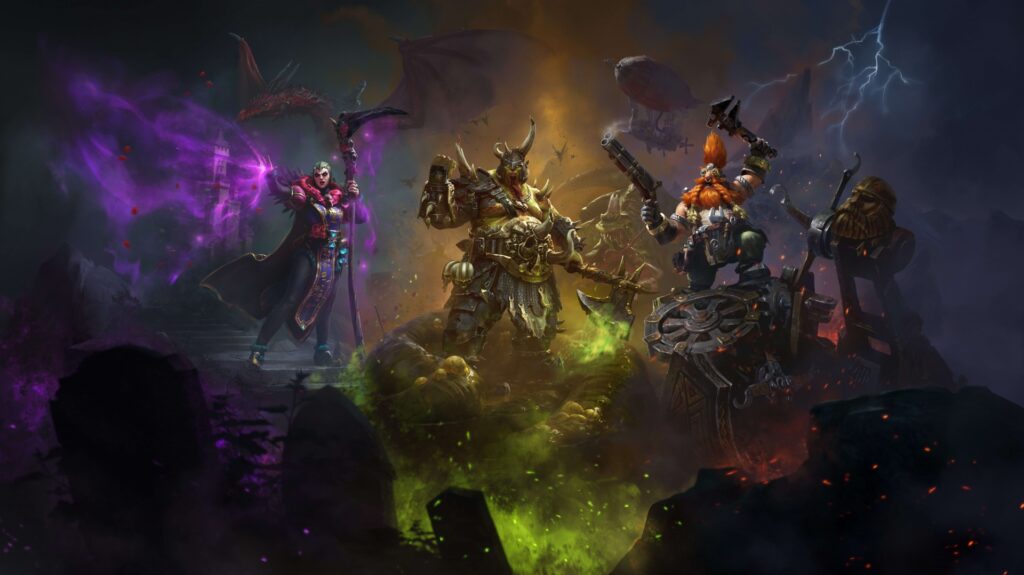
This pace, post-Thrones of Decay, feels like a respected office’s strategy | cut the content before release, then sell it back as new, sprinkling in nonsense collected on the knee. Even the one playable mode was delayed. The base game is expanding, yes, but the chronic, systemic problems—the dull sieges, the end-game tedium, the tactical blandness—remain untouched, festering in the code.
The glacial pace is the true killer. The next drop, Lords of the End Times with Nagash, is slated for Summer 2026. That is another six months of dead time, another six months of hoping the game will finally achieve the form it should have had at launch.
Nagash | The Re-Skin of Failure
And here is the final, cynical punchline.
The Nagash DLC is not just late; it is a regression. The Great Necromancer will arrive as a faction with a single Legendary Lord, some customization, and unique mechanics.
Does that sound familiar?
It should. It’s a literal re-skin of the Chaos Demons, widely considered the most poorly implemented and least engaging faction mechanics in the entire Total War | Warhammer trilogy. CA is ending the trilogy by returning to the exact mechanical well that was poisoned from the start.
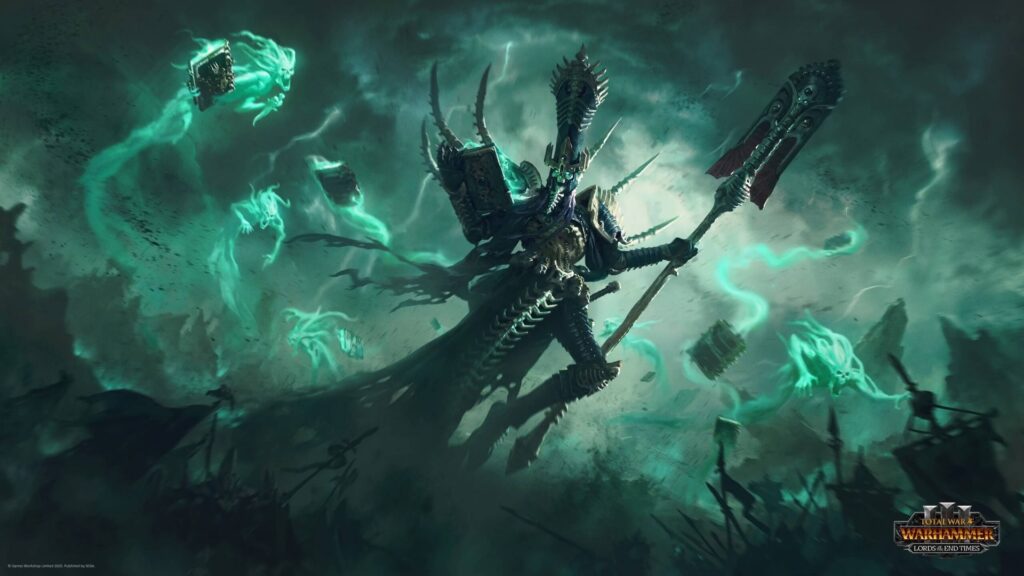
Symbolically, this is not an epic conclusion. It is a shrug.
The Succession Protocol | Total War | 40,000
The ultimate proof that Nagash is the period, not the ellipsis, came just days after CA offered hollow assurances of continued Warhammer III support. SEGA dropped the bomb | Total War | Warhammer 40,000 is announced, complete with the promise of a new engine and galactic-scale war.
This announcement is the explicit signal that the development cycle for the Old World trilogy is done. The best code and the highest-priority resources are already being shifted to the new space millennium. Nagash is simply the final, necessary content dump before the servers are effectively abandoned.
Warhammer III will be remembered as the point where the Total War formula choked on its own spaghetti code and poor design decisions. It buried itself with its own unsuccessful updates, and the announcement of Nagash, a recycled, poorly conceived faction concept is merely the final scratch of the shovel on the grave. It is a shame, a massive failure of execution that will haunt the legacy of the otherwise brilliant Warhammer series for years to come.