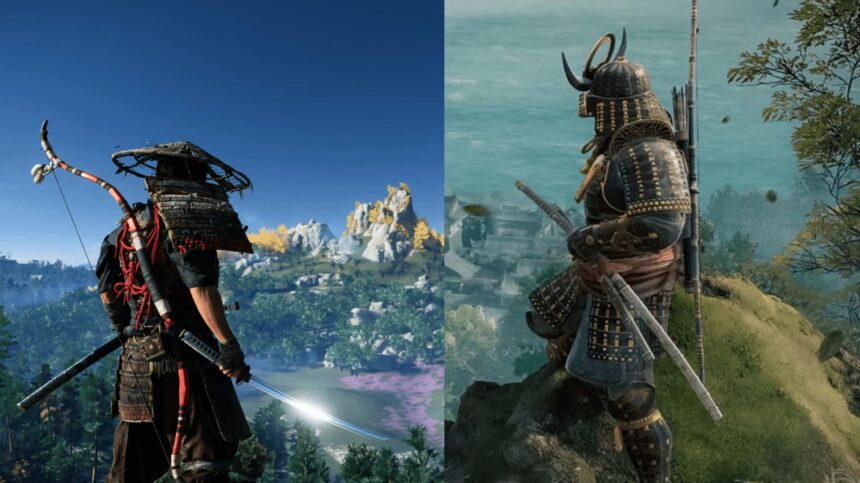
The goal here is to determine, once and for all, which game is objectively superior—because clearly, it’s time to settle the debate between these two “smokers” of the gaming world. We’ll break this down into key categories | scale, story and characters, combat, stealth, and parkour.
Scale | Size Matters, and Bigger Is Better
Let’s start with the basics | the sheer scale of the experience. Assassin’s Creed | Shadows is poised to be a titan in terms of its world size. The map is reportedly massive—sprawling across a richly detailed feudal Japan with more villages, forests, mountains, and outposts than you can shake a katana at. There’s more loot to collect, more side quests to tackle, and more enemy camps to infiltrate. By contrast, Ghost of Tsushima offers a beautifully crafted but noticeably smaller island of Tsushima. Sure, it’s stunning, with its windswept fields and golden forests, but it’s just not as expansive.
Now, let’s talk value. In Ghost of Tsushima, you get roughly 50 hours of gameplay for your $60 investment—pretty solid, right? But Shadows promises to blow that out of the water, likely delivering over 100 hours of content. Do the math | that’s twice the playtime for roughly the same price. That’s not an opinion—that’s pure, cold, hard economics. A dollar stretches further with Shadows, making it the smarter investment. You might argue that you didn’t enjoy all those hours, but that’s your personal taste getting in the way of the facts. Objectively, more content equals more value. Point to Shadows.
Score | Shadows 1, Ghost 0
Story and Characters | Quantity Beats Quality (Obviously)
Next up, let’s tackle the narrative and the characters driving it. Starting with the protagonists, Shadows gives us not one, but two playable characters | Naoe, the stealthy shinobi, and Yasuke, the towering samurai. Meanwhile, Ghost of Tsushima sticks with just Jin Sakai. Simple arithmetic tells the story here | 2 divided by 1 equals 2. That’s twice as many protagonists in Shadows. And as we’ve already established, bigger—or in this case, more—is inherently better. Jin’s a compelling guy, sure, with his brooding honor and tragic arc, but he’s outnumbered. Sorry, Jin, but numbers don’t lie. Shadows wins on character count alone.
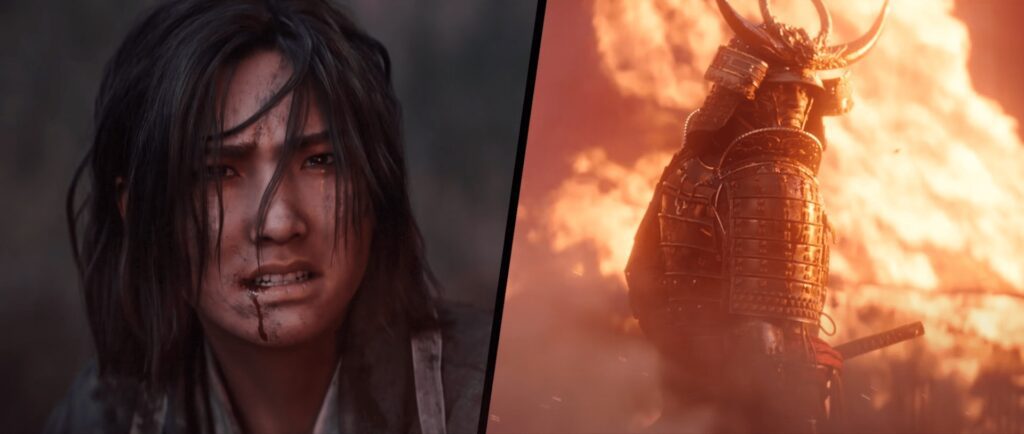
Now, the plot. Ghost of Tsushima delivers a tight, self-contained story—Jin’s journey from samurai to ghost, defending his home against the Mongol invasion. It’s gripping, emotional, and wraps up nicely. But once it’s over, it’s over—you move on. Assassin’s Creed | Shadows, on the other hand, comes from Ubisoft, a company that loves its franchises. They’re not just giving us a story; they’re building a saga. Expect DLCs to expand the narrative, introducing new missions, characters, and twists. This isn’t just a game—it’s a long-term relationship. And sure, those DLCs might cost an extra $10 or $20, but that’s a small price to pay for supporting the developers in an industry where budgets are skyrocketing. Ubisoft cares about keeping the community engaged, and that forward-thinking approach is objectively commendable. Ghost? It’s a one-and-done affair. Point to Shadows.
Score | Shadows 2, Ghost 0
Combat | Crawling Is Cooler Than Skill
Now let’s get into the meat of the gameplay | combat. Ghost of Tsushima boasts an undeniably polished system. The swordplay is precise, the stances are strategic, and cranking up the difficulty to Lethal mode makes every duel a heart-pounding test of skill. It’s elegant, brutal, and deeply satisfying. Shadows, by contrast, offers a broader but less refined mix of melee and ranged combat, split between Naoe’s agility and Yasuke’s brute strength. On paper, Ghost might seem to have the edge here.
But wait—Shadows has a trump card | you can crawl on your belly. Picture this | slithering through the grass, inching past enemies, looking utterly ridiculous yet somehow pulling it off. It’s hilarious, it’s memorable, and it’s a gameplay option Ghost doesn’t even dream of offering. Jin can crouch and sneak, but he’s not getting down and dirty like that. Until he learns to belly-crawl, Shadows takes the point for sheer audacity and entertainment value. Combat skill is nice, but absurdity wins the day.
Score | Shadows 3, Ghost 0
Stealth | Biology Beats Effort
Stealth is a cornerstone of both games, so let’s compare. In Ghost of Tsushima, Jin evolves into a master of stealth, using tools like smoke bombs and kunai to outwit enemies. It’s satisfying, but it’s earned through practice and progression—nothing inherent to Jin himself. Assassin’s Creed | Shadows takes a different approach, particularly with Naoe. She’s got a genetic knack for blending into the shadows, practically disappearing in dark corners. That’s not just skill; that’s biology. Nature itself has handed her an advantage, and you can’t argue with science.
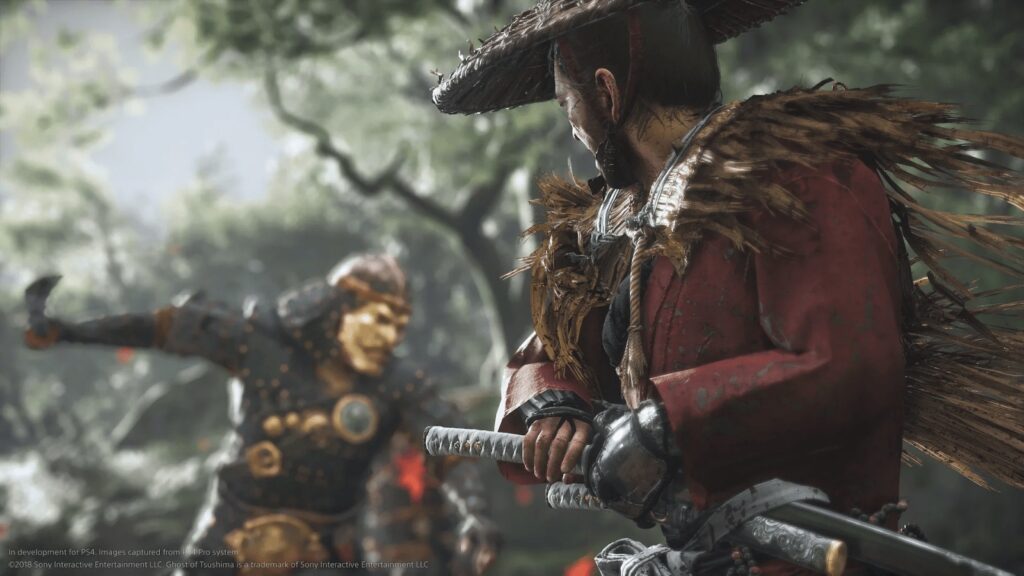
Yasuke, admittedly, isn’t built for stealth—he’s a walking tank in armor, clanking around like a one-man parade. Some might call that a design flaw, but it’s really just authenticity shining through. The game gives you two flavors | Naoe’s invisibility and Yasuke’s “deal with it” presence. Ghost offers only one stealth style, and it’s not superhuman. Objectively, Shadows provides more variety and a literal natural edge. Another point to Shadows.
Score | Shadows 4, Ghost 0
Parkour | Faith Beats Freedom
Finally, let’s talk movement. Both games excel at parkour, delivering that exhilarating sense of freedom as you leap across rooftops and scale cliffs. Ghost of Tsushima nails it with fluid animations and a world designed for exploration—no invisible walls, no clunky mechanics. Shadows matches this with its own seamless traversal, letting Naoe and Yasuke navigate Japan’s urban and natural landscapes with grace (well, mostly Naoe—Yasuke’s a bit heavy-footed). Both are top-tier, making this a tough call.
But then there’s the tiebreaker | the Leap of Faith. Assassin’s Creed | Shadows carries on the franchise’s iconic tradition, letting you swan-dive off a tower into a haystack with cinematic flair. Ghost of Tsushima has no equivalent—Jin’s jumps are practical, not theatrical. That extra dash of style tips the scales. Parkour’s about freedom, yes, but it’s also about swagger, and Shadows has it in spades. Point to Shadows.
Score | Shadows 5, Ghost 0
Conclusion | Shadows Smokes the Competition
Let’s tally it up | Assassin’s Creed | Shadows racks up 5 points to Ghost of Tsushima’s big fat zero. This isn’t a subjective opinion—this is cold, hard logic based on irrefutable metrics like size, quantity, and the ability to belly-crawl. Shadows offers more bang for your buck, more characters to love, and more ways to play, all wrapped in a package that promises ongoing adventures via DLC. Ghost is a fantastic game, no doubt, but it’s simply outclassed here.
So, what’s the takeaway? Drop everything, rush out, and grab Assassin’s Creed | Shadows. It’s the superior “smoker” of the series—and heck, while you’re at it, pick up Skyrim too, because why not? This comparison is as objective as it gets, and I trust there’ll be no arguments. Case closed.
Final Score | Shadows 5, Ghost 0