






EXCAVATION Nº 0020 · EXTINCT WORLDS
World: Bastion, Anthem
Period: 2019 to 2026 (real world)
Status: Extinct
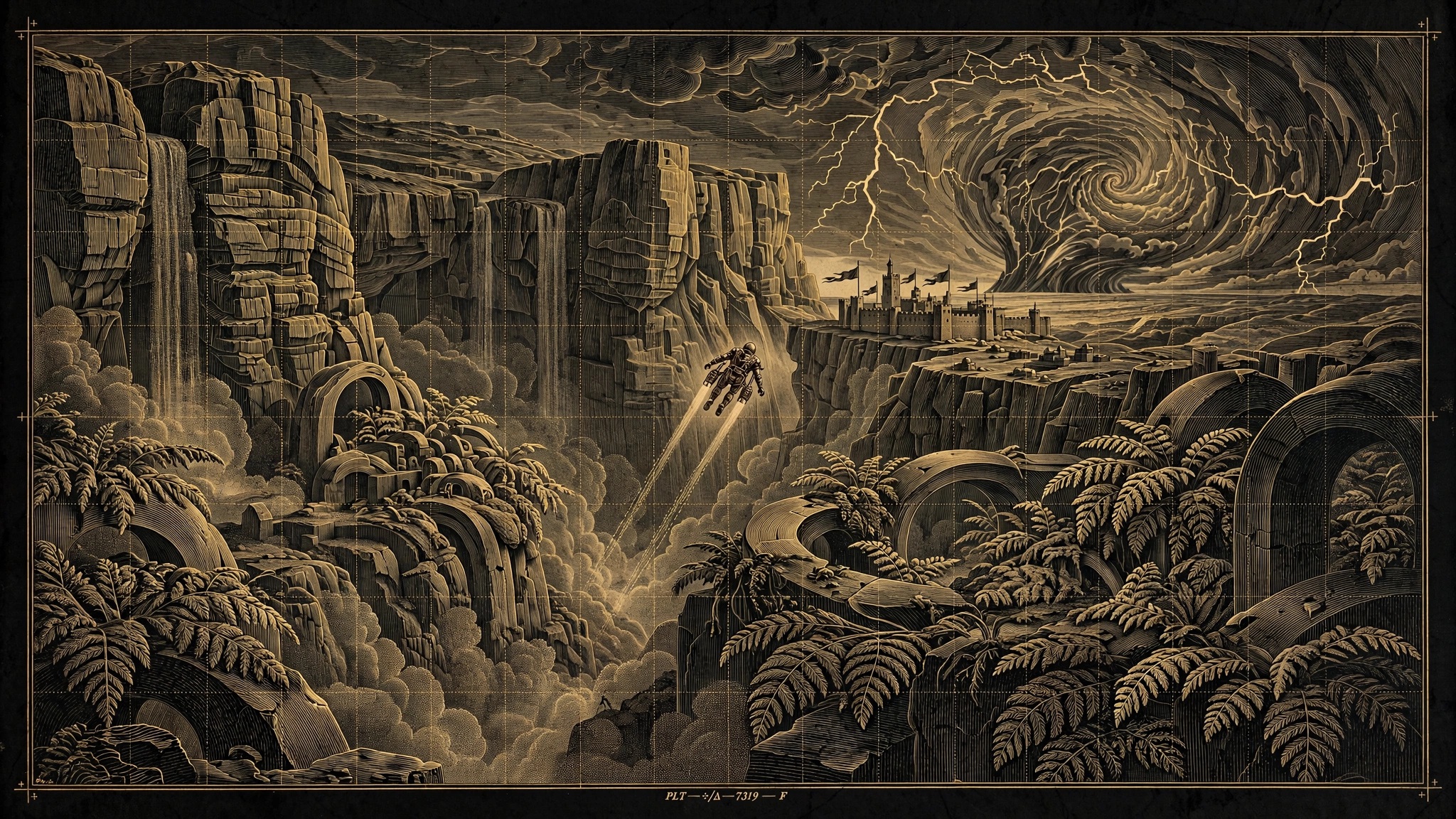
On 12 January 2026, the planet Bastion ceased to exist. Its jungles and waterfalls, its walled frontier town, its ancient ruins and its storm-wracked wilderness had been home to thousands of players. That day the servers that held them were switched off by their owner, Electronic Arts, and the world went with them. Anthem had been designed to work only online. There was no offline mode, no local version and no way for the people who had bought it to keep playing. A game that had been sold to more than five million people became, overnight, a box that opened onto nothing.
This was not an obscure death. Anthem was made by BioWare, the studio behind Baldur’s Gate, Mass Effect and Dragon Age, and it had been launched with the full weight of one of the largest publishers in the world. Yet it lived only seven years, and for five of them it was waiting for a rescue that was cancelled.
The Extinct Worlds department excavates games whose servers have gone dark. The Institute has already studied a world that collapsed in WildStar, and a world brought back from the dead in City of Heroes. Anthem is a third kind. It is a world that never got the chance to grow up, ended by a decision rather than a collapse, and its death changed the argument about whether such worlds should be allowed to die at all.
I. The World That Was Promised
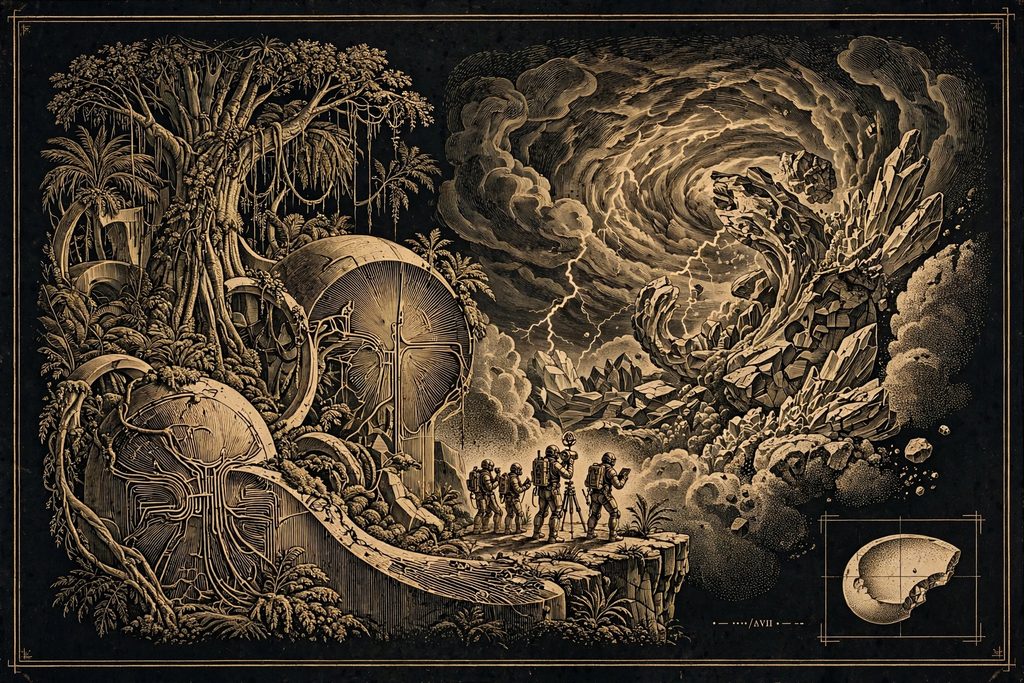
Anthem was revealed at a press event in June 2017 to great excitement. Players would become Freelancers, pilots of armoured flying exosuits called Javelins, on a wild and dangerous planet called Bastion. The world had been left unfinished by its creators, ancient beings known as the Shapers. They had used a mysterious force called the Anthem of Creation to make the world, and then disappeared, leaving behind relics, ruins and runaway storms of raw creation called Cataclysms. Humanity survived on the frontier, in walled settlements such as Fort Tarsis, threatened by the militaristic Dominion and the alien Scars.
The setting belonged to the family of myths the Institute described in The Civilization Beneath Every Civilization. It was a world built on the unfinished work of vanished makers, whose powerful tools the present could barely control. The flight was the game’s great achievement. Javelins soared through canyons, dived beneath waterfalls and skimmed over jungle canopies, and many players and critics agreed that it felt wonderful.
Behind the scenes, the world was in trouble. Development had begun in 2012 under the internal codename Dylan, and for years the game was known as Beyond. Weeks before its public reveal, it had to be renamed because of trademark problems. Its engine, Frostbite, was built for shooters, not for an open world of flying exosuits, and fought the team at every step. Leadership and direction changed repeatedly. According to the account later published by the journalist Jason Schreier, much of the game that players actually experienced was built in its final year and a half.
II. The Launch
Anthem was released on 22 February 2019 for PC, PlayStation 4 and Xbox One. The reviews were mixed. Critics praised the flight and the combat but found the missions repetitive, the story thin and the endgame shallow. Players reported technical problems, long loading screens and a loot system that rarely felt rewarding. The game sold more than five million copies over its life, but it fell short of Electronic Arts’ sales expectations.
Within weeks, the journalist Jason Schreier published a long investigation into the game’s development for Kotaku. It described years of shifting direction, an engine poorly suited to the game, stress and burnout among the team, and a studio culture that relied on what staff called “BioWare magic”, the belief that everything would come together at the end. For many players, the account explained what they were seeing. The world they had been given looked finished on the surface, but much of what had been promised was missing underneath.
III. The Reinvention That Never Came
BioWare did not abandon the game at once. In February 2020 it announced plans for a substantial reinvention, widely known as Anthem Next or Anthem 2.0. A small team worked on reworking the game’s core systems, from loot to missions to the structure of the world. The community that remained followed every update and hoped for a second chance.
In February 2021, the work was cancelled. There would be no reinvention and no new content. The game remained online, but it was frozen. For nearly five more years, Bastion existed in a kind of suspended animation. Its servers ran, its world could still be explored, and its small community could still fly through its canyons. But nothing would ever change again, and everyone knew the world was waiting for an end.
An archaeologist would recognise the condition. It resembles a settlement that has lost its reason to exist, still inhabited by a few people, its buildings intact, but no longer growing or maintained, and slowly emptying. The Institute calls such a world a ghost town. In Anthem’s case, the ghost town lasted five years.
IV. The Announcement
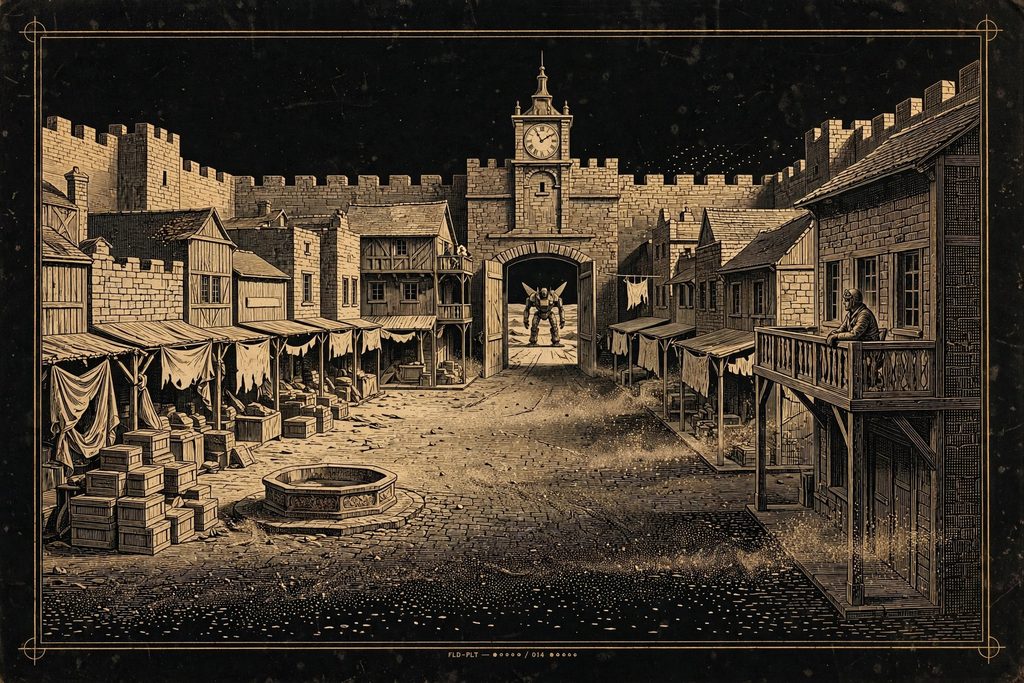
On 3 July 2025, Electronic Arts announced that Anthem’s servers would be shut down on 12 January 2026. From the day of the announcement, the game could no longer be bought, nor could its premium currency. It was removed from the EA Play subscription service in August. EA’s statement was direct. Anthem was designed to be an online-only game, “so once the servers go offline, the game will no longer be playable”. The company thanked players for their “dedication, passion and support” and noted that the decision had not led to any layoffs.
For the players who still owned the game, the announcement set a date for the end of something they had paid for. Unlike City of Heroes in 2012, there was no large campaign to save the game itself. The community was small, and the outcome seemed certain. Instead, the six months before the shutdown became a long goodbye. Players logged in to fly the canyons, finish the missions they had never completed, take screenshots and record their last flights.
V. The Afterlife
The servers went offline on 12 January 2026, and Bastion ceased to exist in its official form. Within a short time, fans had released an unofficial patch that reportedly allowed parts of the game to run without EA’s servers. It was the same instinct for preservation the Institute documented among the players of City of Heroes, now acting much faster.
Anthem’s death also took place in the middle of a wider political struggle. In March 2024, Ubisoft had shut down The Crew, an online-only racing game from 2014, leaving the people who had bought it with nothing they could play. In response, the YouTuber Ross Scott launched a campaign called Stop Killing Games. It argued that publishers should not be allowed to make games unplayable after selling them. A European Citizens’ Initiative titled “Stop Destroying Videogames” closed on 31 July 2025 with about 1.45 million signatures. When verification was completed in January 2026, the same month Anthem went dark, 1,294,188 of them had been confirmed as valid.
The European Commission held a public hearing on the initiative in April 2026. In June 2026 it declined to require that games remain playable, proposing instead to work with consumers and publishers on voluntary industry standards. The campaign continues to press for change, including through the European Union’s planned Digital Fairness Act. Anthem did not start this argument, but it became one of its most visible examples. It was a major game, from a famous studio, sold to millions, and simply switched off.
The ancestor of them all
The loss of online games has a precedent in another young medium. In 2013, the Library of Congress published a study of American silent feature films. It concluded that about seventy-five per cent of them had been lost entirely. Some decayed on unstable nitrate film or were destroyed in fires. Many more were simply thrown away by studios that saw no further commercial value in them. The early history of cinema survives mostly in fragments because the people who owned it did not think it worth keeping.
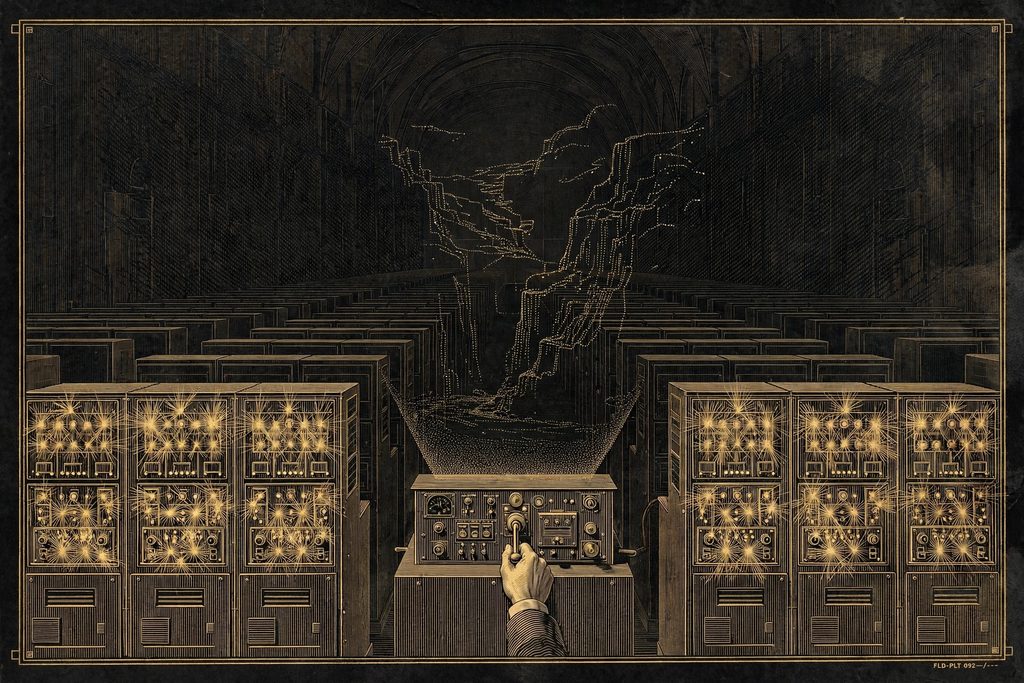
In 2015, the computer scientist Vint Cerf, one of the founders of the internet, warned that the world might be entering a “digital dark age”. He meant that information stored in digital formats could become unreadable as the software and systems needed to access it disappeared. Online games are the most extreme example of this risk. A book can survive in an attic and a film can survive in a vault. An online-only game exists only as long as its owner keeps the servers running, and when they stop, nothing remains to be found.
Anthem’s own story contains a bitter echo of this. Its world was built on the relics of the Shapers, makers who left their creation unfinished and their tools uncontrolled. The game itself was left unfinished by its makers and then removed by them. Its players became, for a few months, the last archaeologists of Bastion, recording what they could before the world disappeared.
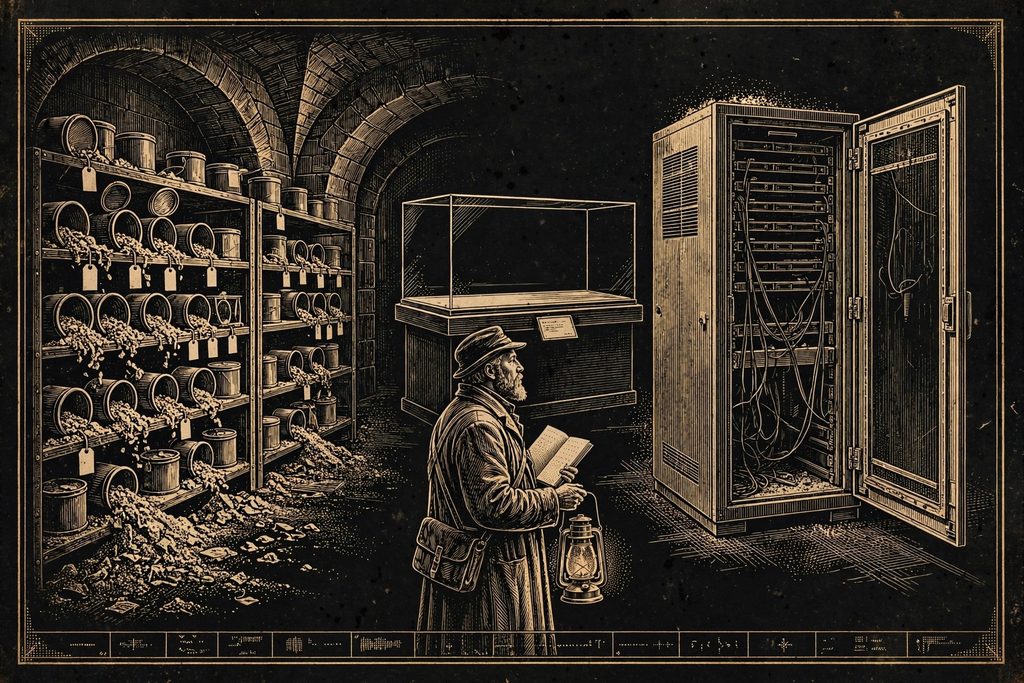
The pattern
Anthem shows a pattern the Institute expects to see more often as online worlds age:
- Ambition outran foundations. A celebrated studio promised a vast new world, but troubled development left much of it unbuilt.
- A world can die before it matures. Anthem never reached the stable, thriving state of an established online society.
- Promised rebirth can become prolonged limbo. The cancelled reinvention left Bastion frozen for five years, a ghost town still online.
- Online-only design makes extinction absolute. When the servers closed, nothing remained that the players could keep.
- Each extinction strengthens the case for preservation. Anthem’s shutdown arrived in the middle of a European campaign to stop publishers from destroying the games they sell.
Findings
- Anthem’s world was switched off by its owner. Electronic Arts announced in July 2025 that the servers would close, and on 12 January 2026 the online-only game became unplayable.
- It was a world that never grew up. Launched in February 2019 after a troubled development, it fell short of expectations and never reached a thriving maturity.
- Its rebirth was cancelled. The reinvention announced in 2020 was abandoned in 2021, leaving Bastion frozen in place for nearly five years.
- Its death joined a political argument. It closed as the Stop Killing Games campaign’s European initiative, with 1,294,188 verified signatures, pressed for rules on game preservation.
- It belongs to a wider loss. Like the three quarters of American silent films that have disappeared, online-only games risk vanishing almost without trace.
This Excavation draws on Anthem’s history, Electronic Arts’ official announcements, published reporting on its development, and the record of the Stop Killing Games campaign. Read more about how the Institute works.
The Institute collects field evidence from people who lived inside these worlds. If you flew over Bastion before it went dark, and kept screenshots, footage or memories, send us your account.
Sources
- Anthem (BioWare and Electronic Arts, 2019 to 2026).
- Anthem Game Update, Electronic Arts (3 July 2025).
- Anthem (video game), Wikipedia.
- Jason Schreier, “How BioWare’s Anthem Went Wrong”, Kotaku (April 2019).
- Stop Killing Games, Wikipedia, for the campaign, the European Citizens’ Initiative and the Commission’s response.
- Library of Congress, The Survival of American Silent Feature Films: 1912 to 1929 (2013).
- Vint Cerf, warning of a “digital dark age”, American Association for the Advancement of Science annual meeting (2015).