




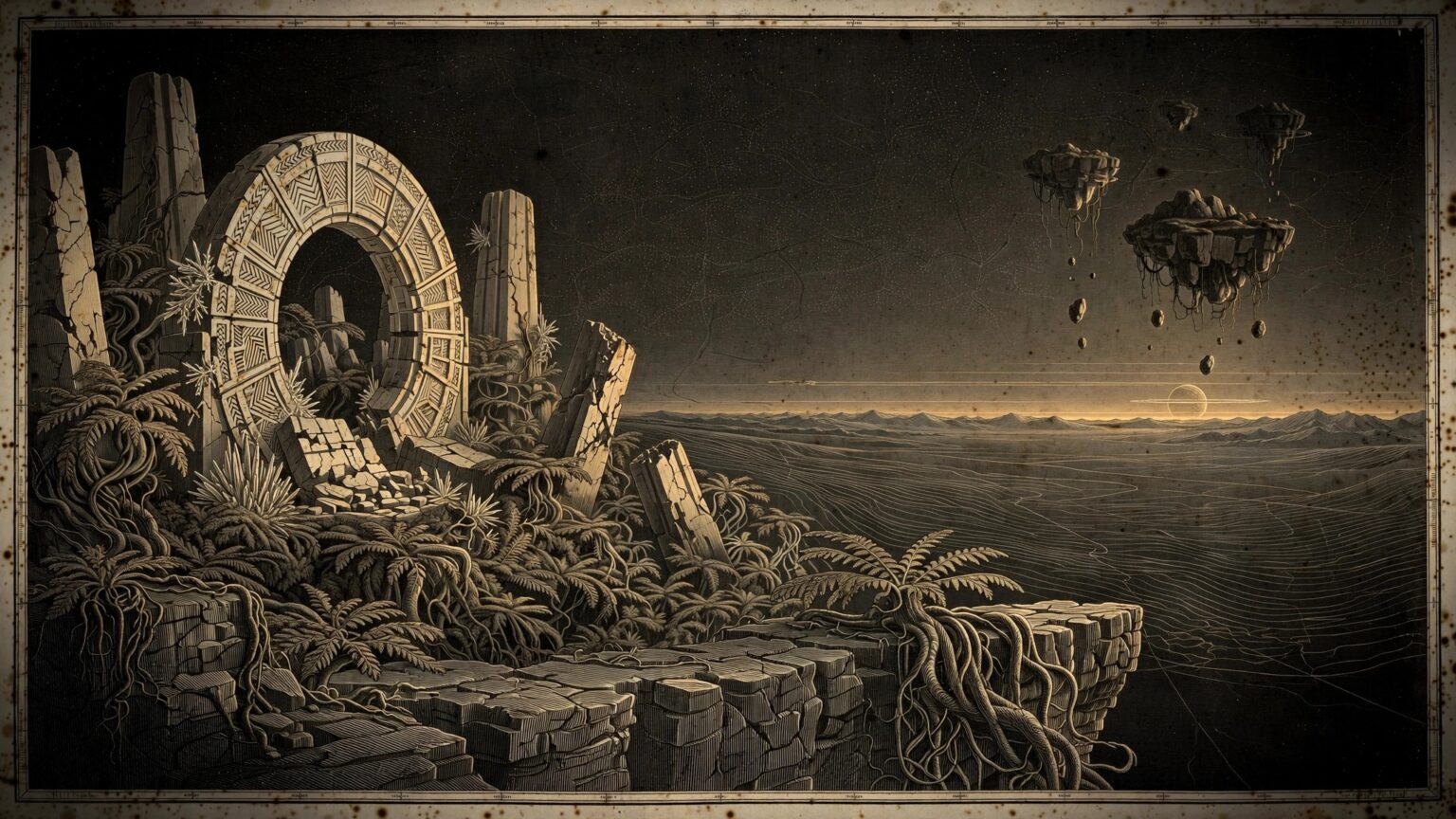

EXCAVATION Nº 0001 · EXTINCT WORLDS
The Final Days of WildStar
An archaeological reconstruction of a civilization after the servers went dark.
World: Nexus, WildStar
Inhabited: 2014 to 2018
Status: Extinct
At 2pm Pacific time on 28 November 2018, a planet stopped existing.
It had forests and deserts, frozen highlands and a moon. It had two rival civilizations, a working economy, a calendar of festivals, and homes built by its own citizens on islands in the sky. Five minutes before the end, every person still on the planet received the same message:
“This is your friendly reminder of TOTAL DESTRUCTION in 5 minutes. We hope that you have enjoyed your stay and accomplished your dreams, here on planet Nexus.”
Then the servers went dark, and WildStar became an extinct world.
This report reconstructs that civilization from what survives: patch notes, the studio’s announcements, press coverage, recordings made by players in the final hours, and a volunteer project that is rebuilding the planet from its last known state. The record is incomplete, as every excavation record is. Where the evidence runs out, we say so.
A world built for arrival
Nexus was never anyone’s homeland. That is the first thing the site tells us.
The planet had belonged to the Eldan, an advanced race who vanished before the story begins. They left behind ruins across every continent, machines that still worked, sealed laboratories and a buried catastrophe. Their greatest creation was Drusera, a being of immense power, and their greatest failure was the corruption that followed her, a malevolent force the game calls the Entity, which spread through the planet as the Strain.
Everyone who arrived after them was a newcomer, and they came in two civilizations.
The Exiles were a coalition of the displaced: humans, the stone-bodied Granok, the forest-dwelling Aurin, and the Mordesh, a people ruined by their own attempt at immortality. They came to Nexus because they had nowhere else to go.
The Dominion was an empire from the planet Cassus: the human Cassians, the predatory Draken, the machine race of the Mechari, and the small, volatile Chua. They regarded Nexus as a sacred inheritance and came to claim it.
Their first footholds show the difference. Exile newcomers began in Algoroc and Celestion, frontier country of camps and makeshift towns. Dominion newcomers began in Deradune and Ellevar, under banners and military order. From there both pushed into Whitevale, Wilderrun, Malgrave, the ruin fields of Grimvault, and out to Farside, the planet’s moon.
So the founding story of Nexus was a story about settling someone else’s ruins. Both factions were colonists, and both built on the remains of a civilization they did not understand. In a literal sense, every player who logged in was already an archaeologist, digging through Eldan sites and decoding what had destroyed them.
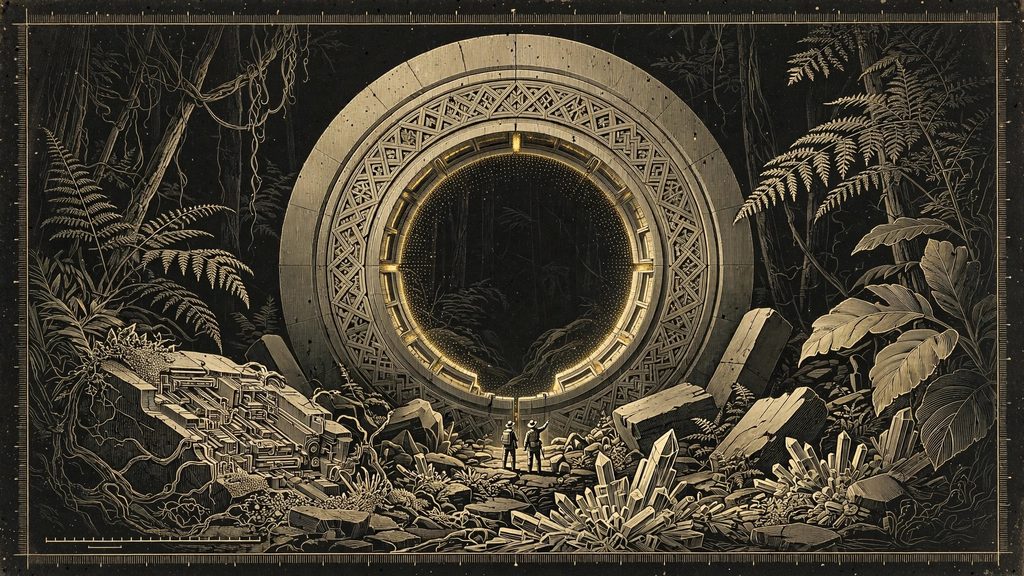
It is an unusually honest premise for a game world. Most fictional settings present themselves as permanent. Nexus opened with a warning that civilizations disappear.
The four callings
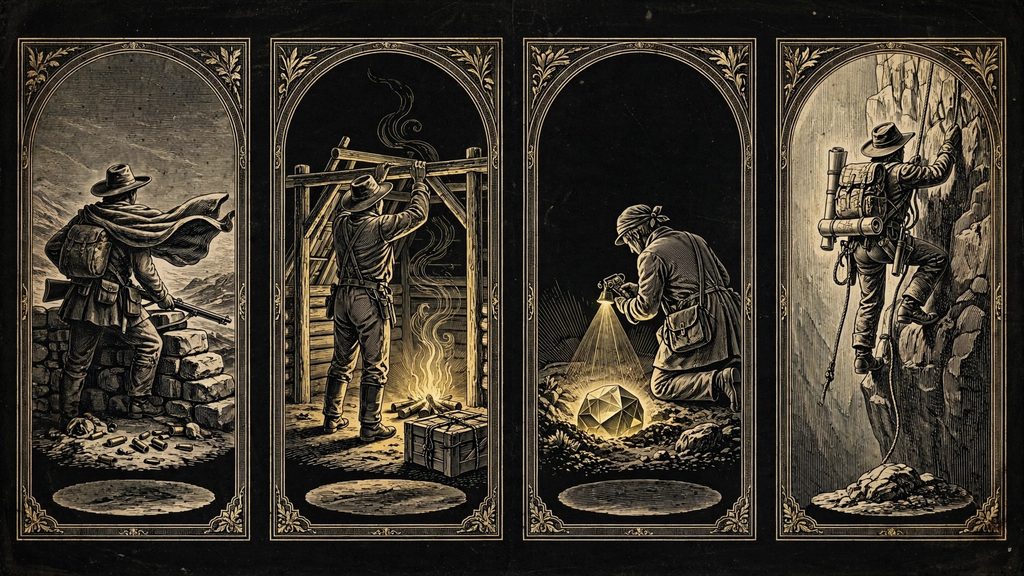
Every citizen of Nexus chose a Path alongside their race and class: Soldier, Settler, Scientist or Explorer.
The Paths were loosely based on the Bartle player types, a well-known model that sorts players by what they enjoy, from fighting to discovery. Each Path gave its members different work. Soldiers held positions against waves of enemies. Settlers built camps, supply stations and public works that anyone passing could use. Scientists scanned creatures, plants and Eldan artefacts, and in doing so unlocked the planet’s history. Explorers climbed, mapped and found the places nobody else reached.
In effect, the designers built a division of labour around temperament rather than birth or wealth. A Settler’s campfire warmed everyone who walked by. A Scientist’s scans revealed history that others would read. The society worked because different kinds of people wanted different things, and the world gave each of them a job.
Few game worlds have made the idea so explicit: a civilization is held together by the different callings of its members. For the Institute’s Human Archive, Nexus is one of the clearest early cases of player archetypes built directly into the structure of a world.
Houses in the sky
The most personal structures on Nexus were not in its cities. They floated above them.
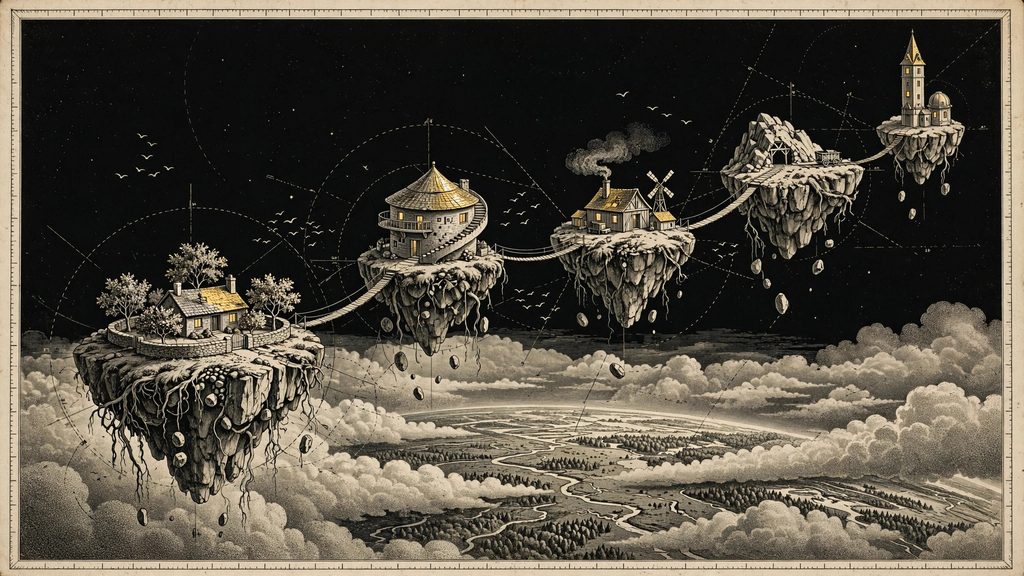
Each citizen could own a skyplot, a private island suspended above the planet, and build a house on it. The houses could be furnished in extraordinary detail, and the islands held working additions: crafting stations, gardens, even small mines. Late in the world’s life, neighbours could join their islands into housing communities of up to five plots, the closest thing Nexus had to a village made by its own people.
Archaeologically, this matters. The public world of Nexus belonged to its designers. Its zones, dungeons and storylines were built and fixed. The skyplots were the only places where citizens made something entirely their own. They were the planet’s true domestic architecture, and they were the artefacts players most mourned when the end was announced. Almost none of them survive except in screenshots.
The currency of time
Nexus ran on an unusual economic instrument called C.R.E.D.D.
A CREDD could be bought with real money, sold to other players for in-game gold, or redeemed for game time. It connected two economies. Citizens with more money than time bought gold. Citizens with more time than money earned their continued membership by trading.
The world also had its own caricature of commerce in Protostar, a grasping corporation that sold to both sides of the war and gave its name to one of the planet’s festivals. The game laughed at the idea that anything on Nexus was beyond a price.
The effect of CREDD was to put a market price on continued existence. A month of life on Nexus had a value that rose and fell with supply and demand. For a civilization that would one day simply be switched off, the detail is striking. Its citizens were already paying, in one currency or another, for every month they stayed.
Signs of decline
The record shows a world that contracted steadily after its founding.
WildStar opened on 3 June 2014 as a subscription game. On 29 September 2015 it relaunched as free-to-play, a common move for worlds losing their population. In February 2016 its dedicated PvP servers closed because too few people remained to fill them.
Why the population fell is still argued. The explanation most often given by critics and former players is the world’s endgame. Its most prestigious content, raids such as the Genetic Archives and the Datascape, was built for forty players at once and guarded by long attunement requirements. It suited a committed minority and discouraged almost everyone else. That reading is widely shared, but it remains an interpretation rather than a documented cause.
What the record does show is the pattern: a world that could no longer keep enough people to sustain all of its parts, and began closing them one at a time.
The last ten weeks
On 6 September 2018, the studio announced that WildStar would close on 28 November, and that its developer, Carbine Studios, would close with it. The announcement ended with a single line of thanks:
“We are truly grateful for the vibrant community that grew around WildStar.”
What happened next is the most revealing part of the excavation. With an end date fixed, the world held one festival after another. Its final calendar included a housing renovation event, the Shade’s Eve festival, Protostar’s Gala Winterfest, and the zPrix Invitational, a hoverboard racing tournament held in the last days before the shutdown. Double experience and bonus rewards ran throughout.
The final update then dismantled the economy. The premium currency, bought with real money, was converted into the currency players earned in the world. Every item in the store became purchasable with earned currency, and the limits on earning it were raised substantially. Every player was granted Signature status, the privileged tier that had once required payment.
It is tempting to read this in human terms, and the reading seems fair if it is marked as interpretation. A society told that it would end abolished its money and its class distinctions. Scarcity no longer served any purpose. For its final weeks, Nexus was the most equal it had ever been.
The final minutes
On the last day, players returned in numbers the planet had not seen for years. They crossed both factions’ territories one last time, finished old challenges and gathered with their guilds. Some of the developers were in the world with them. One, Paul Buckley, recorded the final gathering from the inside.
The surviving footage shows crowds standing together under the Nexus sky. One recording shows a conga line winding through the world in its last minute. At five minutes to the end, the broadcast announcing TOTAL DESTRUCTION went out. At 2pm Pacific time, the official account confirmed what the players already knew:
“As of November 28 at 2pm PST, the North American and European WildStar game service has closed.”
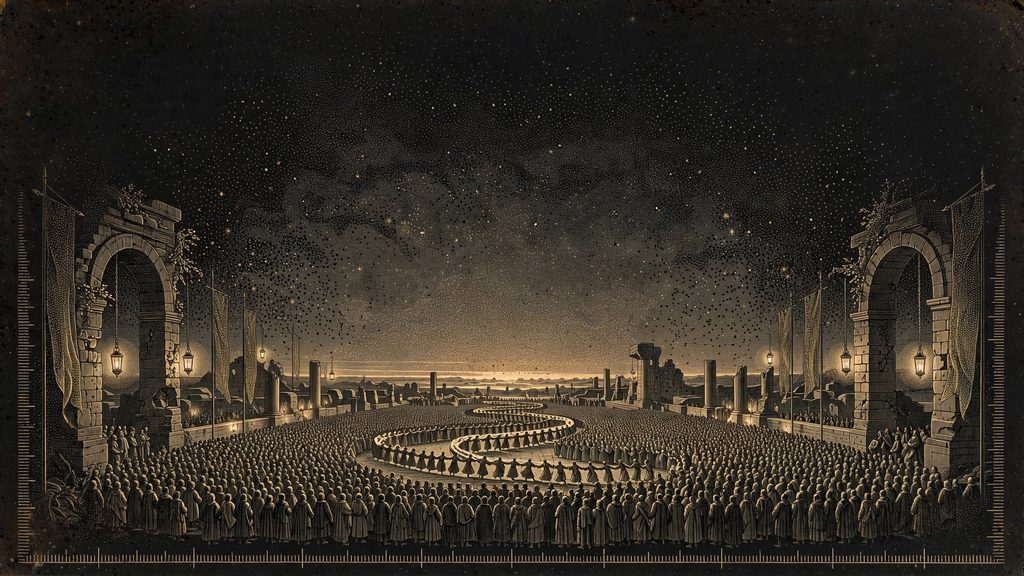
The mourning that followed was real, and it was also the mourning of people who had spent years in an absurd, brightly coloured world. On the game’s community forum, one player observed that WildStar was “simply unplayable in this condition”. Others replied that it was too soon.
The official WildStar website was taken down soon afterwards. The public square where the community had gathered disappeared with the world itself.
What remains
Three kinds of evidence survive.
The first is testimony: footage, screenshots and forum posts from the final days. They are scattered and fragile, and they are the only record of how the place looked and felt with people in it.
The second is text. Shortly before the shutdown, the studio published a final piece of lore, The Lost World Story, which continued the central mystery of the Eldan, Drusera and the Entity. The story of Nexus was never finished inside the world. Its ending survives only as a document, read by people who could no longer go there.
The third is reconstruction. A volunteer project called NexusForever is building an emulator of WildStar’s servers, targeting build 16042, the world’s final patch. The planet is being rebuilt from its last known state, the version that existed in its final weeks, after the economy had been dissolved and every citizen made equal.
Findings
- Nexus was founded on one civilization’s disappearance, and it ended the same way. The Eldan left ruins for the players. The players left screenshots.
- Its society was organised around temperament. The four Paths turned different kinds of players into a working division of labour, which makes Nexus an early and explicit case for the Human Archive.
- Its most personal artefacts were private. The skyplot homes were where citizens truly built, and they were the first things lost.
- Facing its end, the world abolished its own scarcity. In its final weeks Nexus dissolved its premium economy and made every citizen privileged.
- Extinction was not total. Its people scattered to other worlds, and a small group is rebuilding the planet from its final state.
Nexus lasted a little under four and a half years. It was never the largest civilization of its kind. It is one of the best-documented deaths of a virtual world: announced in advance, observed by its population, and recorded from the inside in its final minutes. That makes it the right place for the Institute to begin.
Were you on Nexus in its final weeks? The Institute collects field evidence from people who lived through the ends of worlds. Send us your account.
Filed under Extinct Worlds. For how the Institute separates evidence from interpretation, see our methodology.
Sources
- PC Gamer: Wildstar is shutting down on November 28, Carbine plans special events to see it off
- PC Gamer: The final moments of Wildstar
- Game Informer: WildStar shutting down, developer Carbine closed
- Mein-MMO: The MMORPG WildStar is dead, these were the last moments
- MMOs.com: WildStar releases new lore ahead of server shutdown
- NexusForever on GitHub
- WildStar on Wikipedia