



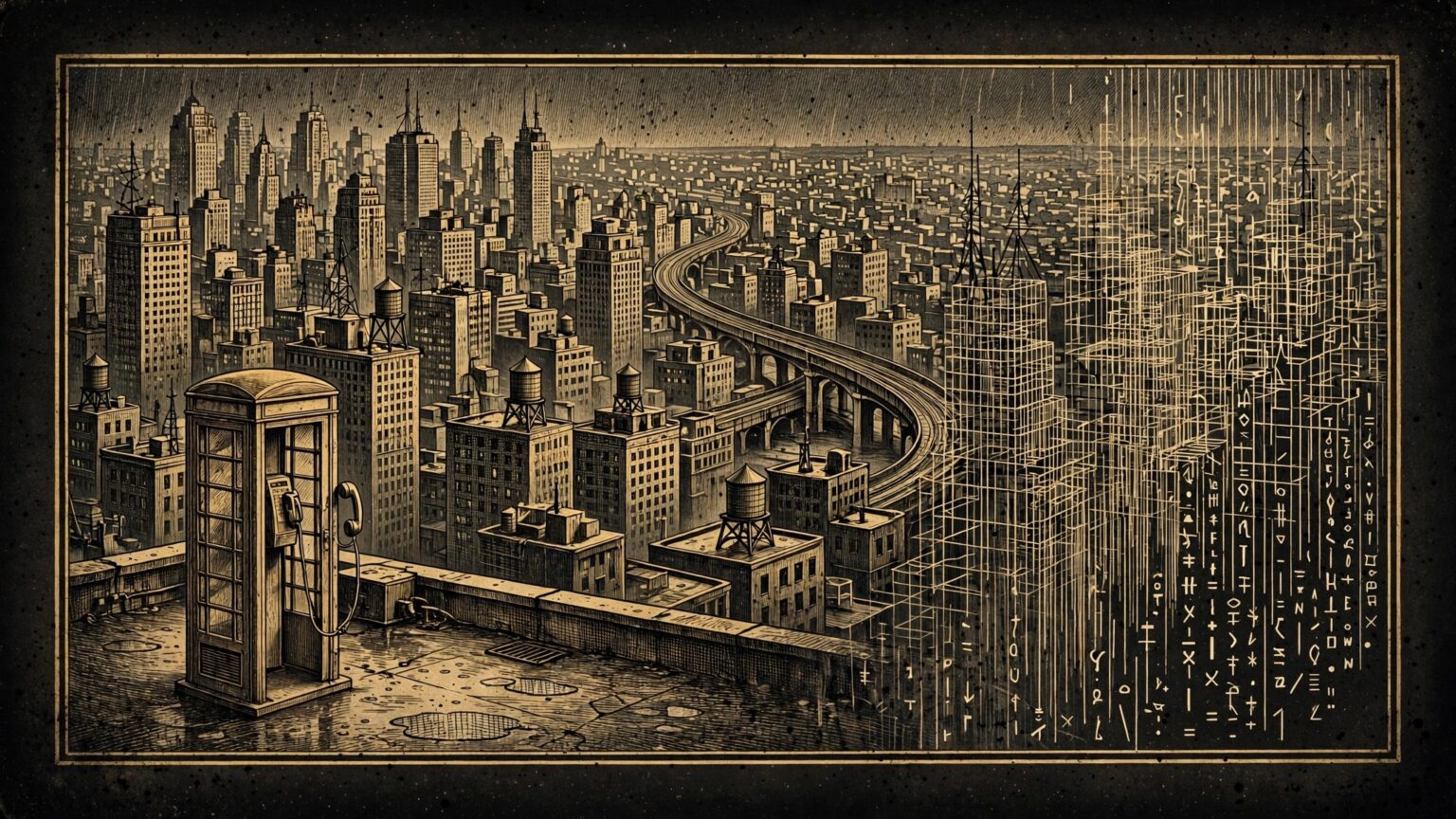
In the spring of 2005, barely two months after a new online world opened its doors, one of the most famous characters in modern cinema was shot dead in a water treatment plant. Morpheus, the man who had offered Neo the red pill, was killed by a masked assassin firing through a ventilation shaft. It was not a rumor or a fan theory. It was the official continuation of The Matrix, approved by its creators, and it happened inside a video game that most of the films’ audience never played.
Four years later the game itself was gone. On the last day of July 2009, the servers of The Matrix Online were switched off, and the city where the official story of the Matrix had continued for four years ceased to exist. Its canon outlived it. Its world did not.
The Institute has excavated other dead online worlds, from The Final Days of WildStar to The Last Days of Anthem. The Matrix Online is a different and stranger case. It was a simulated city inside a fiction about simulated cities, inhabited by players pretending to be people who knew their world was false. And it was the only place where the main story of one of the defining film series of its era continued. This Excavation asks what happens to a civilization when its software dies but its story does not.
I. A World Inside a World
The Matrix trilogy ended in 2003 with a truce. Neo traded his life for a peace between the machines and the human city of Zion, and humans trapped inside the Matrix were promised the freedom to leave if they chose. The Matrix Online, developed by Monolith Productions and launched in March 2005, picked up the story from there.
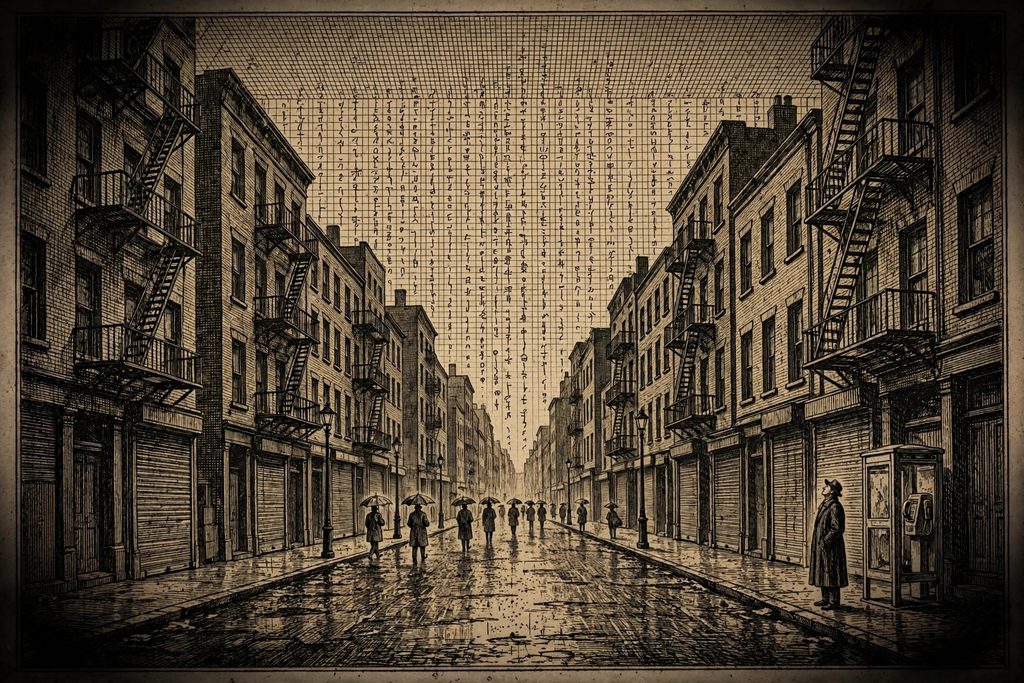
Its players were redpills, humans who had already been freed from the simulation and who chose to jack back into it. They entered through hardlines, the telephone lines that serve as doors between the real world and the Matrix, and walked the streets of Mega City, a vast nocturnal metropolis populated by bluepills, the sleepers who still believed the simulation was real. Every player was, in the fiction, someone who knew the city was a lie and came back anyway.
That premise made the game an unusual anthropological object. In most online worlds, players pretend the world is real. In The Matrix Online, the world itself was openly false, and the players’ characters knew it. What held them there was not belief in the city but loyalty to a cause inside it. The question every faction answered differently was the same one the films had posed. If you know the world is a simulation, what do you owe it, and what do you owe the people still asleep inside it?
II. The Story That Was Canon
The Matrix Online was not a spin-off. The Wachowskis passed the continuing story of their world to the game, and its narrative, written by the comic artist and author Paul Chadwick, was treated as the official third act after the films. Players did not read about the aftermath of the war. They took part in it.
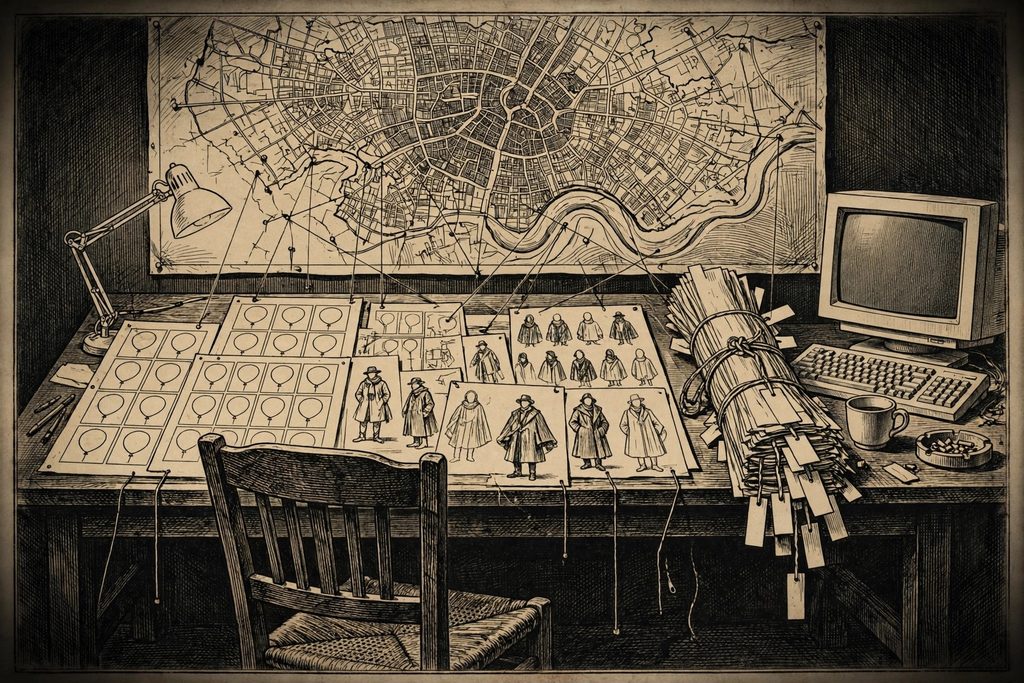
The story arrived in chapters. Critical missions released on a regular schedule advanced the main plot, illustrated cinematics told the key moments, and a Live Events Team played the franchise’s characters in real time inside the world. Players could meet Niobe, the Merovingian or agents of the machines, receive missions from them, argue with them and witness events that would never be repeated. A player who missed a live event missed a piece of canon forever.
This is the detail that makes the game an excavation site rather than a memory. The official history of the Matrix after 2003 was not written in a book or filmed for a cinema. It was performed, once, in a persistent world, for whoever happened to be logged in. Its primary sources were chat logs, screenshots and the recollections of players.
III. The Death of Morpheus
The most famous of those events came in the game’s first months. Morpheus, grieving for Neo, had become convinced that the machines were keeping Neo’s body, and he wanted it back. To force the issue, he began planting code bombs across the Matrix that would expose the simulation to the sleepers trapped inside it. He was, in effect, waging a campaign of revelation against the truce itself.
During one of these operations, a masked figure known only as the Assassin, with abilities beyond anything seen before in the Matrix, shot him through a ventilation shaft. Players protested at once. In the game, redpills who died inside the Matrix could escape through an emergency jack-out and return, so why couldn’t Morpheus? The developers answered within the story. The Assassin’s bullets had carried a new kind of code, a kill code, that defeated every protection. Morpheus did not come back.
For a franchise built on the question of what is real, it was a strange and fitting fate. The character who taught Neo that the mind makes the death real died inside the Matrix, inside a game, in front of whoever was logged in that night, and the death was permanent in every sense that mattered. Most of the films’ audience never knew it had happened.

IV. Factions of a Post-War City
With the war over, Mega City became a political arena. Players joined one of three great organizations. Zion fought for the freedom of the sleepers and the memory of the war. The Machines guarded the stability of the simulation and the truce that kept it running. The Merovingian, the program who traded in secrets and protected rogue programs called Exiles, offered a third path built on self-interest and influence.
Two smaller movements show how quickly a post-war society produces its own sects. E Pluribus Neo gathered players devoted to Neo’s legacy, treating the savior’s memory as a cause in itself. The Cypherites took the opposite path, named for the traitor of the first film who asked to be reinserted into the Matrix and forget everything. They wanted to go back to sleep. A civilization that had just won its freedom immediately split between those who wanted to honor it and those who wanted to give it up.
Inside the factions, players formed crews, kept archives, held meetings and staged their own rivalries alongside the official story. The game’s history was written twice over, once by its writers and once by its inhabitants, and only the inhabitants were there for all of it.
V. The Last Night of Mega City
The Matrix Online never found the audience its franchise promised. Within months of launch, Warner Bros. sold the game, and Sony Online Entertainment took it over in August 2005. Its population declined year by year. By the time the shutdown was announced, fewer than five hundred people were still active.
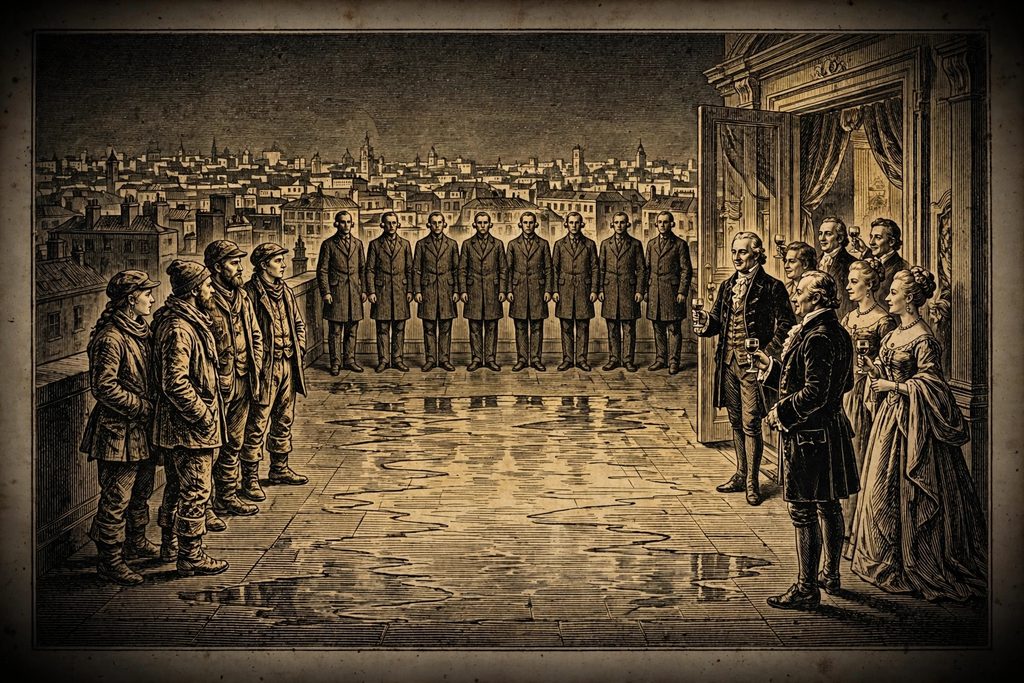
The servers went dark on the 31st of July 2009. Those who remained gathered inside the city for its final hours, and Sony left the community a farewell book of memories. The journalists at Giant Bomb chronicled the last days in a video series named after a line from the films, Not Like This.
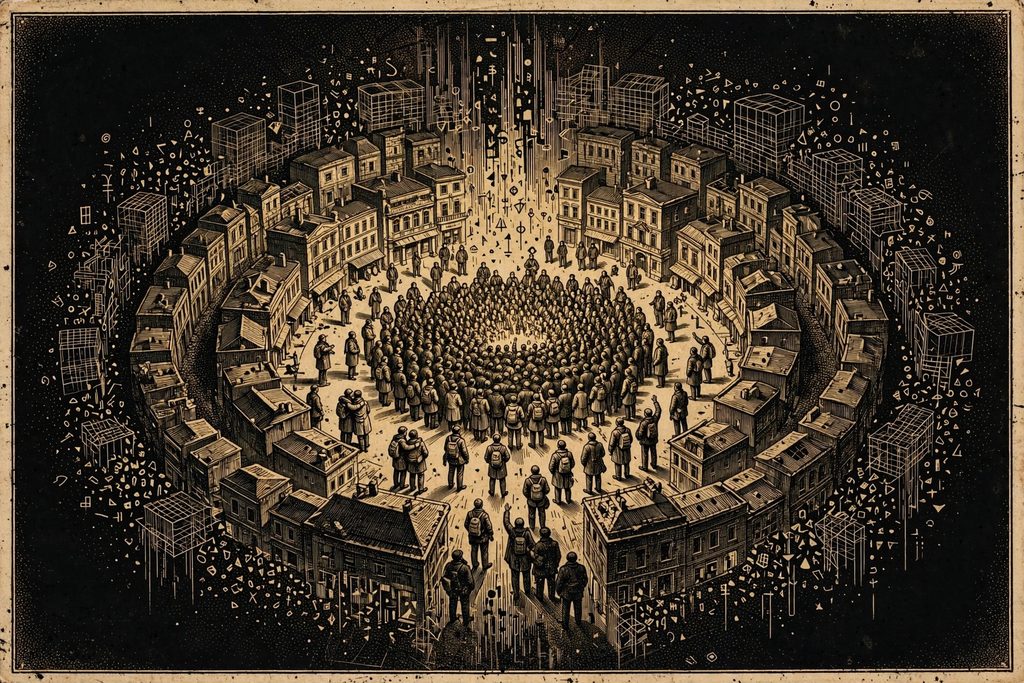
What disappeared that night was not only a game. It was the only place where the official continuation of The Matrix could be experienced as it had been made, live and in the world. The chapters, the events, the meetings with canon characters and the death of Morpheus survived only as descriptions, summaries and fragments. The civilization was gone. Its history had become hearsay.
VI. The Afterlife of a Canon
And yet the story did not stop. In 2021, The Matrix Resurrections returned to the franchise’s main line in cinemas. The original Morpheus was absent. In his place stood a new program built partly from his likeness. Many fans read the choice as the film quietly honoring what had happened in the game. The death that almost nobody saw became the reason a new character exists in the film that almost everyone did.
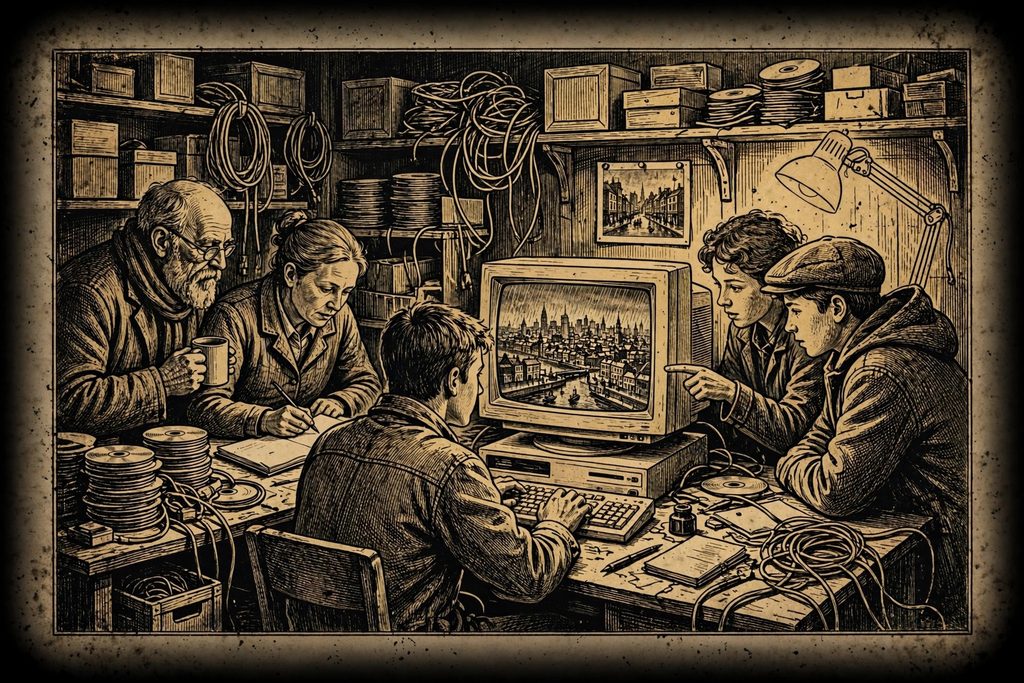
Meanwhile, the city itself has refused to stay dead. Since the shutdown, a developer known as Rajko and a small community of volunteers have worked to reverse-engineer the game’s servers from captured data, building an emulator that lets Mega City run again in fragments. The community gathers there regularly, walking the streets of a world that officially ended long ago.
That is why the title of this Excavation holds a quiet argument. A world can die twice. The first death comes when it stops running. The second comes when nobody remembers it. The Matrix Online has died once. Its software ended in 2009. Its canon, its players and its stubborn emulator have so far prevented the second death.
The ancestor of them all
The fate of The Matrix Online has an ancient precedent, and it belongs to the oldest stories in Western literature.
Around the Iliad and the Odyssey there once stood a whole cycle of Greek epics, the Epic Cycle, which told the rest of the Trojan War. The Cypria told how the war began. The Aethiopis told the death of Achilles. The Little Iliad told of the wooden horse, and the Iliou Persis told the sack of Troy. These poems were canon in every sense. Greek tragedy, vase painting and later poetry drew on them constantly. And almost all of them are lost. We know their contents mainly through brief prose summaries attributed to a scholar named Proclus, preserved in later Byzantine manuscripts, and through scattered quotations.
The death of Achilles, one of the most famous events in all of myth, survives in its original epic form only as a summary of a lost poem. The death of Morpheus survives in its original form only as summaries, wikis and the memories of the players who saw it. In both cases the event became canon while the medium that carried it vanished.
Online worlds have their own ancestor as well. In 1986, Lucasfilm Games launched Habitat, one of the first graphical online worlds, where players built an economy, a church and the first experiments in virtual government before the service closed. Habitat too was later revived by volunteers from its surviving code. The pattern is as old as the medium. Online worlds die, and their people try to bring them back.
The pattern
The Matrix Online belongs to a family the Institute keeps meeting, worlds where the official story and the living world come apart. The most famous case is Star Wars. When Disney acquired the franchise, the decades of novels, comics and games known as the Expanded Universe were renamed Legends in 2014 and removed from the official canon. Their events did not stop being remembered. They simply stopped being true. Star Wars Galaxies, the franchise’s own online world, had already closed in 2011, taking its player-made history with it.
Three features define these worlds. The first is that their canon was performed rather than written, so it existed fully only in the moment it happened. The second is that their medium was mortal, dependent on servers, licenses and the economics of a company. The third is that their inhabitants became their archivists. When the world closed, the players were the only complete record of what had happened there, and the emulators, wikis and archives they built became the new primary sources.
Some extinct worlds come back almost whole, as the Institute documented in The City That Refused to Die, where City of Heroes returned through its players. The Matrix Online returns in fragments, and that may be the more common fate. A civilization is remembered by what survives of it, and in online worlds, what survives is chosen by the people who loved it.
Findings
- The Matrix Online carried the official story of The Matrix. The Wachowskis passed the continuing story to the game, and for four years the franchise’s main line after Revolutions lived inside a persistent online world.
- Its canon was performed, not written. Critical missions, illustrated cinematics and live events played by a dedicated team meant that key moments happened once, for whoever was logged in, and survive only in logs, screenshots and memory.
- It killed Morpheus. In 2005, a masked Assassin’s kill code ended the franchise’s most iconic mentor inside the game, and the death held. The Matrix Resurrections later replaced him with a new program bearing his likeness.
- Its society split along familiar lines. Zion, the Machines and the Merovingian divided the post-war city, while E Pluribus Neo honored the savior and the Cypherites asked to forget and go back to sleep.
- It has died once, not twice. The servers closed in 2009, but its canon, its archivists and a volunteer emulator keep it remembered, much as the lost epics of the Trojan War survive through Proclus’ summaries.
This Excavation draws on The Matrix Online and its community archives, on the films of The Matrix, on the history of the Greek Epic Cycle, and on the history of early online worlds.
The Institute collects field evidence from people who lived inside these worlds. If you walked the streets of Mega City before the lights went out, send us your account.
Sources
- The Matrix Online (2005 to 2009), Monolith Productions and Sony Online Entertainment, published by Warner Bros. Interactive Entertainment and Sega.
- The Matrix (1999), The Matrix Reloaded (2003), The Matrix Revolutions (2003) and The Matrix Resurrections (2021), Warner Bros.
- Kotaku, on the death of Morpheus in The Matrix Online (2020).
- Inverse, on the fan effort to resurrect The Matrix Online (2021).
- Giant Bomb, Not Like This (2009).
- Martin L. West, The Epic Cycle, A Commentary on the Lost Troy Epics (2013), Oxford University Press.
- Chip Morningstar and F. Randall Farmer, “The Lessons of Lucasfilm’s Habitat”, in Cyberspace, First Steps (1991), MIT Press.
- Lucasfilm, announcement of the Star Wars Legends brand (2014).