

Most online worlds die when their servers are switched off. Star Wars Galaxies died twice. The first time, its servers were still running. In November 2005, a sweeping redesign called the New Game Enhancements erased most of its professions, rewrote its rules and dissolved the society its players had spent two and a half years building. Six years later, on 15 December 2011, the servers were switched off for good. Many of its citizens remember the first death as the real one.
Star Wars Galaxies was developed by Sony Online Entertainment and published by LucasArts, and it launched in North America on 26 June 2003. Under its creative director Raph Koster, it was designed not as a game about heroes but as a simulation of life in the Star Wars galaxy, where most players would be crafters, merchants, doctors, dancers, architects and mayors. For a while, it was one of the most ambitious social experiments in the history of games.
The Institute has studied the last days of online worlds in The Final Days of WildStar and the players who brought a closed world back in The City That Refused to Die. Star Wars Galaxies belongs to both stories, but its central tragedy is different. Its society was not ended by neglect or closure. It was ended by a decision to redesign it.
I. A Galaxy Without Heroes
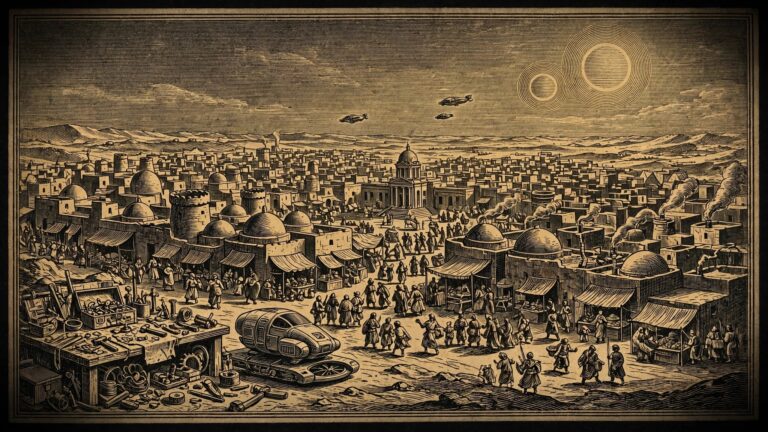
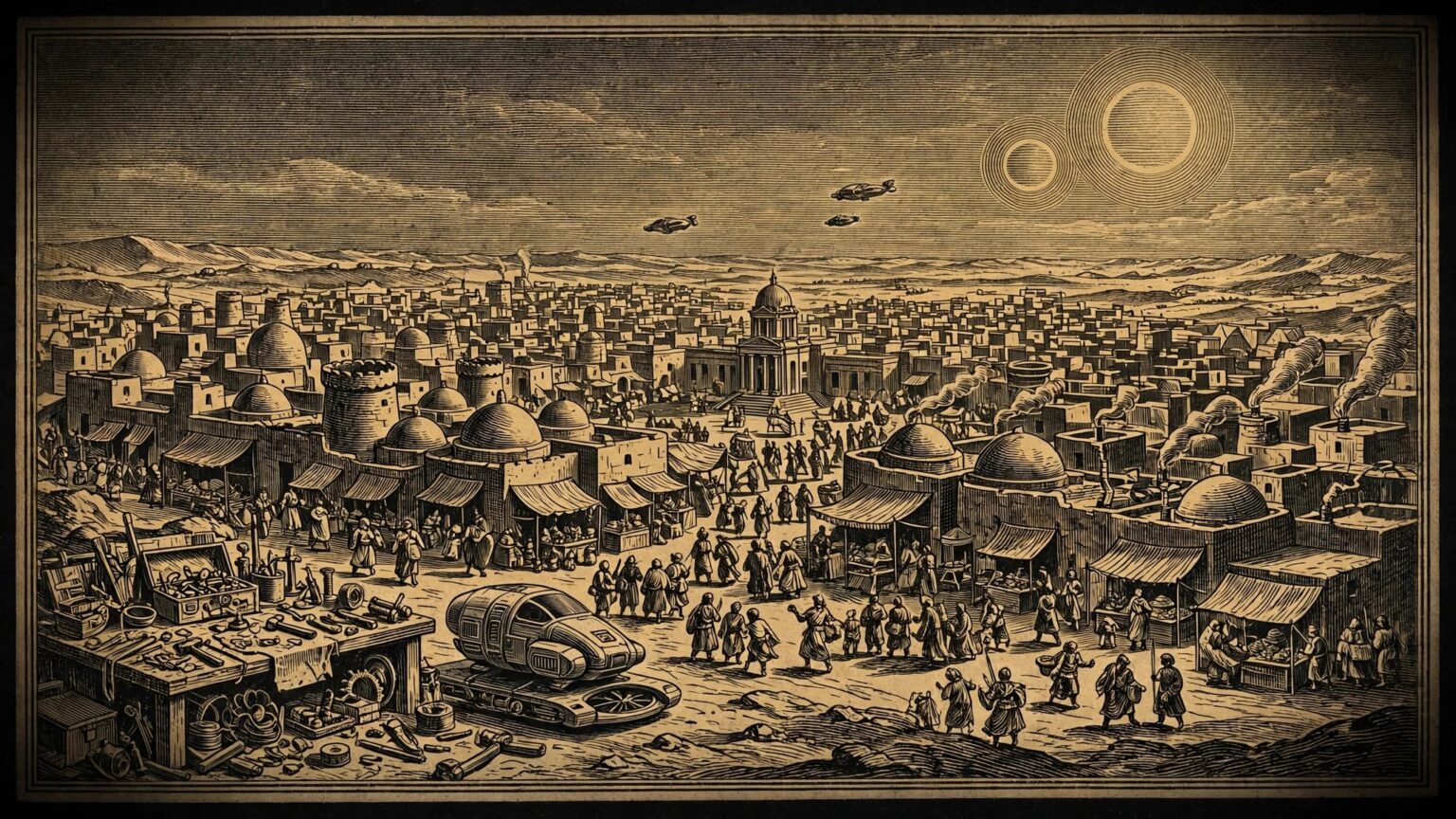
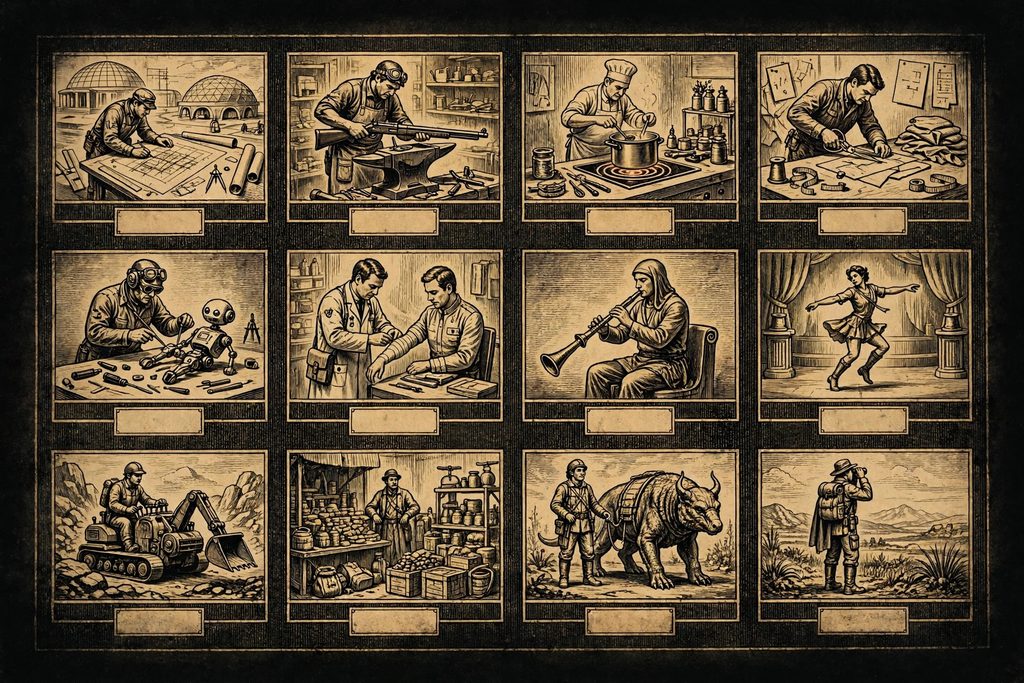
Star Wars Galaxies was set in the time of the Galactic Civil War, between the destruction of the first Death Star and the events of The Empire Strikes Back. Players could visit famous planets, join the Rebellion or the Empire and meet the films’ characters. But they did not begin as heroes. At launch, the game offered thirty-four professions, six basic and twenty-four advanced, and most of them had nothing to do with fighting.
A player could become an Architect, an Armorsmith, a Weaponsmith, a Chef, a Tailor, a Droid Engineer, a Doctor, a Musician, a Dancer, an Image Designer, a Creature Handler, a Ranger or a Merchant. Skills could be mixed, so that one character might be a part-time medic and part-time marksman. Experience came from doing things, crafting, healing, performing and trading, not only from combat. The game rewarded every role that a real society needs.
This was a deliberate philosophy. Koster later described the goal as “weak-tie interdependence”, a society in which strangers you rarely meet are still essential to your survival. In Star Wars Galaxies, no one could do everything. The soldier needed the weaponsmith, the weaponsmith needed the miner, and everyone needed the doctor and the entertainer. The galaxy was built so that its players would need one another.
II. An Economy Made by Players
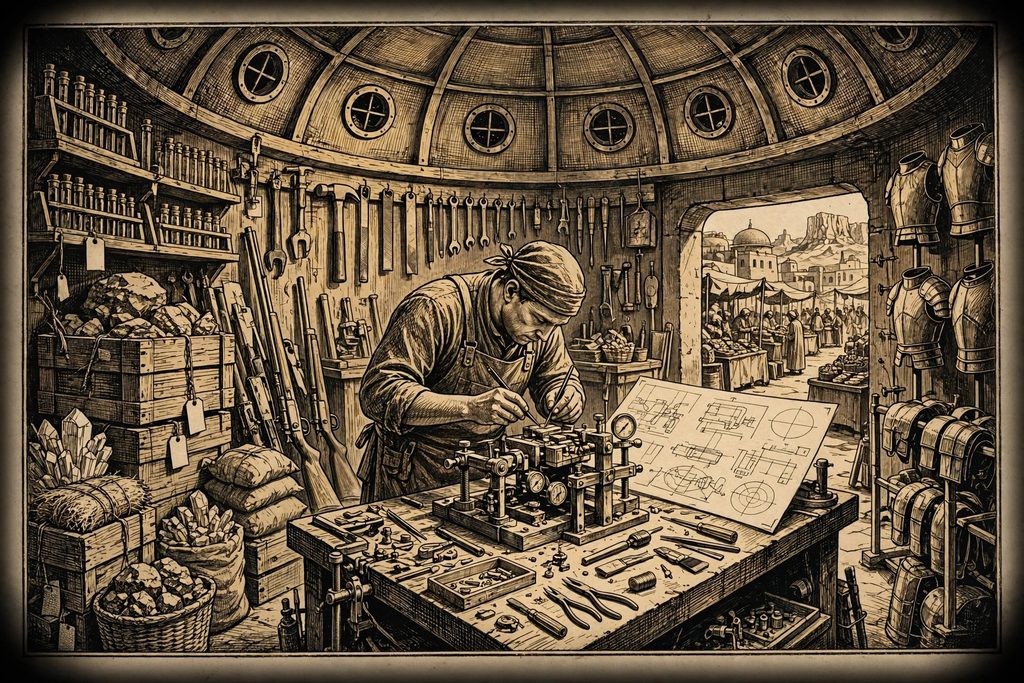
The heart of Star Wars Galaxies was its economy, and almost all of it was made by players. Blasters, armour, clothing, food, furniture, droids, vehicles, houses and starships were crafted by other players from raw materials gathered by other players. Shops were run by players through vendors placed in their own buildings. When a character walked through the galaxy wearing armour and carrying a rifle, those items had a maker, and often a famous one.
The raw materials were unusual too. Resources appeared across the planets in randomly generated types, each with its own quality statistics, and when a spawn was mined out, it was gone. A superb batch of metal or chemical could make one crafter’s weapons the best on the server for months, until the stockpile ran out. Crafters experimented with formulas, guarded their best schematics and built reputations. Koster noted that the system created obsolescence, which kept the market alive.
The result was a real economy, with supply, demand, competition and inequality. Koster later observed that it quickly became “a Pareto-distributed economy where the richest were insanely rich”. Prices floated, merchants specialised and markets rose and fell. For many players, the economy was the game. They logged in not to fight but to harvest, craft, sell and build their business.
III. Dancers, Doctors and Mayors
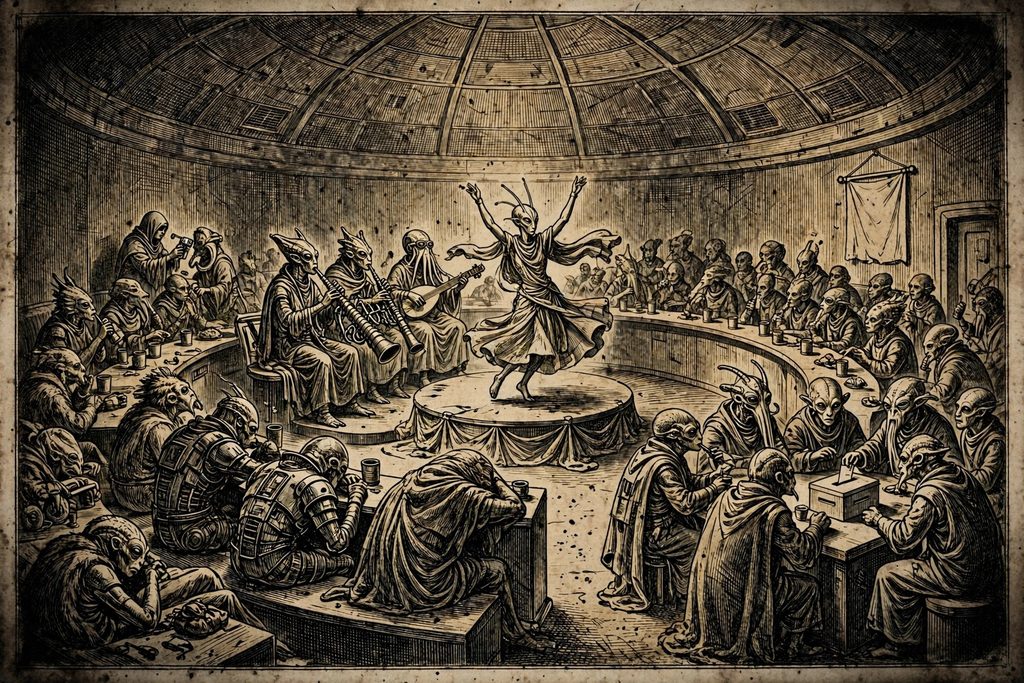
Star Wars Galaxies also gave its society rituals. Combat left characters with wounds and battle fatigue that ordinary healing could not cure. To recover fully, a soldier had to visit a cantina and watch a player Entertainer dance or play music. The cantinas of the major cities became gathering places, filled every evening with tired fighters, performers, traders and friends. A purely mechanical rule produced a culture of nightlife.
Image Designers could change a character’s appearance in ways not available at character creation, and became the galaxy’s stylists. Doctors ran clinics and sold medicines. Architects built houses, and players could place them on the open landscape of the planets. When enough houses stood together, their owners could form a city. Cities had mayors elected by ballot every three weeks, and as they grew they could add services such as cloning facilities and hospitals, along with civic structures, decorations and shops.
These cities were the most visible sign of the society players had built. Some were small villages of friends. Others were large towns with markets, cantinas and guild halls, known across the server. They had politics, disputes, zoning arguments and civic pride. They were, in a modest way, fictional civilizations built by the people who lived in them, inside a fiction they did not own.
IV. The Hologrind
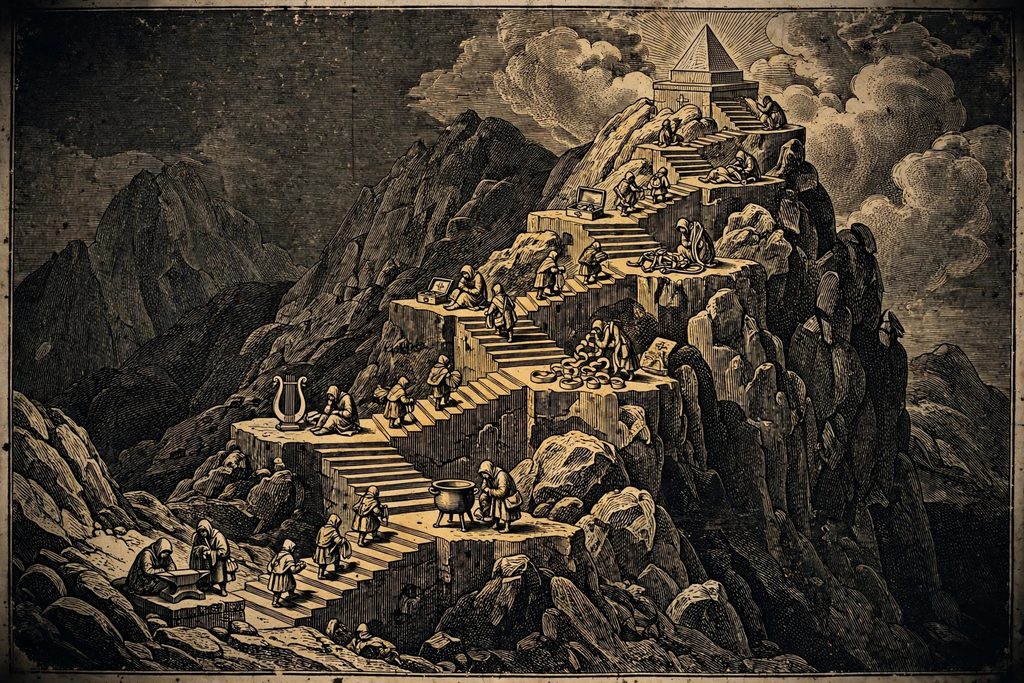
The society of Star Wars Galaxies had one great tension built into it. In the films, the Jedi are the heroes, and many players wanted to become one. The designers made it possible, but hidden and extremely difficult. The path to unlocking a Jedi character was secret. Players gradually discovered that it involved mastering a series of professions, revealed one by one through holocrons, chosen in a way no one could predict.
The first player unlocked a Jedi slot on 7 November 2003, more than four months after launch. The search transformed the society. Players began grinding through professions they had no interest in, mastering dancing, cooking or creature handling purely as steps on the hidden path to the Force. Players called it the Hologrind. A world designed so that people would choose a role in society became a world in which many people took up roles only to escape them.
The Hologrind revealed the conflict at the centre of the game. Its designers had built a galaxy of ordinary lives, while its licence promised a galaxy of heroes. As long as becoming a Jedi was nearly impossible, the society of crafters and dancers could hold together. Pressure to give players what the films had promised would eventually bring that society down.
V. The Enhancements
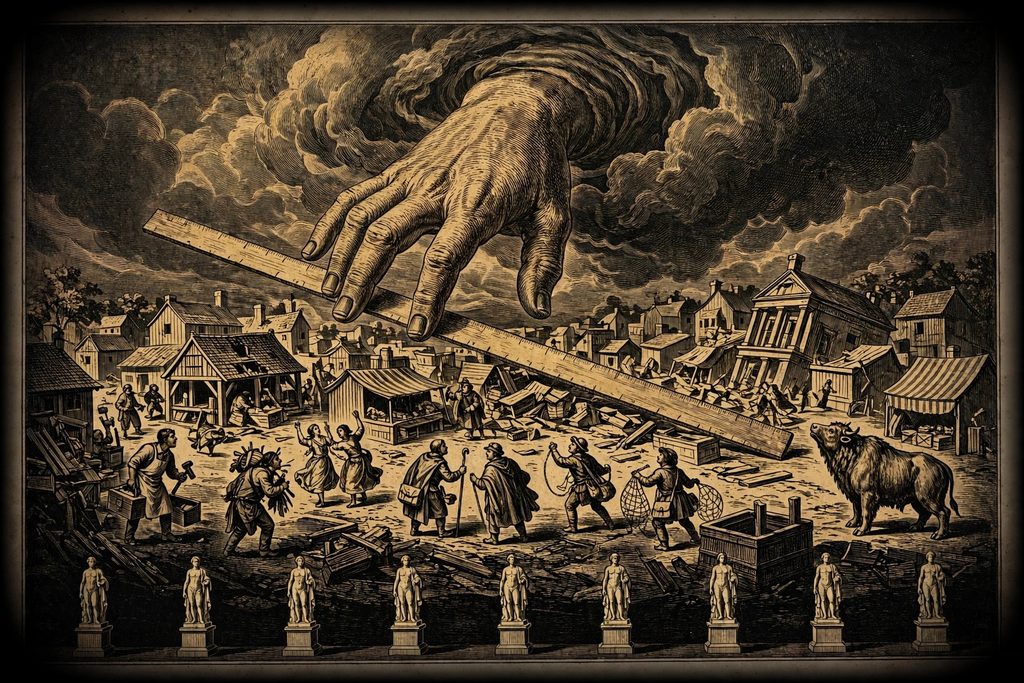
In 2005, the society was changed from above, twice. In April, the Combat Upgrade reworked the game’s fighting. Then, on 1 November, Sony and LucasArts released an expansion, Trials of Obi-Wan. Days later they announced the New Game Enhancements, which went live on 15 November 2005. The thirty-four professions were replaced by nine iconic classes, Jedi, Bounty Hunter, Smuggler, Spy, Commando, Officer, Medic, Entertainer and Trader. Combat became faster and closer to an action game. Creature Handlers were removed entirely.
For the people who lived in the galaxy, it was a catastrophe. Characters built over years were converted into new classes, and skills, roles and identities disappeared overnight. The careful interdependence of the old economy was dismantled. The developers explained that players wanted to be heroes, closer to Han Solo or Luke Skywalker than to a moisture farmer. Many of the players who had chosen to be moisture farmers, merchants and dancers left. The outcry reached the New York Times and the Washington Post, and the companies offered refunds for Trials of Obi-Wan to anyone who asked.
Subscriptions, already falling, fell further, from around 250,000 to just over 100,000 by the middle of 2006. In 2007, Sony Online Entertainment’s president John Smedley admitted, “We screwed up and didn’t listen to the fans when we should have.” The game continued for six more years, and many players returned or stayed to build again. But the original society, the galaxy of crafters, doctors and mayors, had been dissolved by a patch.
VI. The Last Night and the Afterlife
Star Wars Galaxies closed on 15 December 2011, days before the launch of a new Star Wars online game, The Old Republic. The final evening was staged as a last battle between the Empire and the Rebellion across the galaxy. Players gathered in their cities, cantinas and battlefields, held ceremonies, said goodbye and took screenshots of the places they had built. At 9:01 in the evening, Pacific time, the servers went dark.
The society did not disappear. Even before the shutdown, fans had begun rebuilding the galaxy. SWGEmu, founded in 2004, set out to recreate the game as it existed before the Combat Upgrade, with all thirty-four professions. Project SWG, begun in 2011, set out to recreate the later version. Other fan servers followed. Each rebuilt a different era, depending on which version of the galaxy its founders remembered as home.
This division is the most revealing detail of all. Players of Star Wars Galaxies do not agree on when their world was alive. For some, it was the original galaxy of crafters and mayors, destroyed in 2005. For others, it was the heroic galaxy that came after, closed in 2011. Like exiles from a real country that went through a revolution, they rebuild the state they belonged to, and argue with each other about which one was the true one.
The ancestor of them all
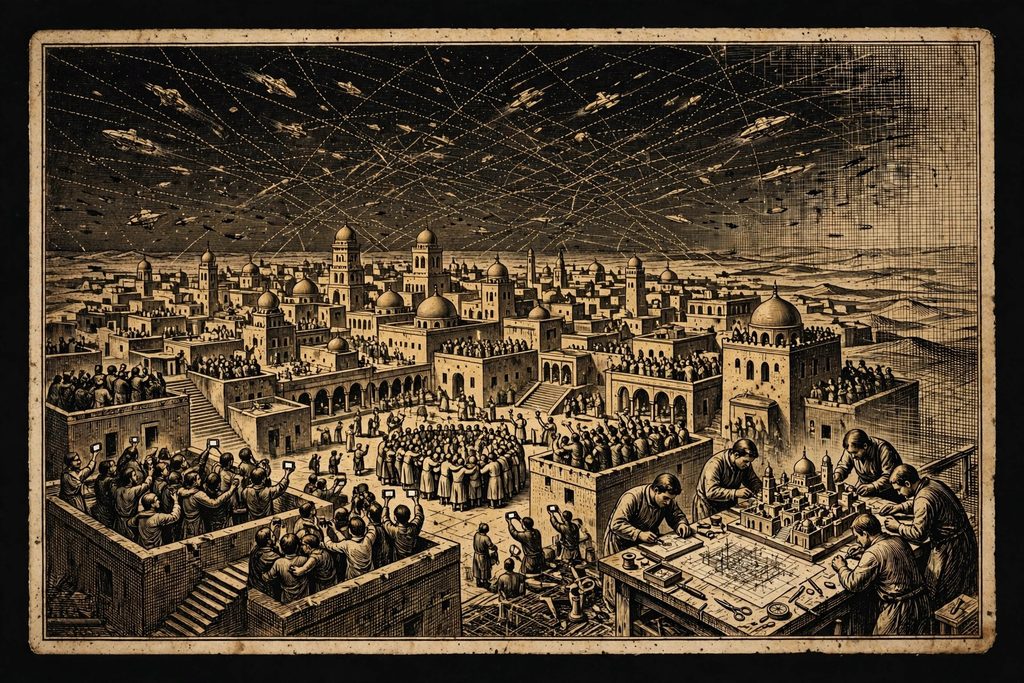
History offers a clear ancestor for the crafters of Star Wars Galaxies, a community of skilled workers whose world was rearranged overnight by decisions taken far above them.
In March 1811, in the villages around Nottingham, framework knitters began breaking the machines of employers who were using them to produce cheap, inferior stockings and cut wages. They signed their letters in the name of a mythical leader, General Ludd. Within a year, the protests had spread to the croppers of Yorkshire and the weavers of Lancashire. Parliament responded with the Frame Breaking Act of 1812, which made the destruction of machinery a capital crime, and thousands of soldiers were sent to the affected counties. In January 1813, a mass trial at York ended with a series of executions.
The Luddites are often remembered as enemies of technology. Historians from E. P. Thompson onward have argued that they were something more specific, skilled workers defending a way of life built around their craft, its standards, its customs and its place in a community, against changes imposed by people who did not share it. The crafters of Star Wars Galaxies broke no machines. But they understood the same loss. They had built an identity around a craft, and they watched it erased by a decision made elsewhere, for reasons that had nothing to do with them.
The pattern
Star Wars Galaxies belongs to a family the Institute calls the redesigned societies, communities whose world is rewritten from above by those who own it. Its closest literary relative is Ted Chiang’s novella The Lifecycle of Software Objects, published in 2010, in which the people who raise digital beings inside an online world must watch the platform decline, and struggle to keep alive the community they built when its owners move on.
Three features define these societies. The first is a world built on a platform its citizens do not own, where everything they create exists by permission. The second is a sudden rewrite from above, a decision that changes the rules of life overnight. The third is exile and restoration, in which the dispossessed rebuild their old world elsewhere, often arguing about which version of it to restore.
The Institute has traced the ending of another online world in The Last Days of Anthem, where the servers were switched off before a society could take root. Star Wars Galaxies is the opposite case. Its society took root deeply, and that is why its redesign hurt so much. A world can survive the loss of its servers in the memories of its players. It is harder to survive the loss of the self those players chose to be.
Findings
- Star Wars Galaxies was designed as a society, not a hero story. Its thirty-four original professions included crafters, doctors, dancers, architects and merchants, built so that players would depend on one another.
- Its economy was almost entirely player-made. Weapons, armour, houses, ships and food were crafted by players from finite, randomly generated resources and sold through player-run shops.
- Its rules produced real culture. Entertainers healed battle fatigue in crowded cantinas, Image Designers became stylists and player cities elected mayors by ballot every three weeks.
- A single redesign dissolved that society. The New Game Enhancements of November 2005 replaced thirty-four professions with nine iconic classes, and subscriptions fell from about 250,000 to just over 100,000.
- Its exiles rebuild different eras. After the servers closed on 15 December 2011, fan projects such as SWGEmu and Project SWG recreated the galaxy, each restoring the version its players remembered as home.
This Excavation draws on Star Wars Galaxies and its design history, on Raph Koster’s writing about the game’s society, on contemporary reporting about the New Game Enhancements, on the history of the Luddites and on Ted Chiang’s The Lifecycle of Software Objects.
The Institute collects field evidence from people who have lived inside these worlds. If you were a crafter, a dancer or a mayor in Star Wars Galaxies, or if you still play on a fan server, send us your account.
Sources
- Star Wars Galaxies (2003–2011), Sony Online Entertainment and LucasArts.
- Raph Koster, “Designing a Living Society in SWG, part one”, raphkoster.com, 21 April 2015.
- “The Game Archaeologist, Star Wars Galaxies’ NGE”, Massively Overpowered, 22 August 2015.
- “Trials of Obi-Wan refunds offered”, GameSpot, November 2005.
- E. P. Thompson, The Making of the English Working Class (1963), Victor Gollancz.
- Kevin Binfield (ed.), Writings of the Luddites (2004), Johns Hopkins University Press.
- Ted Chiang, The Lifecycle of Software Objects (2010), Subterranean Press.