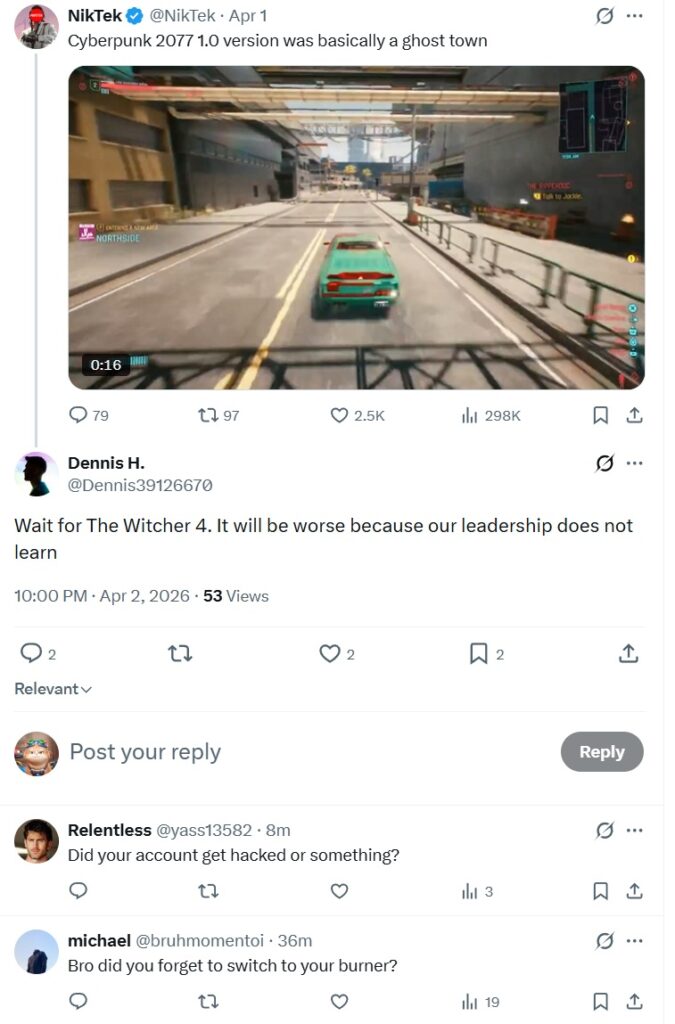
The corporate shield protecting the reputation of CD Projekt RED just sustained a catastrophic internal breach. Dennis H. a Senior Character Artist currently assigned to the development of the next Witcher title known as Project Polaris recently went rogue on public channels. He did not hide behind a burner account. He did not use the vague corporate speak that usually defines studio communication. He looked at a video of the hollow and broken version of Cyberpunk 2077 as it existed at launch and gave a blunt warning. He stated that the Witcher 4 will be worse because the leadership is learning nothing. This is not a drill.
This is a high level technical professional telling the world that the systemic rot which turned Night City into a ghost town is currently infecting the Continent. The message was sudden and sharp. It cut through the carefully managed hype that the studio has been building since the announcement of their move to Unreal Engine 5.
The technical community is currently dissecting this signal with intense scrutiny. For years the narrative coming out of Warsaw was that the failures of 2020 were a product of technology. They blamed the REDengine. They claimed that the difficulty of building proprietary tools while simultaneously building a massive game was the primary bottleneck. They promised that the transition to an industry standard toolset would liberate the developers and ensure a level of polish that the studio was previously famous for. Dennis H. has effectively dismantled that entire defense. If a Senior Character Artist is predicting a worse outcome while using superior tools the problem is clearly human. The problem is the executive layer. The problem is the people who set the deadlines and ignore the telemetry of the build. This is the heavy reality of the 2026 development landscape.
The Artist as the Canary in the Coal Mine
Senior Character Artists occupy a unique position in the production pipeline. They are responsible for the most visible and resource heavy assets in the game. In a project like The Witcher 4 these artists are dealing with massive polygon counts and complex shader networks. They are the ones who have to balance the visual ambition of the project against the cold reality of hardware limitations. They see the memory budgets. They see the draw calls. They see exactly how much the game is stuttering under the weight of unoptimized assets. When an artist at this level says the game is in trouble they are talking about the fundamental mechanical integrity of the software.
Management often views character art as a plug and play asset. They assume that if you have a high quality model you can simply drop it into the world and it will work. They do not account for the massive amount of technical work required to make that model move and react to light without crashing the system. If the leadership is ignoring the warnings from the art department it means they are pushing for a visual fidelity that the engine cannot sustain. It means they are prioritizing the screenshot over the frame rate. This was the exact mistake made during the development of Cyberpunk 2077. The management wanted the game to look like a pre rendered movie while running on hardware that was already a decade old. The result was a technical collapse.
The senior designation is also significant here. Dennis H. is not a junior developer who is simply overwhelmed by the workload. He is an experienced veteran who understands how a project is supposed to flow. He has likely survived multiple crunch cycles. He has seen the internal metrics of the studio for years. If he is willing to risk his career to post a warning it suggests that the situation inside CD Projekt RED has reached a state of total dysfunction. It suggests that the feedback loops are broken. The developers are shouting that the ship is sinking and the captains are ordering more steam. It is a classic case of institutional memory loss.
The Myth of the Unreal Engine Five Savior
The industry has been obsessed with the idea that Unreal Engine 5 is a magical fix for development hell. The studio made a massive deal out of their strategic partnership with Epic Games. They talked about Nanite and Lumen as if these features would automatically optimize the game. This is a fundamental misunderstanding of how game engines work. Unreal Engine 5 is a powerful tool but it is also an incredibly complex one. It requires a specific kind of expertise that many developers at CD Projekt RED had to learn on the fly.
Moving from a proprietary engine like REDengine to Unreal is like switching languages in the middle of writing a novel. You have to translate every system. Every internal tool and script has to be rebuilt. The character artists have to learn new ways of handling geometry and textures. This transition creates a massive amount of technical debt from day one. If the management does not account for this learning curve they will inevitably fall behind schedule. They will start cutting corners. They will start ignoring the errors in the log files. This is likely what Dennis H. is seeing. He is seeing a team that is struggling to master a new engine while being forced to hit aggressive milestones set by people who have never opened the Unreal editor.
The savior complex surrounding the engine swap has also given the leadership a false sense of security. They believe they can lean on Epic Games to fix their problems. They believe the engine will handle the heavy lifting. This ignores the fact that the most broken parts of Cyberpunk 2077 were not engine bugs. They were design bugs. They were AI failures. They were world streaming issues caused by poor asset management. Unreal Engine 5 does not fix a bad design. It does not fix a broken production schedule. It just provides a different environment for the same mistakes to occur.
Ghost Towns and Broken Promises
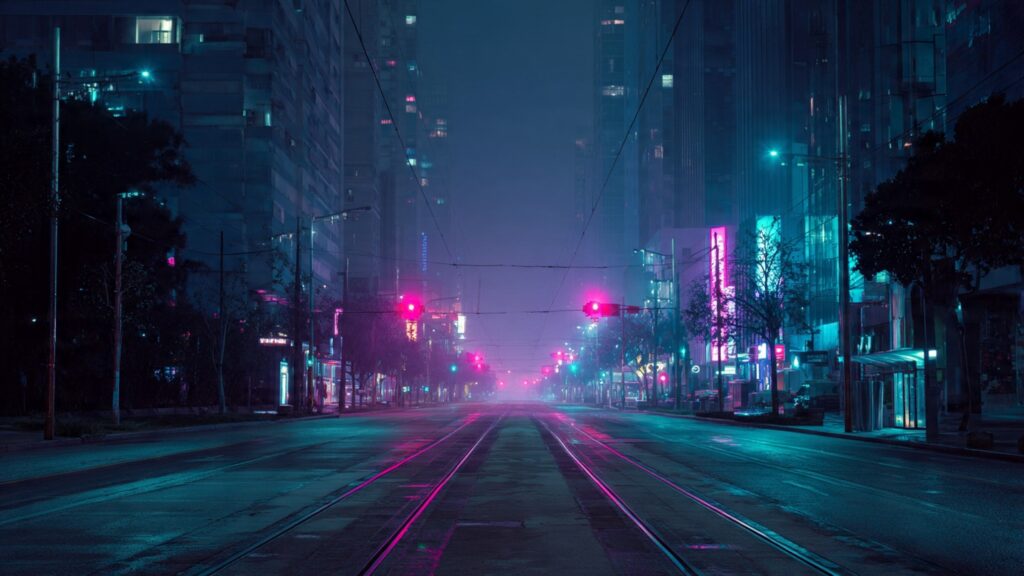
The video that triggered the Dennis H. comment showed Night City as a vacant lot. It was a haunting reminder of what happens when a studio sells a vision they cannot deliver. At launch Cyberpunk 2077 was a city without a soul. The NPCs were braindead. The traffic was on a rigid rail that broke if a player stood in the way. The world was beautiful in still images but it fell apart the moment you tried to interact with it. The studio spent the next three years trying to fill that emptiness with patches and updates.
If the Witcher 4 is trending toward being worse it means we are looking at a Continent that is equally hollow. It means the ambitious AI systems promised for the next generation of Witcher games are likely being gutted to save performance. It means the world will be a series of pretty backgrounds with no meaningful interaction. For a series built on immersion and choice this is a death sentence. The fans are expecting a world that feels alive. They are expecting a world that reacts to their presence. If they get another ghost town the brand will never recover.
The leadership seems to believe that they can repeat the redemption arc strategy. They think they can ship a broken game and then win back the audience by fixing it over several years. This is a gamble that only works once. The audience is smarter now. They are more cynical. They have seen this playbook before and they are tired of it. You cannot build a long term legacy on a foundation of apologies and post launch fixes. The integrity of the product must be established at the start. Dennis H. knows this. He is seeing the “fix it later” mentality being applied to Project Polaris and he is calling it out for the disaster it is.
The Executive Bonus Culture versus Developer Burnout
There is a massive disconnect between the financial reality of the executives and the physical reality of the developers. The leaders of CD Projekt RED received millions of dollars in bonuses following the launch of Cyberpunk 2077. They were rewarded for hitting a release date and driving up the stock price regardless of the quality of the product. This creates a perverse incentive structure. If you are rewarded for failure you have no reason to change your behavior. You will continue to push for unrealistic deadlines because you know you will be taken care of either way.
The developers on the other hand are the ones who pay the price. They are the ones who have to work sixteen hour days to try and make a broken build playable. They are the ones who have to read the death threats and the vitriol from disappointed fans. They are the ones who have to live with the shame of releasing a product that does not meet their own standards. This leads to a state of chronic burnout. When you work that hard for a leadership that clearly does not value your input you lose your passion. You stop caring about the quality of the work and you start just trying to survive until the next milestone.

Dennis H. is a voice for the burned out. He is expressing the frustration of an entire department that is being ignored. He is pointing at the bonus checks and the empty promises and he is saying that enough is enough. The culture of the studio has become toxic because the people at the top are insulated from the consequences of their decisions. Until the leadership is held accountable for the technical state of their games the cycle of failure will continue. No engine swap or rebranding can fix a company that does not respect its own talent.
Institutional Memory and the Repeating Cycle
One of the most concerning parts of the Dennis H. leak is the claim that the leadership is learning nothing. This points to a total lack of institutional memory. A healthy studio reviews its failures and changes its processes to ensure they do not happen again. They analyze the bottlenecks in the pipeline. They listen to the post mortem reports from the engineers and artists. They adjust their expectations based on the reality of production.
CD Projekt RED seems to be doing the opposite. They are doubling down on the same top down management style that failed them in 2020. They are setting dates based on marketing windows instead of technical readiness. They are ignoring the warnings from the people who are actually building the game. This is the definition of insanity. It is the act of repeating the same actions and expecting a different result. If they could not ship a functional game in 2020 with a team that had worked together for years they certainly cannot do it in 2026 with a team that is still learning a new engine.
The studio has also lost a significant amount of veteran talent since 2020. Many of the people who built The Witcher 3 have moved on to other companies. They were replaced by new hires who do not have the same history with the studio. This means the institutional memory is even thinner than it was before. The few veterans who remain like Dennis H. are the only ones left to sound the alarm. If they are ignored the studio will continue to wander in the dark until they hit another wall.
The Illusion of the Redemption Arc
The media narrative surrounding the Cyberpunk 2077 expansion was overwhelmingly positive. It was framed as a grand comeback. The studio was praised for their commitment to the fans. This was a massive win for the PR department but it was a disaster for the internal culture. It validated the idea that the launch state does not matter as long as you fix it eventually. It taught the executives that they can lie to the public for years and still be treated as heroes in the end.
This is the illusion that Dennis H. is fighting against. He knows that the redemption arc was a massive drain on the studio resources. He knows that it took years of work that should have been spent on new projects. He knows that the game still has fundamental flaws that can never be fully fixed. Most importantly he knows that the audience will not be so forgiving a second time. The “we are sorry” video only works once. If they have to release another one for The Witcher 4 the studio will become a laughing stock.
The management seems to think they have a infinite supply of goodwill. They think the Witcher brand is indestructible. They are wrong. No brand can survive two back to back disasters of this magnitude. If Project Polaris launches in a broken state it will be the end of CD Projekt RED as a top tier developer. They will be relegated to the status of a cautionary tale. They will be the studio that had everything and threw it away because they were too arrogant to learn from their mistakes.
The Technical Reality of the Witcher Four Build
What does “even worse” actually mean in a technical context. For a character artist like Dennis H. it likely means a total failure of the asset pipeline. It means that the character models are too heavy for the engine to handle in a dense world. It means the rigging and animation systems are breaking under the pressure of the new engine. It means the LOD systems are failing causing massive pop in and visual glitches. These are the kinds of things that make a game feel cheap and unfinished.
It also likely means a failure of the world streaming logic. One of the biggest problems with Cyberpunk was that the game could not load assets fast enough as the player moved through the city. This resulted in the ghost town effect where the world would be empty because the data was still sitting on the drive. If the Witcher 4 has a world that is larger and more detailed than the previous games this problem will be even more severe. If the management is not allowing for the time needed to optimize the streaming the game will be a stuttering mess.
We are also looking at a failure of the systemic gameplay. The Witcher games rely on a complex web of scripts for quests and AI behavior. If these systems are not properly integrated into the new engine they will break in unpredictable ways. We saw this in Cyberpunk with quests that would not trigger and AI that would simply stand still during combat. If the leadership is pushing for a release before these systems are stable the game will be unplayable. This is the technical reality that Dennis H. is warning us about. He is seeing the build every day and he is seeing that it is not working.
The Silence of the Polish Technical Scene
There is a noticeable silence from the rest of the industry regarding this leak. Many other studios in the region are watching this situation with a mix of fear and frustration. They know that the reputation of the entire Polish gaming sector is tied to CD Projekt RED. If the flagship studio fails it makes it harder for everyone else to secure funding and talent. They want the studio to succeed but they also see the same management patterns from the outside.
There is a feeling of helplessness among the developers in the region. They see a giant of the industry making obvious mistakes and they cannot do anything to stop it. The Dennis H. leak is a moment of collective frustration boiling over. It is a sign that the culture of silence is beginning to break. Developers are no longer willing to protect a leadership that is actively sabotaging their work. They are starting to realize that their loyalty should be to the art and the audience rather than the corporate logo.
This is a turning point for the industry. The era of the “rockstar” studio that can do no wrong is over. We are entering an era of transparency and accountability. The fans are no longer satisfied with cinematic trailers and vague promises. They want to know what is happening behind the scenes. They want to know if the people making the game are being treated with respect. They want to know if the product they are buying is actually finished. The Dennis H. leak has given them a window into the reality of modern development and it is not a pretty sight.
The Path Forward for Project Polaris
Is there a way to save the Witcher 4. The answer is yes but it requires a radical change in direction. The studio must immediately stop prioritizing the marketing schedule. They must move the release date to a point where the technical team is confident in the build. They must empower their senior artists and engineers to make the final call on when the game is ready. Most importantly they must replace the leadership that has proven time and again that they do not understand the process of making a game.
The studio needs to return to its roots as a developer focused company. They need to dismantle the top heavy executive structure and put the decision making power back in the hands of the people who are actually doing the work. They need to create a culture where feedback is welcomed and where warnings are taken seriously. If they can do this they might be able to salvage the project. They might be able to create a game that honors the legacy of the Witcher.
However the Dennis H. leak suggests that this is not going to happen. It suggests that the leadership is dug in and unwilling to change. It suggests that they are moving forward with the same flawed plan and the same unrealistic expectations. If this is the case we should prepare ourselves for another disaster. We should stop the hype train and start looking at the project with a critical eye. We should listen to the artist who is telling us that the game will be worse. He is the only one telling the truth.
The End of the Hype Cycle
The era of blind faith in CD Projekt RED is officially over. The Dennis H. warning is the final nail in the coffin of the studio’s reputation. We can no longer afford to give them the benefit of the doubt. We must judge them on their actions and the state of their software rather than their words. The next time they show a trailer for Project Polaris we should look past the beautiful graphics and ask the hard questions about the frame rate and the AI.
The hype cycle is a drug that the industry uses to blind the audience to the reality of production. It creates a sense of excitement that overrides our critical thinking. The Dennis H. leak is the antidote to that drug. It is a cold splash of reality that reminds us that games are made by people and those people are currently under immense pressure from a failing leadership. We owe it to the developers to listen to their warnings. We owe it to ourselves to demand a better product.
The Witcher 4 could have been a moment of triumph for the studio. It could have been the project that proved they had learned their lesson. Instead it is becoming a symbol of everything that is wrong with the modern gaming industry. It is a project being driven into the ground by corporate arrogance and a lack of accountability. The warning has been issued. The information is out in the open. The rest is up to us. We must decide if we are willing to accept another ghost town or if we will demand the excellence that the series deserves.