Closed testing for Hades 2 concluded on April 29. This sequel to the acclaimed roguelike, which garnered numerous Game of the Year awards in 2020 and was listed among the best games of all time by various outlets, allowed a select group of users to experience the first location and boss.
This was part of the polishing process prior to its anticipated early access launch. Having played Hades 2 ourselves, we were pleased with the experience and are eager to share why the upcoming release from Supergiant Games is worth the wait.
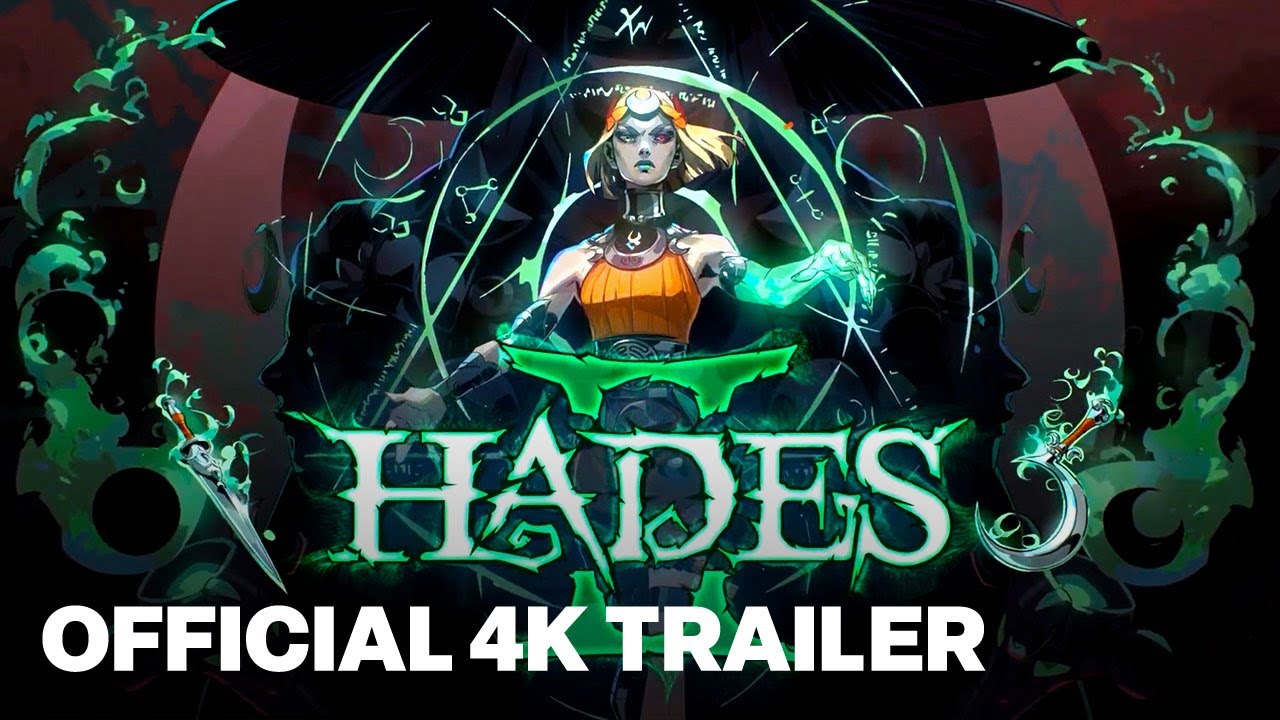
Hades 2 unfolds several years after the original game’s events. This time, the protagonist is Melinoe, Zagreus’s sister and the Underworld’s princess. She yearns to avenge Kronos for her family’s downfall, some of whom fell to the titan or remain in his captivity. However, she cannot simply leave the house; first, she must demonstrate to the goddess Hecate her capability to endure the forthcoming challenges. The first location in Hades 2, explored during the playtest, is dedicated to this very trial.
The fundamental gameplay mechanics remain unchanged. The heroine must navigate labyrinths of various rooms, battling numerous monsters for rewards that lead to the boss guarding the passage to the next area. Melinoe’s arsenal includes three techniques | a melee attack, a ranged attack, and a sigil—a large circle that decelerates all ensnared enemies.
Assisting Melinoe’s escape, as they did for Zagreus, are Greek gods like Poseidon, Aphrodite, and Apollo, who bestow gifts that enhance abilities. These gifts can expand the attack radius, teach incendiary or freezing attacks on foes, and enable lightning emission while sprinting past monsters. Additionally, gifts may include valuable resources or items like a silk cape that provides damage protection and a temporary buff until it tears.
Artemis, the huntress goddess, is particularly notable among the Olympians. She does more than offer gifts to Melinoe; occasionally, she joins the fray, emerging from the bushes to inflict substantial damage on enemies. The key is to avoid her powerful shots and dodge effectively. After the battle, Artemis also upgrades the heroine’s abilities, setting a precedent for the other gods.
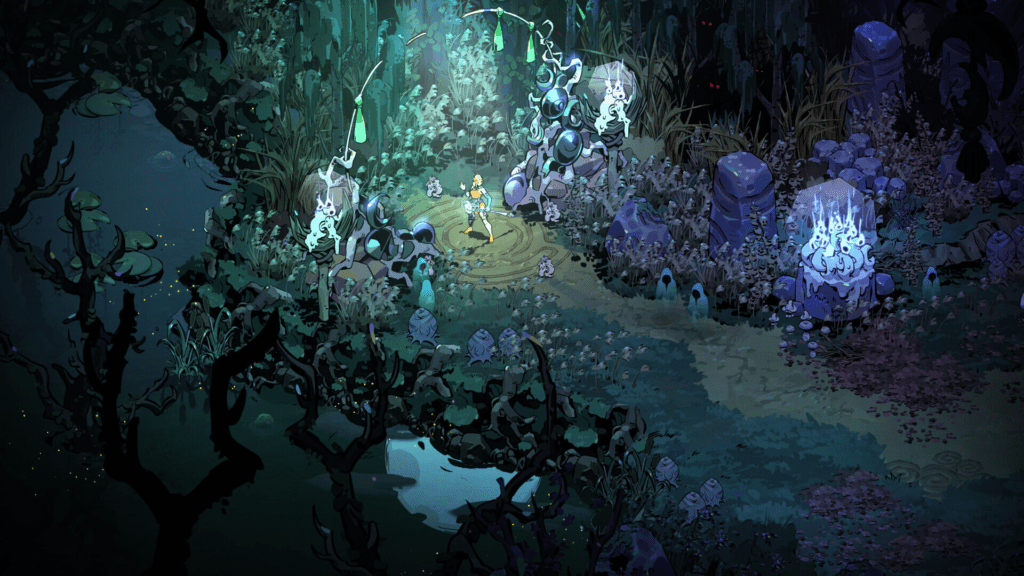
Despite significant content limitations in the playtest, it was still possible to create diverse builds to suit any preference. On several occasions, a power-up was secured that significantly boosted the heroine’s damage in the battle’s first 10 seconds. The game promoted an aggressive playstyle, encouraging direct engagement over distant shooting or evading enemies around the arena. When executed well, one could breeze through locations in seconds, reaching the final boss from the start in just five minutes. Alternatively, another build enabled the detonation of enemies with a long-range attack every 20 seconds, allowing for a safer strategy of herding monsters across the field and intermittently firing from a distance.
During the test, only two weapon types were available | swift blades and a slow, yet marginally stronger, staff. However, it was evident from the starting area that at least four more would be introduced. Blades could be acquired using resources collected during runs, which could also be spent on additional tools like a pickaxe for mining silver in designated areas across various locations. Generally, even the least successful run would yield some supplies to carry over and invest in upgrades.
The Arcana system was another new feature – special cards granting passive abilities such as mana restoration, healing, damage amplification, and more. Each passive had a unique potency, and Melinoe could allocate cards for 10 points, typically selecting three or four Arcana from a possible nine. Thus, even with full access, choices had to be made, opting for either numerous but weaker abilities or a few stronger ones.

The continuous enhancements extend further. The hub features a unique cauldron where players must deposit extracted resources to unlock new rooms, passive abilities, or characters at the starting location. During closed testing, there were approximately ten characters available for interaction, offering insights into the game’s altered world or accepting gifts. In exchange, they bestow a small item upon the heroine that provides a consistent buff during races, such as healing after each room is completed. However, this effect is temporary, and the item breaks after several uses, though it is not permanently destroyed. It can be retrieved from home for subsequent journeys.
The confrontation with the final foe in closed testing, Hecate, proved significantly more challenging than the initial bosses in the original Hades. Her speed, diverse attack patterns, and the occasional “bullet hell” scenario in the arena, where dodging a barrage of spheres while counterattacking is necessary, heightens the difficulty. Defeating her once may seem like a miracle, but the test build requires five victories. With practice and character progression, the final battle becomes manageable, allowing for a flawless victory without sustaining any damage.
Hades stood out as an exceptional action game, captivating even those typically uninterested in roguelikes. Its ease of learning, coupled with profound game mechanics and considerable variability, made it notable. The addition of a striking visual style and Darren Korb’s enchanting soundtrack resulted in a game that Supergiant Games is likely to revisit frequently. Based on the closed test observations, Hades 2 should not be a concern. If the original appealed to you, the sequel promises to be equally, if not more, pleasing.