In the ever-evolving world of video game development, motion capture technology has long been a staple, bringing lifelike movements to characters by scanning the faces and bodies of Hollywood stars, professional athletes, and even voice actors. From the expressive faces of A-list celebrities in games like Death Stranding to the athletic builds of footballers in FIFA, this practice has become standard for creating immersive digital experiences.
But what happens when the focus shifts to less conventional parts of the body? A fascinating story has emerged from the development of Marvel Rivals, a 2024 hero shooter from NetEase Games, where the spotlight has landed on an unexpected asset | the buttocks of real-world models, digitally scanned to bring authenticity to the game’s superheroines.
At the center of this tale is Alanya Alisha, a model and Twitch streamer known as ARUUU (@DeputyARUUU), who has gained viral attention for her role in shaping the posterior profiles of two iconic Marvel characters. Alisha revealed that her buttocks were scanned and used to craft in-game skins for Psylocke, the telepathic ninja, and Susan Storm, aka the Invisible Woman of the Fantastic Four. This revelation, shared in a now-iconic X post on January 6, 2025 (https://twitter.com/DeputyARUUU/status/1876398121204457673), sparked a wave of intrigue and amusement across gaming communities, shedding light on a lesser-known aspect of character design in modern video games.
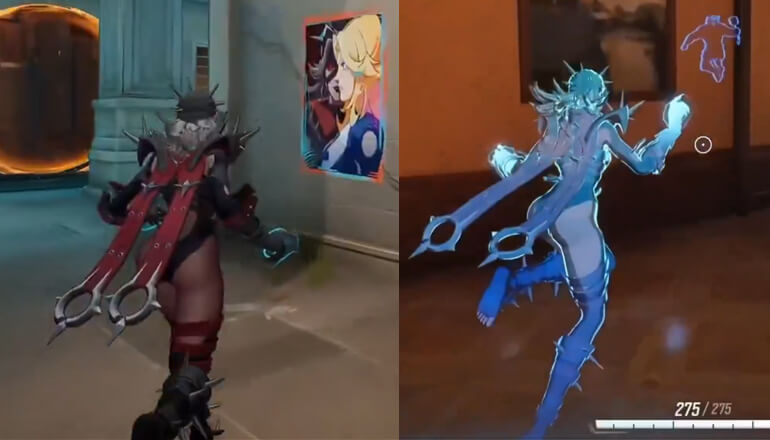
Marvel Rivals, which launched in December 2024, has been a breakout hit, blending fast-paced 6v6 combat with a roster of Marvel heroes and villains. The game’s Season 1 update, “Eternal Night Falls,” introduced the Fantastic Four on January 10, 2025, bringing Susan Storm into the fray alongside her family. But it was during the pre-release teasers that Alisha, an experienced model with a keen eye for detail, noticed something familiar. Watching the trailer for Susan Storm’s standard skin, she recognized the curves of her own backside—a digital cast she had previously provided for Psylocke’s in-game model. “Thought we’ve been over this but once again—you cannot deny that it is my ass right there,” Alisha wrote in her X post, humorously claiming ownership of the Invisible Woman’s posterior. She had been confident about her contribution to Psylocke’s design, a process that involved a detailed scanning session to capture her dimensions, but Susan Storm’s inclusion came as a surprise.
Determined to confirm her suspicions, Alisha took action. She compared the game’s character models to her own measurements, sharing side-by-side images that highlighted the unmistakable similarities. In a follow-up post, she revealed that she reached out to the Marvel Rivals development team at NetEase Games to inquire about the reuse of her scans. The response was swift and affirmative | the team confirmed that her “modified rear” had indeed been repurposed for Susan Storm’s standard skin, a decision likely made to streamline development while maintaining a consistent aesthetic across the game’s female characters. This revelation cemented Alisha’s place in gaming lore, earning her the self-proclaimed title of “That One Marvel Rivals Ass Model” on social media—a moniker that has since become a badge of honor among her followers.
The use of real-world models for such specific body parts isn’t entirely new, but it’s rarely discussed with the candor Alisha has brought to the table. In the past, developers have scanned everything from hands to full-body movements to ensure authenticity, but focusing on the buttocks adds a layer of specificity that reflects the gaming industry’s obsession with detail. For Marvel Rivals, the decision to use digital casts of real women’s buttocks speaks to the game’s commitment to stylized realism—Psylocke and Susan Storm are depicted with athletic, idealized forms that align with their superhero personas, yet grounded in the proportions of actual human models. Alisha’s scans, likely captured using 3D photogrammetry or laser scanning, provided the raw data that artists then sculpted into the final in-game models, ensuring that every curve and contour felt lifelike, even in a fantastical context.
While Alisha has embraced her role in the spotlight, she’s also hinted at the broader scope of this practice. “The names of other gluteal donors remain unknown and are unlikely to be revealed,” she noted in a follow-up post, citing the confidentiality clauses in her contract that prohibited her from disclosing her involvement until the similarities became undeniable. This secrecy is standard in the industry, where models often work under NDAs to protect the development process. Alisha’s willingness to speak out—first about Psylocke and later about Susan Storm—stems from her recognition of her own body in the game, a moment of pride that she couldn’t keep under wraps. Her background as a model, which includes work for denim brands like Express and American Eagle, gave her the confidence to identify her contributions, as she explained in a PC Gamer interview | “I started modeling for jeans… the main focus is usually the fit but also the ass.”
The story has resonated widely, not just for its novelty but for what it reveals about the intersection of gaming, modeling, and digital artistry. Alisha’s journey from a jeans model to a key contributor in a Marvel game highlights the diverse skill sets that feed into modern game development. Her scans, used for Psylocke’s sleek ninja attire and Susan Storm’s form-fitting Fantastic Four suit, have become a talking point in Marvel Rivals’s community, with players on Reddit and X marveling at the behind-the-scenes process. Some have even dubbed her the “unsung hero” of the game’s character design, while others have playfully speculated about which other heroes might share similar origins.
You can learn more about ARUUU’s claims from her materials on Instagram.