





EXCAVATION Nº 0017 · HUMAN ARCHIVE
World: London, Fallout London
Period: 2019 onward (real world)
Status: Active
On 25 July 2024, a game called Fallout London went live on the digital store GOG. Within twenty-four hours it had been downloaded more than half a million times, making it the fastest-claimed title in the store’s history. It had dozens of hours of quests, an original story, new factions, new weapons, and full voice acting by more than a hundred performers, including two actors who had played the Doctor in Doctor Who. It cost nothing. It was built over five years by nearly a hundred volunteers, most of whom had never worked in the games industry, and they gave it away.
Fallout London is a mod, a modification of Bethesda’s Fallout 4 that replaces almost everything in the original game with new content. Calling it a mod undersells it. It is a full game, with its own city, history, factions and culture, built on borrowed technology by people who were not paid.
The Human Archive studies the cultures that players build inside the worlds they enter. The Institute has already looked at players who write messages, wage wars and preserve dead worlds. Fallout London introduces another kind of player, the builder, who does not just live in a world but makes one.
I. The Builders
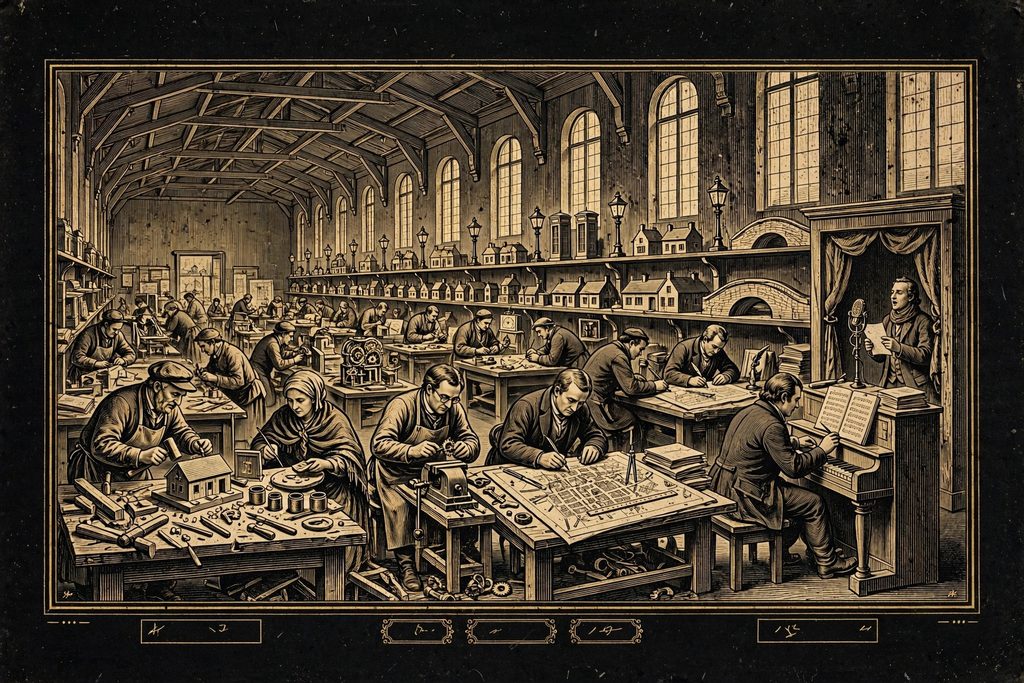
The project was started in 2019 by a group that called itself Team FOLON, led by its director, Dean Carter. It began as an ambitious idea, to take the Fallout series, which had always been set in the United States, and bring it to Britain. It grew far beyond what its founders expected. During the COVID-19 lockdowns of 2020 and 2021, when many people found themselves at home with time and a need for purpose, the team expanded rapidly. By the end, nearly a hundred modders had worked on it, building environments, writing quests, scripting systems, creating weapons and composing music.
The voice cast became a story of its own. More than a hundred actors recorded lines, among them Colin Baker and Sylvester McCoy, the sixth and seventh Doctors in Doctor Who. They were joined by John Bercow, the former Speaker of the House of Commons, and Neil Newbon, who played Astarion in Baldur’s Gate 3.
The project also lived through real history. When Russia’s full-scale invasion of Ukraine began in 2022, the war disrupted the team, and several members left their positions. A game about the aftermath of a war was being built by people whose own lives were being reshaped by one.
II. The Tools
Fallout London exists because of a decision Bethesda made long before. Since The Elder Scrolls III Morrowind in 2002, the studio has released its own development tools to players. Those tools started with the Construction Set and later became the Creation Kit, the same software its designers use to build its games. Players have used them to make everything from new weapons to entire new worlds. Bethesda’s games became, in effect, platforms on which a community could build.
That generosity has a limit, and Fallout London ran into it. In April 2024, shortly before the planned release, Bethesda issued a major update to Fallout 4. Because the mod depended on the old version of the game, the update broke it, and the team had to delay its launch and rework its systems. The game was too large for the usual modding websites, so it was distributed through GOG, which allowed players to install it over a compatible version of Fallout 4. According to Carter, the team had no contact with Bethesda throughout.
The episode reveals the builders’ basic condition. They own their work, but not the land it stands on. Every mod is built on a foundation owned by someone else, which that owner can change at any time. Fallout London’s makers built a city on borrowed ground, and the ground shifted beneath them weeks before they opened the gates.
III. A Country Imagined Into the Wasteland
What the builders made was not simply more Fallout. It was the first Fallout set outside the United States, and the team used that freedom to imagine how Britain, specifically, would have survived the end of the world.
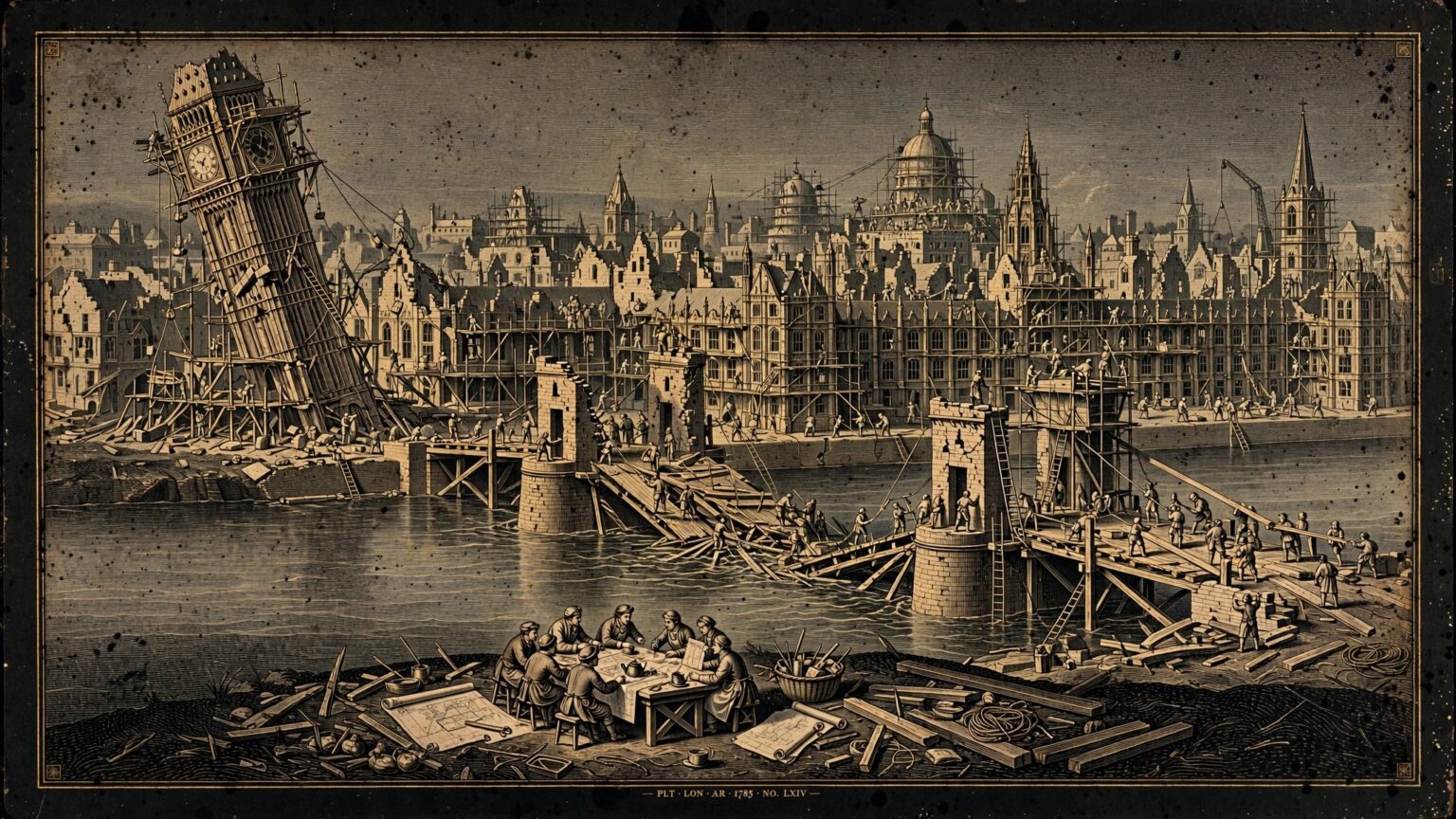
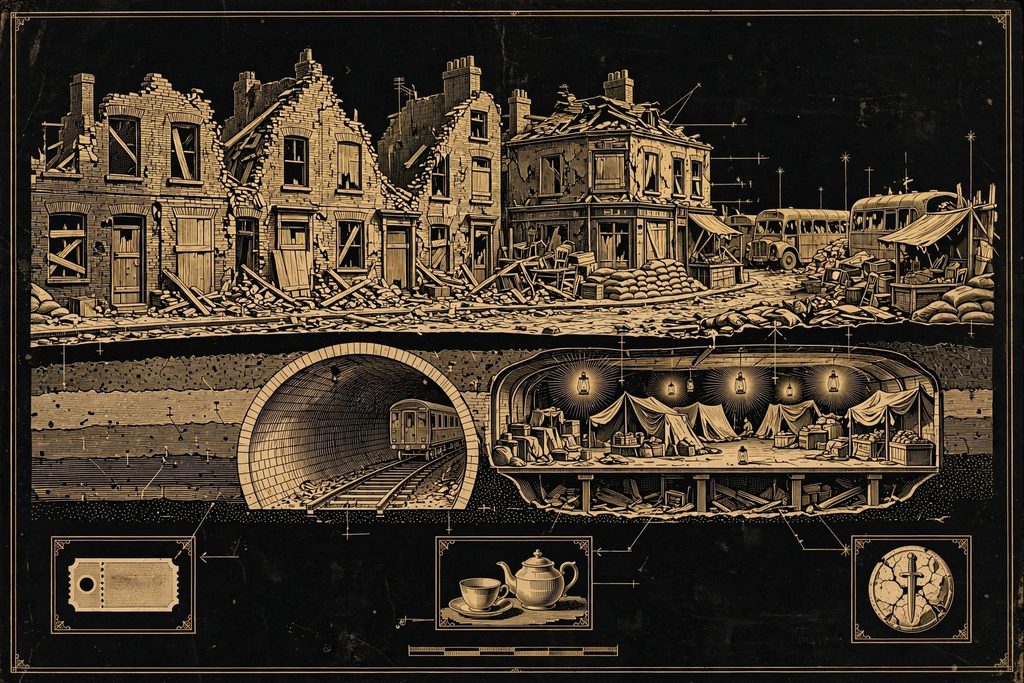
Fallout London is set in 2237, between the events of the first two Fallout games. Its London is ruled by the Gentry, an aristocratic order based in Westminster, and contested by the 5th Column, a militaristic movement with fascist overtones. The Camelot Movement draws on the legend of King Arthur, and gangs, clone-makers and other factions compete for the ruins. The Underground is a central part of the city’s geography. Its currency is not the bottle caps of the American games but old Underground tickets, which also open gates and passages. Players brew tea to improve their equipment. The landmarks are all there, from the clock tower at Westminster to Tower Bridge and Piccadilly Circus. The slang, jokes and references are densely, sometimes untranslatably, British.
The sociologist Roland Robertson popularised the term glocalisation in the 1990s to describe how global products and ideas are adapted to local cultures. Usually that adaptation is done by companies. Fallout London is glocalisation done by fans. An American franchise was taken by people from the place it had never visited and rebuilt in their own image. The builders did not just extend the Fallout world. They gave it a country it had never had, seen through the eyes of the people who live there.
IV. The Economy of the Gift
Why would a hundred people spend five years building a game and then give it away?
The writer Lewis Hyde argued in The Gift (1983) that works of art move through two economies at once. In the market economy, things are sold and the exchange ends the relationship. In the gift economy, things are given, and the giving creates bonds between the people involved. Hyde believed that creative work belongs at heart to the second economy. It is received by its maker as a kind of gift, a talent or an inspiration, and passed on.
Fallout London belongs almost entirely to the gift economy. It was free. After launch, the team opened a page where players could donate if they wished, but there was no price. The rewards for the builders were recognition, the satisfaction of craft, the friendships of a long shared project, and, for some, the beginning of careers. A project of this scale works as a portfolio that no school could provide.
The legal scholar Yochai Benkler described a related phenomenon in The Wealth of Networks (2006), which he called commons-based peer production. Large numbers of people collaborate over the internet to produce complex works without a market or a manager directing them. The Linux operating system and Wikipedia are his central examples. Fallout London belongs in the same family. It is a large, complex and functional work, built by a loosely organised community for no payment, and given to everyone.
V. The Unfinished Cathedral
Fallout London was not finished when it was released, and in some ways it is still being finished. Critics praised its worldbuilding, its ambition and its authentic Britishness. Many also found it unstable at launch, with bugs, crashes and broken quests, the predictable results of an enormous volunteer project built on an older engine. The team kept working. A virtual reality version followed in May 2025. A new expansion, Rabbit and Pork, was released in September 2025 with thirty new quests and eighty new characters. Its name is Cockney rhyming slang for talk.
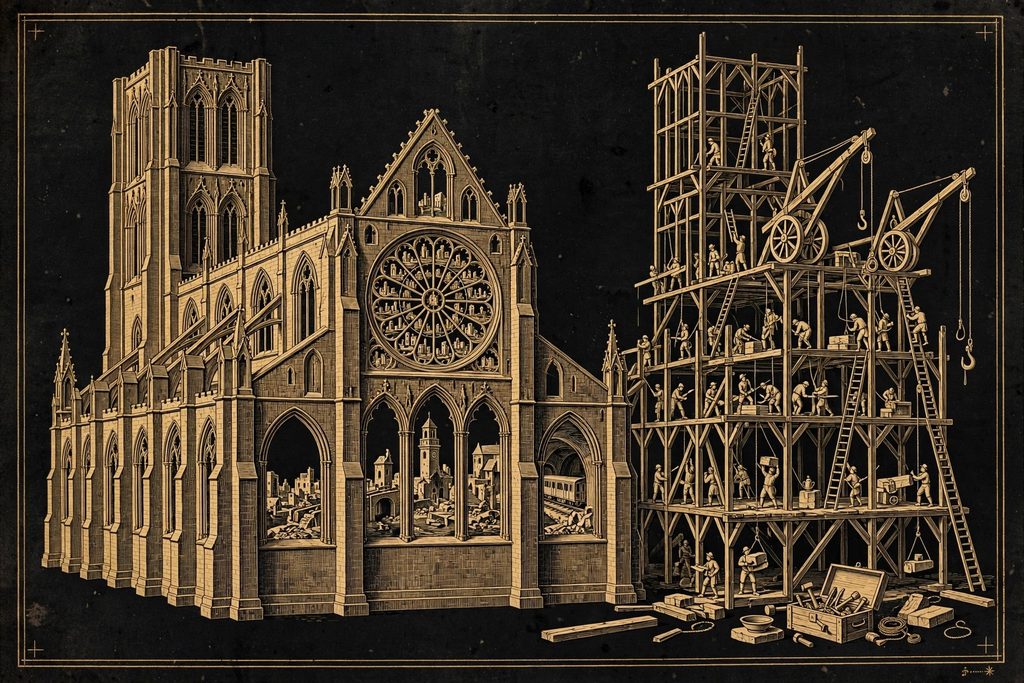
The Institute is reminded of an older kind of collective construction. Europe’s medieval cathedrals were built over decades, sometimes centuries, by generations of masons, carpenters and glaziers. Many of them never saw the finished building, and the work was often begun before its full design was known. Fallout London is a digital cathedral of the same kind. It is never truly complete, and it is maintained and extended by a community that keeps returning to it because building it has become part of who they are.
The ancestor of them all
Fallout London stands at the end of a long tradition of players rebuilding the games they love:
- Doom and Quake. In the 1990s, players released total conversions that turned the original games into entirely new ones.
- Counter-Strike. Created in 1999 as a modification of Half-Life, it became one of the most played games in the world.
- Defense of the Ancients. A custom map for Warcraft III first created in 2003, it founded an entire genre, the multiplayer online battle arena.
- DayZ. Released in 2012 as a modification of the military simulator Arma 2, it helped start the modern survival game.
Some of these projects became commercial products and made their creators famous. Fallout London chose a different path, at least so far, and remained a gift. It also belongs to a quieter tradition the Institute has documented elsewhere. The players of City of Heroes rebuilt and ran a dead world for years without pay. The modders of Rain World spent five years building its Downpour expansion. The pattern is consistent. Wherever a world is loved enough and the tools are available, some of its players will stop consuming it and start building it.
The pattern
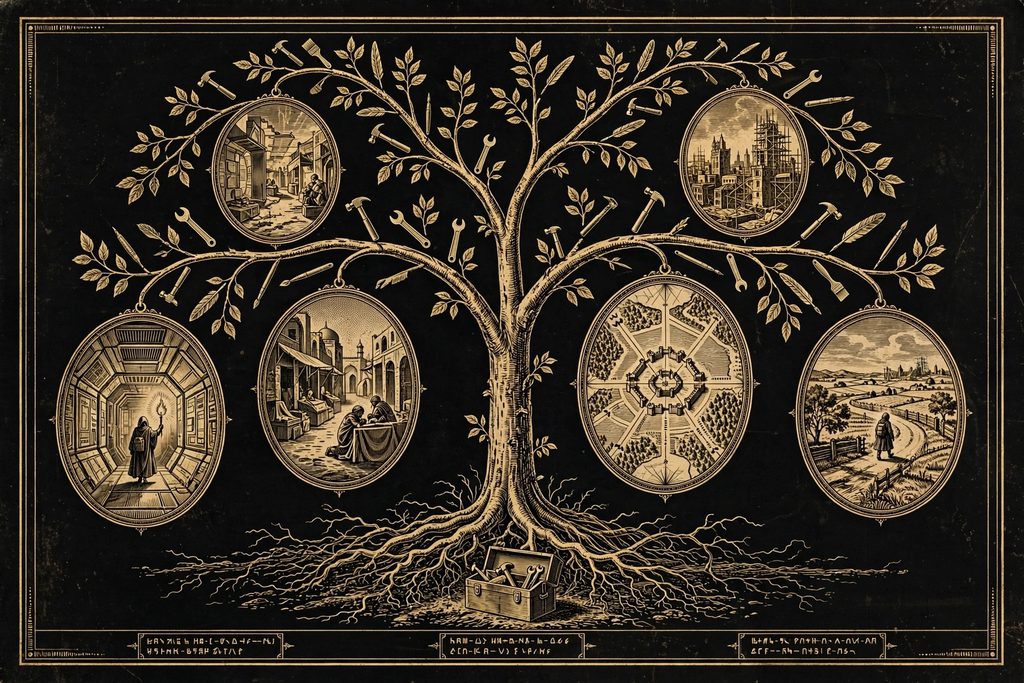
Fallout London shows the life cycle of the builder in player culture:
- Love of a world becomes the desire to extend it. The builders began as players who wanted to see Fallout in a place it had never been.
- Open tools create a commons. Bethesda’s decision to share its development tools turned its games into ground on which communities could build.
- The commons rests on someone else’s land. A single update from the platform’s owner could break years of volunteer work.
- Local builders transform global stories. By rebuilding Fallout in Britain, its fans gave the series a culture and a humour it had never had.
- The gift creates a community. Built for free and given away, the project bound its makers together and continues to grow after release.
For the world Fallout London borrows from, see Why the Wasteland Keeps Rebuilding the Same Civilization.
Findings
- Fallout London is a full game built by volunteers. Nearly a hundred modders and more than a hundred voice actors spent about five years on it, and it was given away free in July 2024.
- It depended on borrowed ground. Built with Bethesda’s tools on Bethesda’s game, it was broken weeks before release by an official update and had to be reworked.
- It reimagined Fallout as British. As the first Fallout set outside the United States, it filled the wasteland with Britain’s institutions, landmarks, slang and humour.
- It belongs to the gift economy. Like Linux and Wikipedia, it is commons-based peer production, sustained by recognition, craft and community rather than payment.
- It is an unfinished cathedral. Updated, translated to virtual reality and expanded after launch, it continues to be built by the community that made it.
This Excavation draws on Fallout London, its development history as reported by its makers and the press, and the research literature on gift economies and peer production. Read more about how the Institute works.
The Institute collects field evidence from people who lived inside these worlds. If you helped build a world for others to play, send us your account.
Sources
- Fallout London (Team FOLON, 2024), and its VR version (2025) and Rabbit and Pork expansion (2025).
- Fallout: London, Wikipedia, for development, release, cast and reception.
- Fallout 4 (Bethesda Game Studios, 2015) and The Elder Scrolls III Morrowind (Bethesda Game Studios, 2002).
- Lewis Hyde, The Gift: Imagination and the Erotic Life of Property (1983).
- Yochai Benkler, The Wealth of Networks (2006).
- Roland Robertson, “Glocalization: Time-Space and Homogeneity-Heterogeneity”, in Global Modernities (1995).