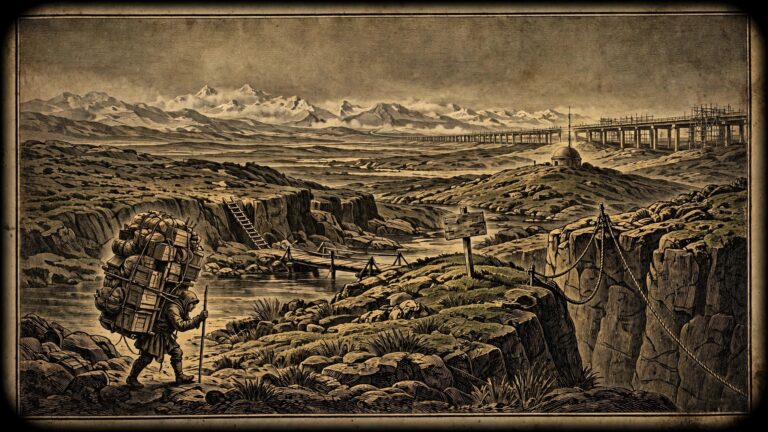


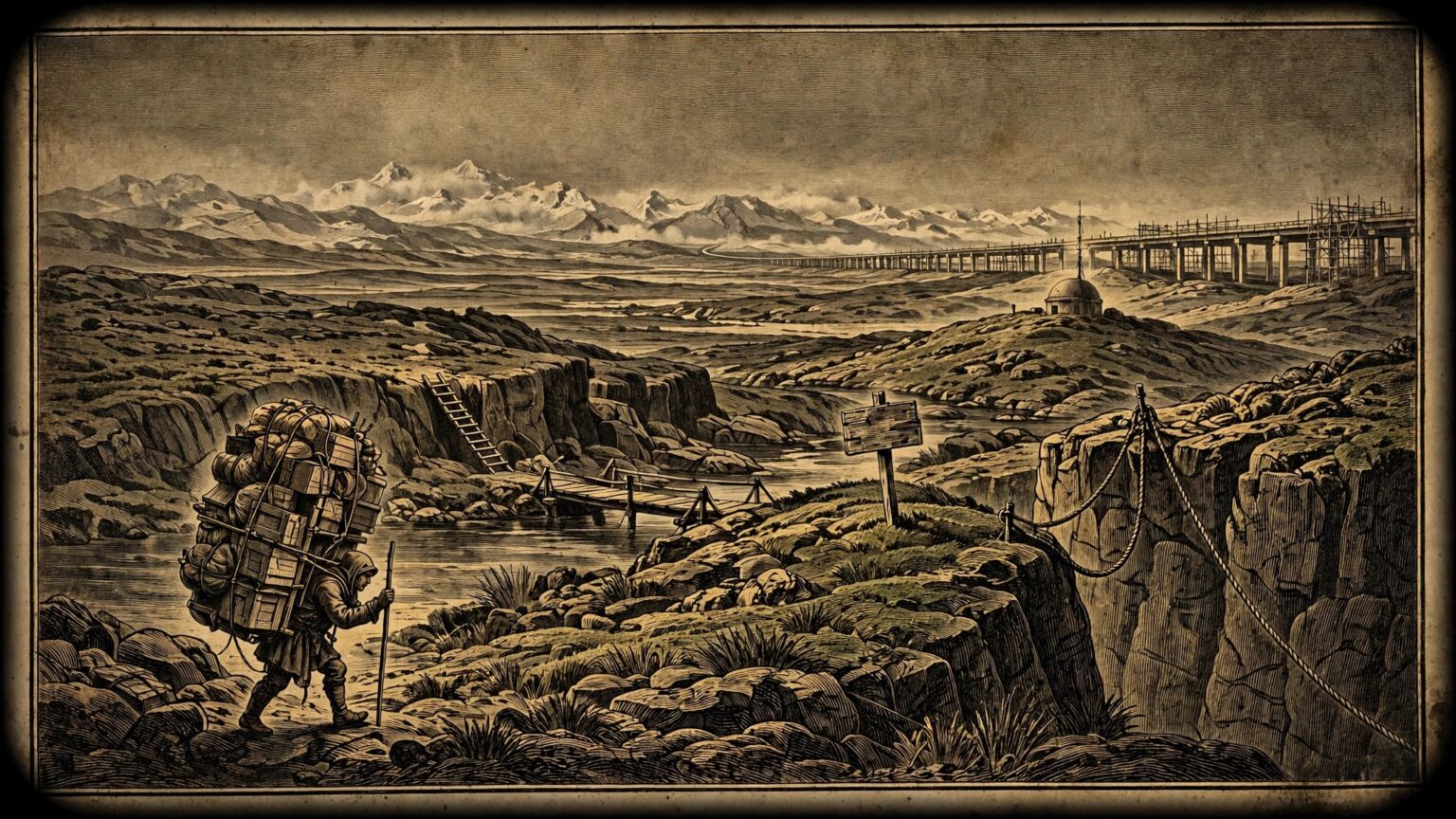
Most post-apocalyptic stories are about fighting. Death Stranding is about walking. In a ruined America where most of the population is dead, cities have been destroyed and the rain itself ages whatever it touches, the hero is not a soldier but a porter. His job is to carry parcels from one isolated settlement to the next, on foot, over mountains and rivers, and in doing so to reconnect a country that has fallen apart.
Death Stranding was created by Hideo Kojima and released by his studio, Kojima Productions, in 2019. A sequel, Death Stranding 2, On the Beach, followed in 2025. Critics were divided at first, unsure what to make of a game about delivery. Then, a few months after its release, the world went into lockdown, and millions of people found themselves isolated at home, waiting for couriers to bring them what they needed. A strange game about loneliness and connection suddenly looked like prophecy.
The Institute has studied the messages players leave for strangers in The Message Culture of the Lands Between and the histories they write in The Fortress That Remembered Everything. Death Stranding belongs in the same Human Archive for a striking reason. Its players, working alone and never meeting, build the roads, bridges and shelters of a shared nation together.
I. The Death Stranding
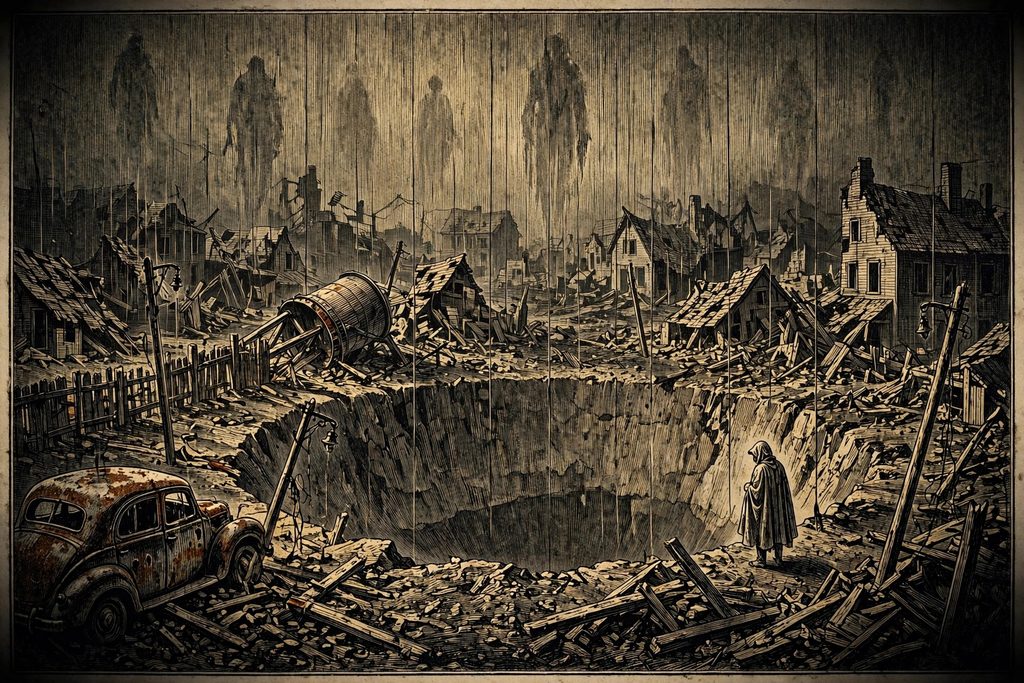
The catastrophe that gives the game its name is never fully explained, and that is part of its power. At some point in the near future, the boundary between the living and the dead broke down. Spectral beings called BTs, the souls of the dead stranded between worlds, now haunt the land. When a BT consumes a living person, the result is a voidout, an explosion powerful enough to leave a crater where a city once stood. A strange rain called Timefall ages and decays anything it touches, plants, metal and human skin alike.
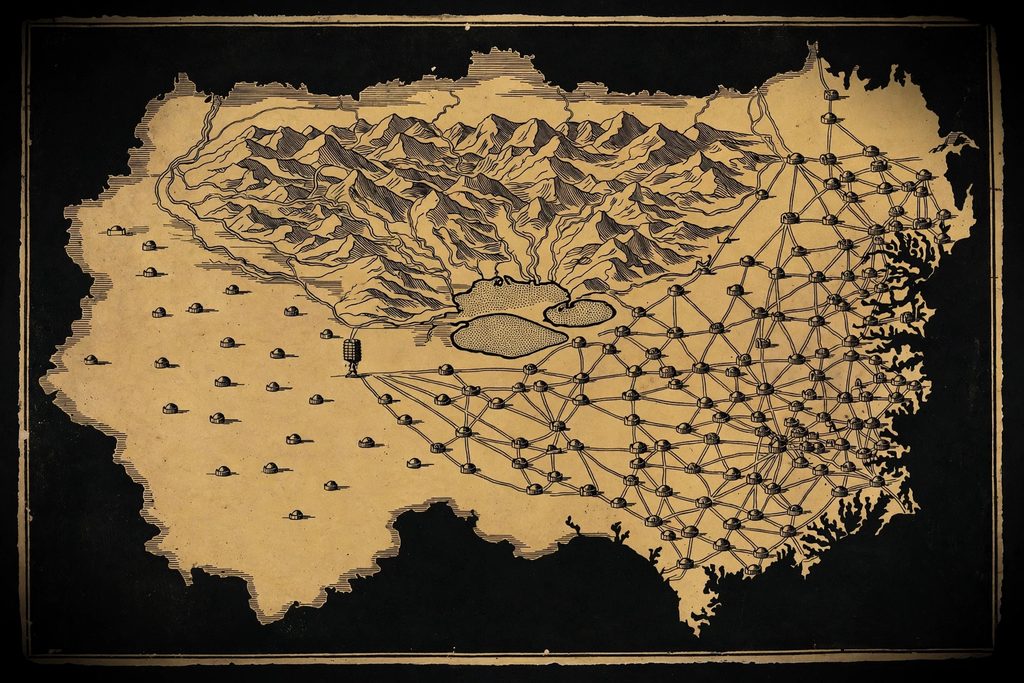
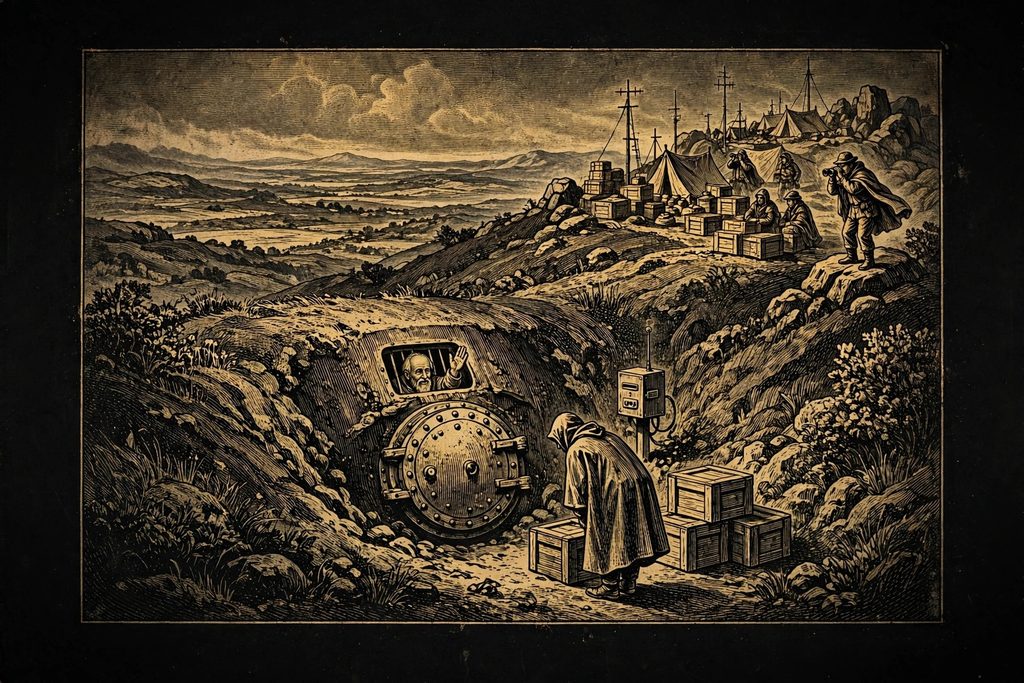
The United States collapsed. Its survivors live scattered across the continent in isolated shelters. Some are knot cities, the remains of towns huddled around a central facility. Others are preppers, families and individuals who live in underground bunkers and never come out. Between them lies an empty land of rocks, moss, rivers and mountains, crossed by no roads, haunted by the dead and patrolled by raiders.
In this world, the most basic act of civilization, moving goods from one place to another, has become heroic. Medicine, food, tools, documents and even the remains of the dead must be carried by hand. The people who do it are porters, and the most reluctant and famous of them is Sam Porter Bridges, the player’s character.
II. A Nation as a Network
The United Cities of America is a country that exists mostly as an intention. Its leaders, working through an organization called Bridges, want to reunite the scattered survivors into a single nation. Their method is not conquest or law. It is a network. Sam’s mission is to walk from the east coast to the west, connecting each settlement he reaches to the Chiral Network, a communication system that lets the cities share information, data and the designs of a technology that can print buildings and tools on demand.
Joining the network is a political act. Each settlement must agree to it, and many are reluctant. Preppers who have survived alone for years distrust a government that failed them once. Some refuse to join at all. Others agree only after Sam has delivered enough of what they need to earn their trust. The relationship is recorded and grows with every delivery, until a settlement is ready to call itself part of the country.
This is a remarkable theory of how nations are made. The UCA is not founded by a declaration or a war. It is built connection by connection, through repeated acts of service between strangers, until a web of dependence becomes a sense of belonging. In Death Stranding, a nation is simply what people call it when enough of them have agreed to stay connected.
III. The Rope and the Stick
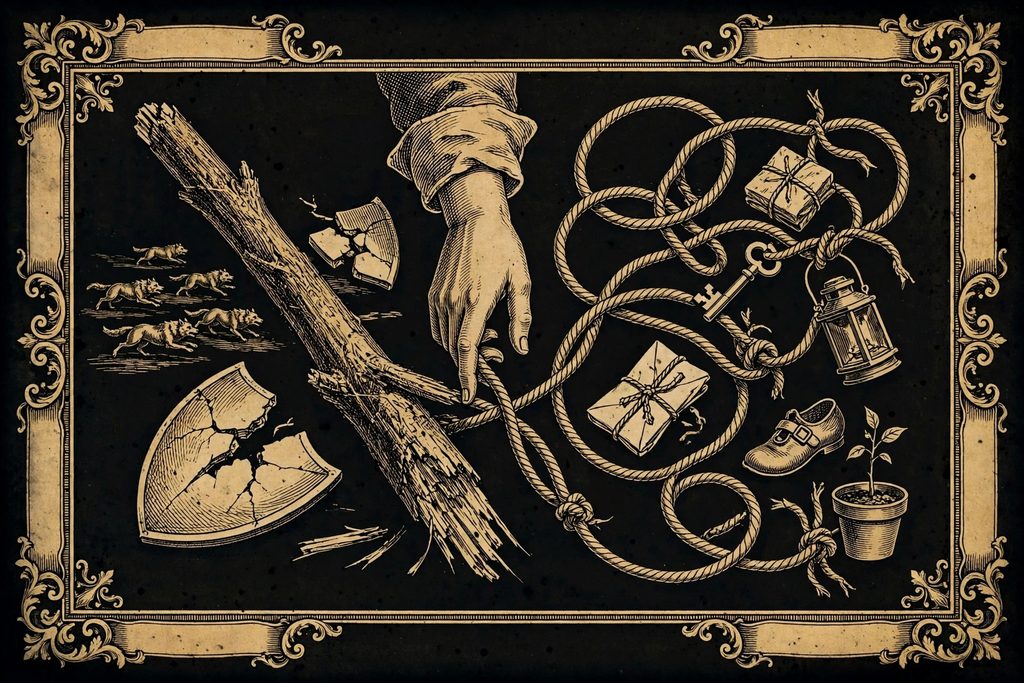
Kojima has explained the philosophy of the game through a short story by the Japanese writer Kōbō Abe. Abe observed that the stick and the rope are among humanity’s oldest tools. The stick is used to keep bad things away. The rope is used to bring good things closer. Most games, Kojima noted, are built around sticks, weapons to push the world back. Death Stranding was meant to be a game about ropes.
The idea runs through everything. Sam’s surname is Bridges. The network is a web of strands. The game’s online system, which connects players to one another, is called the Social Strand System. Its villains are those who would cut the strands, among them a separatist movement and a man who wants to bring about the extinction of humanity. Even its combat discourages killing. Dead humans become BTs and risk causing voidouts, so violence in this world is not only wrong but dangerous.
For a student of civilizations, this is the game’s central thesis. Societies are not held together by force. They are held together by connections, the trades, favours, messages and obligations that bind people who would otherwise be strangers. Death Stranding imagines a world in which every one of those connections has been cut, and asks the player to tie them back together, one knot at a time.
IV. The Roads Built by Strangers
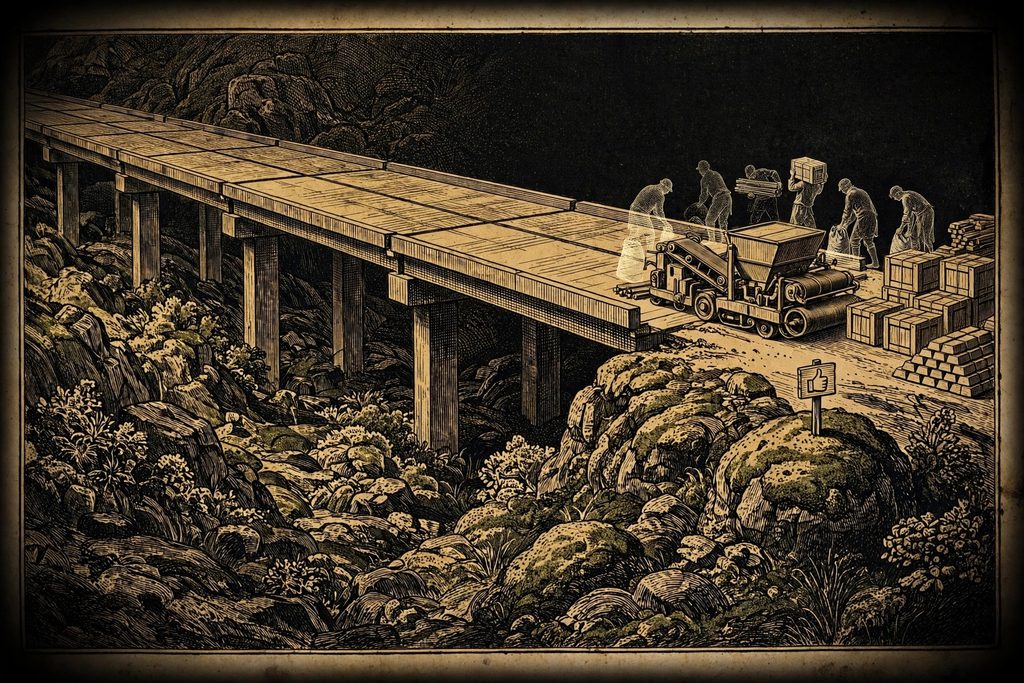
The most extraordinary part of Death Stranding is not in its story but in its design. Each player crosses the land alone. There is no chat, no direct co-operation and no shared session. But when one player builds something, a ladder across a ravine, a rope down a cliff, a bridge over a river, a shelter from the rain or a charging station for vehicles, that structure can appear in the worlds of other players. A stranger’s ladder may be exactly what someone else needs to cross a gorge an hour later.
The most ambitious example is the highway. Across the central region of the map lie the ruins of an automated road-building system. Players can restore it, section by section, but each section requires large quantities of materials. Those materials can be contributed by many players together. In practice, the roads of Death Stranding have been built collectively by thousands of strangers, each carrying a few loads of metal and ceramics to a paving machine, so that everyone after them can drive.
Players thank one another with likes, a currency that has no practical value at all. It cannot be spent. It does nothing except tell a stranger that their bridge helped. And yet players have collected and given them by the millions. A game about isolation turned out to produce one of the most generous player cultures in modern games, a culture of anonymous public works built for people who will never be met.
V. Porters, Preppers and MULEs
The society of Death Stranding is organized around delivery, and its social types are defined by their relationship to it. Porters carry goods for a living, some for Bridges, some for independent companies such as Fragile Express. Preppers live alone in bunkers, depending entirely on deliveries for contact with the outside world, and their relationship with the porter who visits them can become the most important relationship in their lives. Many preppers send Sam letters, gifts and recordings in return, a small economy of gratitude.
There are also MULEs, former porters who have become addicted to the act of delivery itself. They no longer deliver anything. They raid other porters to seize their cargo, scanning the land for packages and hoarding them in their camps. They are a parody of the porter’s virtue, people for whom connection has turned into possession. Other raiders, more dangerous, are terrorists who reject the UCA and its network altogether.
This is a complete social structure built around a single activity. It has its honest workers, its isolated clients, its addicts and its rebels. Death Stranding imagines what happens when an economy is reduced to its simplest form, the movement of a parcel from one person to another, and shows that even then, all the familiar types of human society reappear.
VI. On the Beach
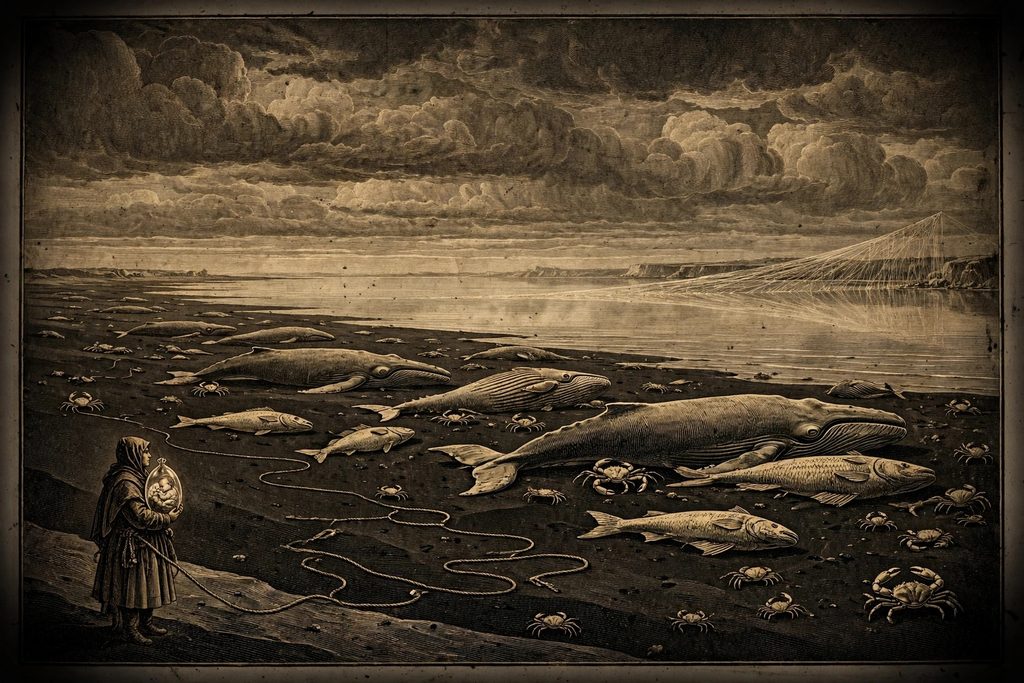
Death Stranding 2, On the Beach, released in 2025, carried the idea beyond the borders of the UCA. Sam’s journey moves first to Mexico and then to Australia, as the network is extended to new lands. The question changes from how to rebuild a nation to whether connection itself is always good. The sequel asks what is lost when every place is linked, and whether some isolation might be worth preserving.
The two games together form one of the most original studies of society in modern fiction. They imagine a civilization that is not defined by its rulers, armies or religion, but by its infrastructure, its roads, networks and deliveries, and by the willingness of individuals to maintain them. And they turn their players into a real community that builds that infrastructure together, anonymously, for one another.
The lockdowns of 2020 gave the first game an unexpected afterlife. Players and critics who had dismissed it as a walking simulator returned to it as a meditation on a world they now recognized, one of isolated homes, essential workers and parcels left at the door. Death Stranding had imagined a society held together by deliveries, and for a few months, the real world was one.
The ancestor of them all
Empires have always been held together by people who carry things, and the ancient world built some of its greatest institutions around them.
The Greek historian Herodotus, writing in the fifth century BCE, described the royal courier system of the Persian Empire. Riders and horses waited at stations a day’s journey apart along the royal roads, and each messenger handed his dispatch to the next, so that news crossed the empire faster than any traveller could. Herodotus admired them, writing that neither snow nor rain nor heat nor darkness could stop them from completing their stage. A version of his words is carved above the entrance of the main post office in New York, the unofficial motto of the American postal service.
On the other side of the world, the Inca built an empire along the Qhapaq Ñan, a road network running tens of thousands of kilometres through the Andes, with suspension bridges of woven grass across mountain gorges. Along it, relay runners called chasquis carried messages and knotted cords called quipu from station to station, covering astonishing distances in a single day. The Inca state did not depend on a common script. It depended on roads, bridges, runners and the rope knots that carried its records.
Both are ancestors of the UCA. The Persian couriers turned a vast territory into a single state by moving messages. The Inca turned mountains into a nation with roads, rope bridges and runners. Death Stranding imagines the same work done again from the beginning, by a porter with a frame on his back, for a country that will exist only if enough people agree to carry it.
The pattern
Death Stranding belongs to a family the Institute calls the network civilizations, societies in which the act of connection becomes the foundation of the state. Its closest literary relative is David Brin’s novel The Postman, published in 1985, in which a drifter in a post-apocalyptic America puts on the uniform of a dead mail carrier and pretends to represent a restored government, and the hope his deliveries bring begins to make the government real.
Three features define these civilizations. The first is fragmentation, a land of isolated communities with no shared institutions left. The second is infrastructure as sovereignty, the idea that roads, messages and networks, rather than armies or laws, are what make a state exist. The third is service as citizenship, a society in which belonging is earned by carrying something for someone else.
What makes Death Stranding unique in this family is that its players do the work for real. The Postman imagines one man rebuilding a nation through deliveries. Death Stranding asks millions of players to do it together, building roads and bridges for one another without ever meeting. The UCA is a fiction, but the community that paved its highways is not. It is one of the clearest examples the Institute has found of a culture that people made, in a world that only gave them the materials.
Findings
- Death Stranding imagines a nation rebuilt by delivery. After a catastrophe that broke the boundary between life and death, the United Cities of America exists only as a network of isolated settlements reconnected by porters on foot.
- Its nation is made of connections. Settlements join the UCA through repeated deliveries and earned trust, so that belonging grows from service rather than conquest or law.
- Its philosophy is the rope, not the stick. Inspired by Kōbō Abe’s image of humanity’s oldest tools, the game rewards connection and discourages violence, which in its world creates new dangers.
- Its players build real public works for strangers. Ladders, bridges, shelters and whole highways built by one player appear in the worlds of others, thanked with likes that have no value except gratitude.
- Its ancestors are the couriers and roads of ancient empires. The Persian royal messengers described by Herodotus and the Inca chasquis on the Qhapaq Ñan held vast states together by carrying things from one place to the next.
This Excavation draws on Death Stranding and Death Stranding 2, on Hideo Kojima’s interviews, on Kōbō Abe’s short story The Rope, on Herodotus’ Histories, on the history of the Inca road system and on David Brin’s The Postman.
The Institute collects field evidence from people who have lived inside these worlds. If you ever found a stranger’s ladder exactly where you needed it, send us your account.
Sources
- Death Stranding (2019) and Death Stranding 2, On the Beach (2025), Kojima Productions, directed by Hideo Kojima.
- Kōbō Abe, “The Rope” (Nawa), short story.
- Herodotus, Histories, book 8, on the Persian royal couriers (fifth century BCE).
- John Hyslop, The Inka Road System (1984), Academic Press.
- David Brin, The Postman (1985), Bantam Books.