

Most fictional worlds are written. Their histories are composed by authors, their kings named, their wars decided before the reader arrives. Dwarf Fortress does something else. Before the player sees a single dwarf, the game runs the history of an entire world, year after year, for as long as the player chooses. Civilizations are founded and destroyed, heroes are born and killed, monsters rise and fall, and every event is recorded. When the game finally begins, the player inherits a past that no one wrote.
Dwarf Fortress was created by the brothers Tarn and Zach Adams, working as Bay 12 Games. Its first public version appeared in 2006, as a free download drawn entirely in letters and symbols, and it gained a reputation as the most complex simulation ever made and one of the hardest games to learn. In 2012 it entered the Museum of Modern Art in New York as one of the first video games in its collection. In 2022, a new edition with graphics arrived on Steam, published by Kitfox Games, and sold more than half a million copies in its first month.
The Institute has studied cultures that players make, from The Message Culture of the Lands Between to The Builders of Fallout London. Dwarf Fortress belongs in the same department for a deeper reason. It is the closest thing in games to a machine for producing history, and its players have become the historians of worlds that no one designed.
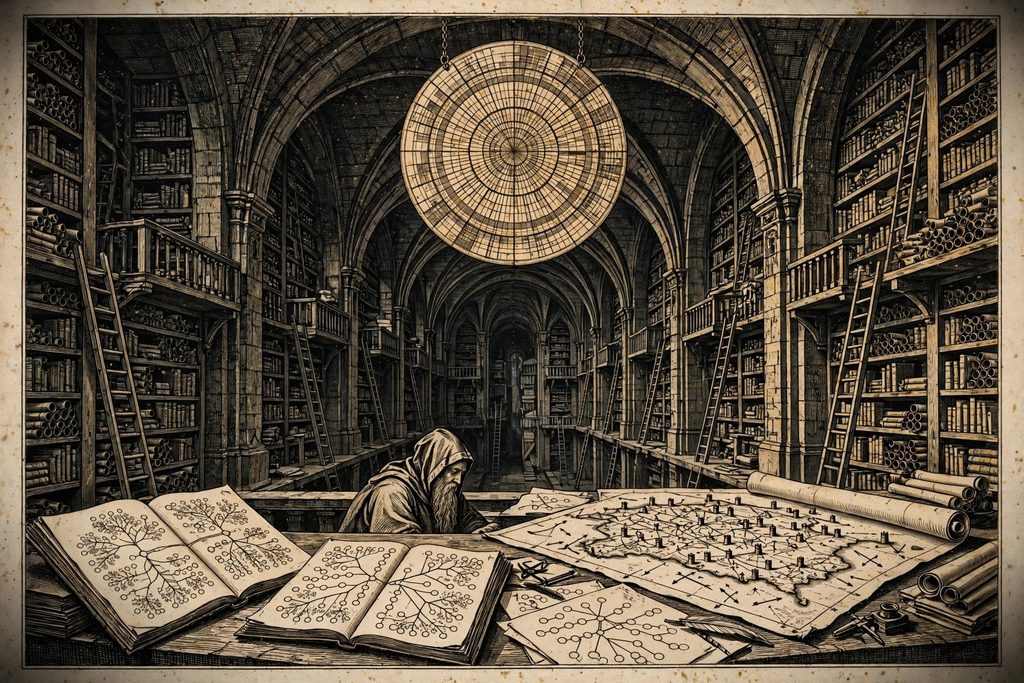
I. A World That Has Already Happened
Every game of Dwarf Fortress begins with the creation of a world. Mountains, rivers, rainfall, minerals and climates are generated, and then the simulation begins. Civilizations of dwarves, elves, humans and goblins spread across the map. Religions form. Wars are declared and fought. Great beasts emerge from the wilderness, and heroes set out to kill them. Counters for population and deaths climb as the centuries pass.
None of this is decorative. Every person in this history is tracked as an individual, with a name, a family, a race, a profession and a record of what they did. Cities are founded and conquered, kings rise and are deposed, artifacts are made and lost. When the simulation stops, the world has a past measured in hundreds of years, and that past is fully recorded in a part of the game called Legends mode, which lets the player read the history of every site, figure, war and object.
This is the fundamental difference between Dwarf Fortress and almost every other fictional world. Its lore is not a story that someone tells. It is a record, the way an archive is a record. The player does not learn history from a narrator. The player opens the archive and reads.
II. Seven Dwarves and a Wagon
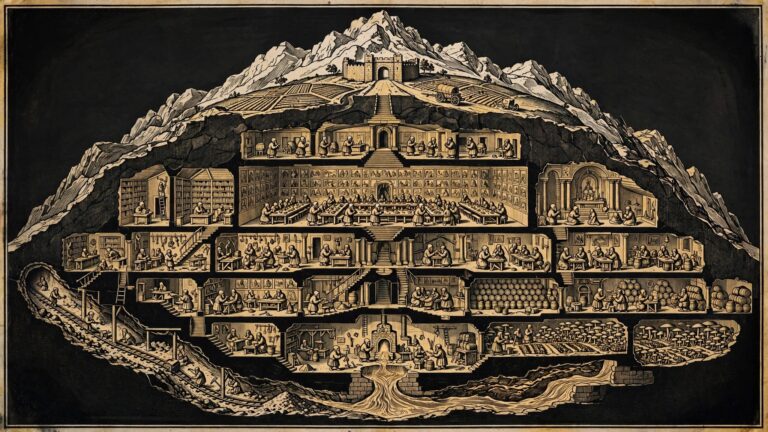
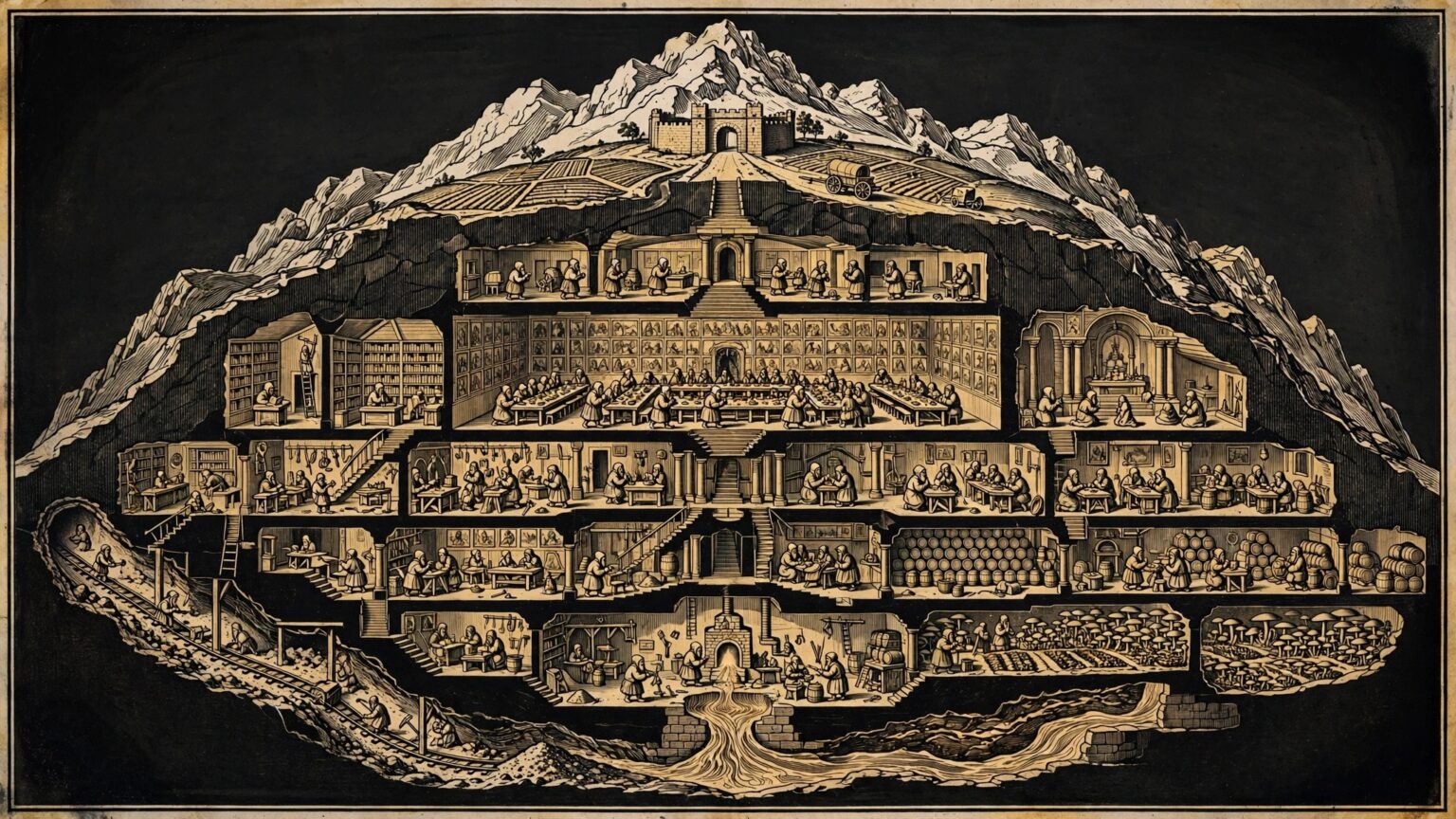
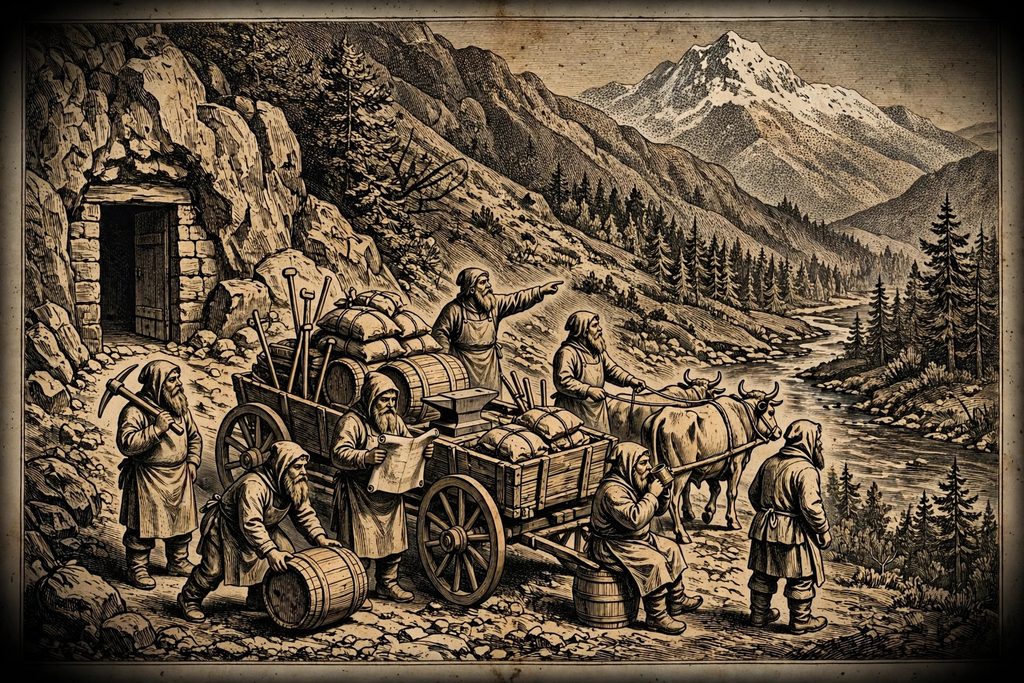
The fortress mode, the heart of the game, begins modestly. Seven dwarves arrive with a wagon of supplies at a site the player has chosen, sent out by their civilization to found a new settlement. They dig into the mountain, build workshops, plant underground crops and brew drink, which dwarves need more than water. If the fortress prospers, migrants arrive in waves, and a camp of seven grows into a town of hundreds.
As it grows, it develops institutions. The expedition leader gives way to an elected mayor, and as the fortress becomes wealthy, nobles are appointed, a baron, then a count, then a duke, each with demands for fine rooms and luxury goods. A sheriff enforces laws. Guilds and military squads form. The fortress has a political life the player can guide but never fully control.
Every dwarf in it is a person with a history. Each has a name, parents and children, friends and rivals, preferences in food, drink and materials, memories of good and bad experiences and moods that rise and fall. A dwarf who saw a friend die may remember it for years. A dwarf who was denied a decent room may hold a grudge. The fortress is not a city of units. It is a community of individuals whose lives are recorded as they happen.
III. The Walls Remember
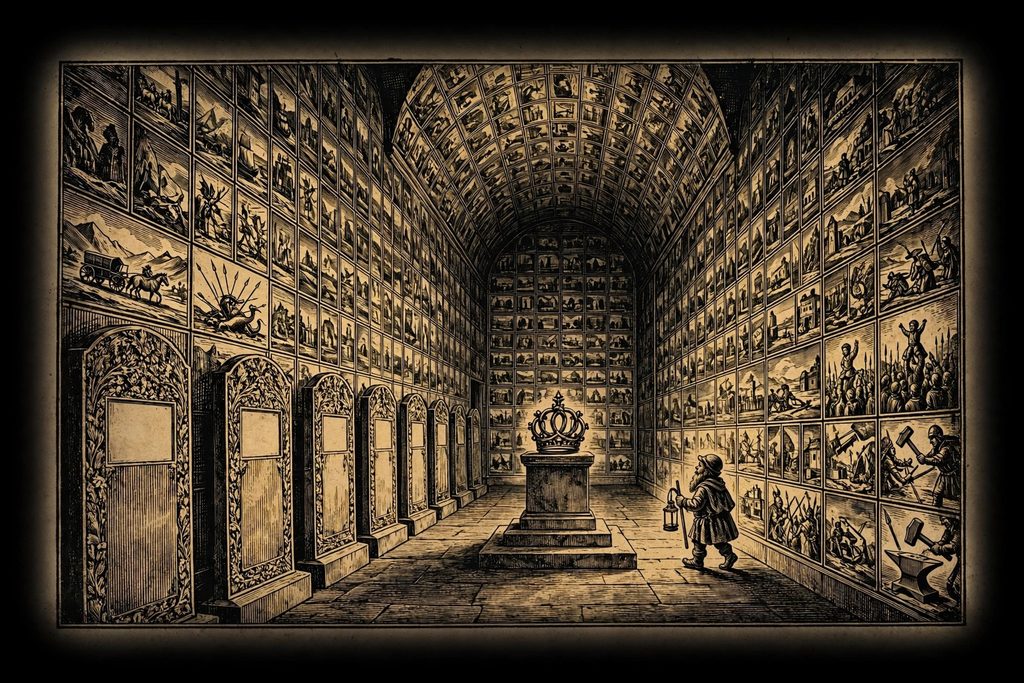
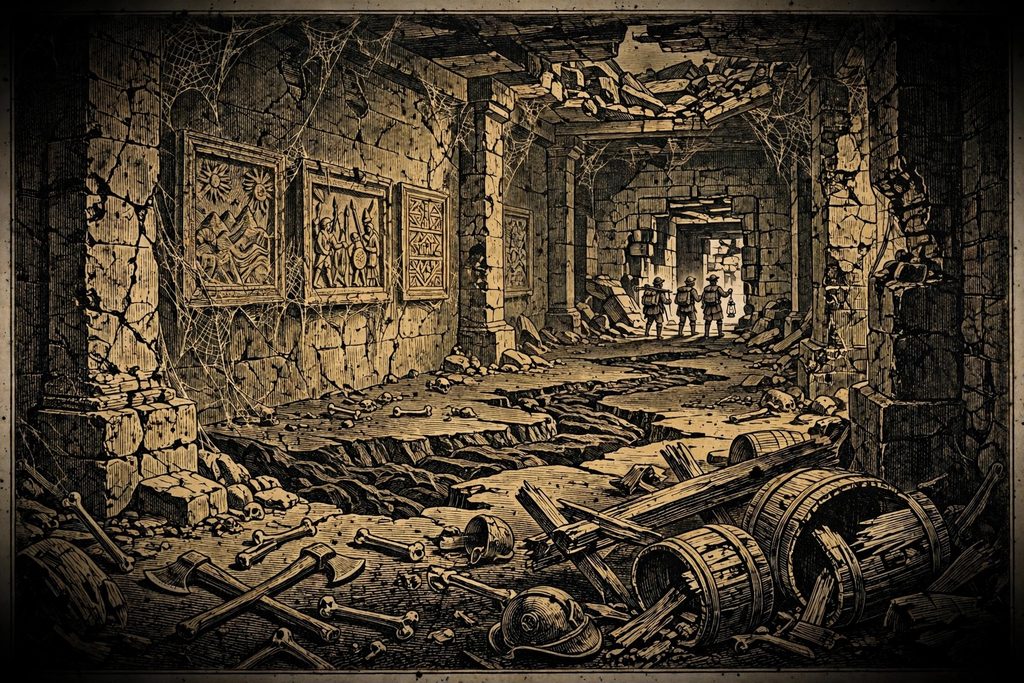
The dwarves record their own history, and they record it in stone. When a dwarf engraves a wall, the engraving depicts something real, an event from the history of the world or of the fortress itself. A wall might show the founding of the fortress, the death of a great beast, a battle against goblins or the birth of a famous dwarf, each scene tied to a real moment in the simulation. Over the years, the halls of a successful fortress become a carved chronicle of everything that has happened there.
The dead are remembered in the same way. Dwarves who die must be buried, or their ghosts may return to haunt the living. When a body cannot be recovered, a memorial slab engraved with the name of the dead can lay the spirit to rest. A fortress that has suffered many losses fills with tombs and slabs, an archaeology of its own tragedies.
Then there are the artifacts. Every so often, a dwarf falls into what the game calls a strange mood. The dwarf seizes a workshop, demands particular materials and refuses to eat, drink or sleep until a masterpiece is made. If it succeeds, the result is a legendary artifact with its own name, often worth more than the entire fortress. If it fails, the dwarf may go mad. Artifacts enter the history of the world. They can be stolen, inherited or carried off by invaders, and Legends mode will record where they went.
IV. Poets, Scholars and Taverns
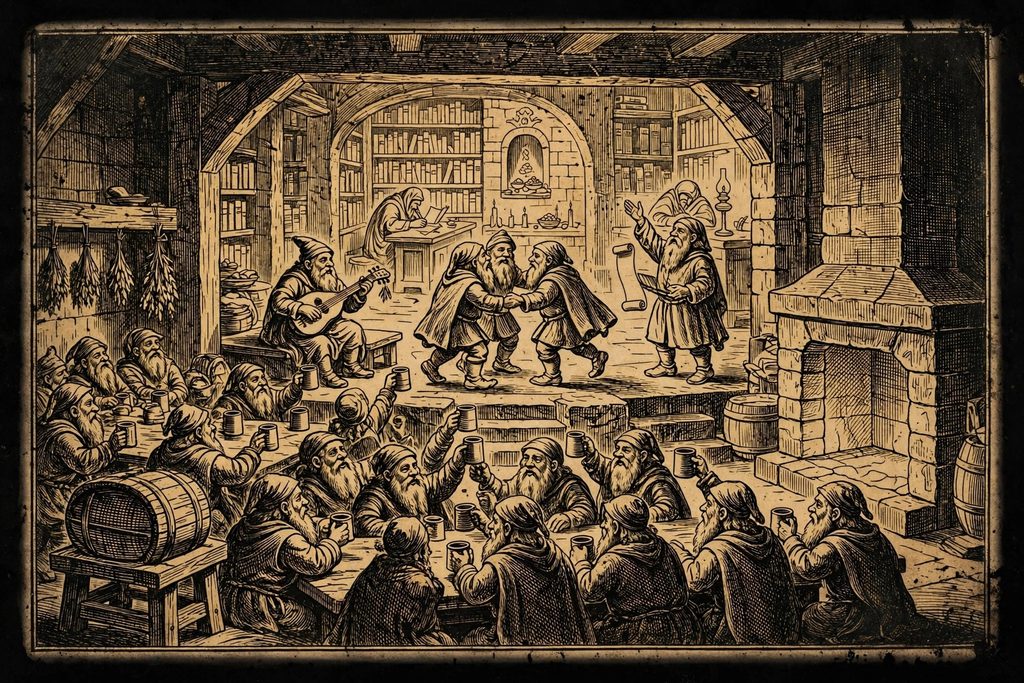
The history of Dwarf Fortress is not only political. Its cultures produce art. Each civilization generates its own poetic forms, musical forms and dances, with rules, structures and names created by the game. Dwarves perform them in taverns and temples, and in Adventure mode, characters can write poems, books and compositions in those forms. Two worlds will never share the same art.
Later versions of the game added more of the institutions that make a civilization. Fortresses can build taverns that host visitors and performers, temples dedicated to the gods their dwarves worship, and libraries where scholars study, debate and write books. Those books are real objects in the world, with titles, authors and subjects, and they can be copied, collected and carried away. A fortress can become a centre of learning in a world that otherwise knows only war.
For an anthropologist, this is the most remarkable part of the design. The game does not simply simulate survival. It simulates culture, the things a society makes when it has enough to eat. Poetry, music, worship and scholarship appear in the fortress the way they appear in human history, once the walls are up and the stores are full.
V. Losing Is Fun
Every fortress falls. The game’s unofficial motto, born as a joke in its manual and adopted by its community, is “Losing is fun.” Fortresses flood when miners breach an underground river. They burn when magma is mishandled. They are overrun by goblin sieges, by forgotten beasts from the caverns below or by the dead. Most famously, they collapse from within, in what players call a tantrum spiral, when one dwarf’s grief or rage spreads through the community until fights, madness and murder consume the whole settlement.
But a fallen fortress does not vanish. It becomes part of the world’s history. Its ruins remain on the map, with their carvings, artifacts and bones. The player can later send a new expedition to reclaim the site and find the remains of the previous attempt, or travel there as a single character in Adventure mode, released on Steam in early 2025, and walk through the halls of a civilization that the player once ruled. The fortress has become an archaeological site in its own world.
This is why the Institute places Dwarf Fortress in its Human Archive. Its civilizations are not designed by anyone. They are produced by a simulation and shaped by a player, and when they die, they leave records, ruins and legends that outlive them.
VI. The Chronicle of Boatmurdered
The most famous history in Dwarf Fortress was written by its players. In November 2006, only three months after the game’s first public release, a member of the Something Awful forums proposed a succession game. Each player would rule the same fortress for one in-game year, then pass the saved game to the next. Fourteen players took part, and each wrote up their reign as the fortress’s new ruler, often criticizing the decisions of the one before. The fortress was called Boatmurdered.
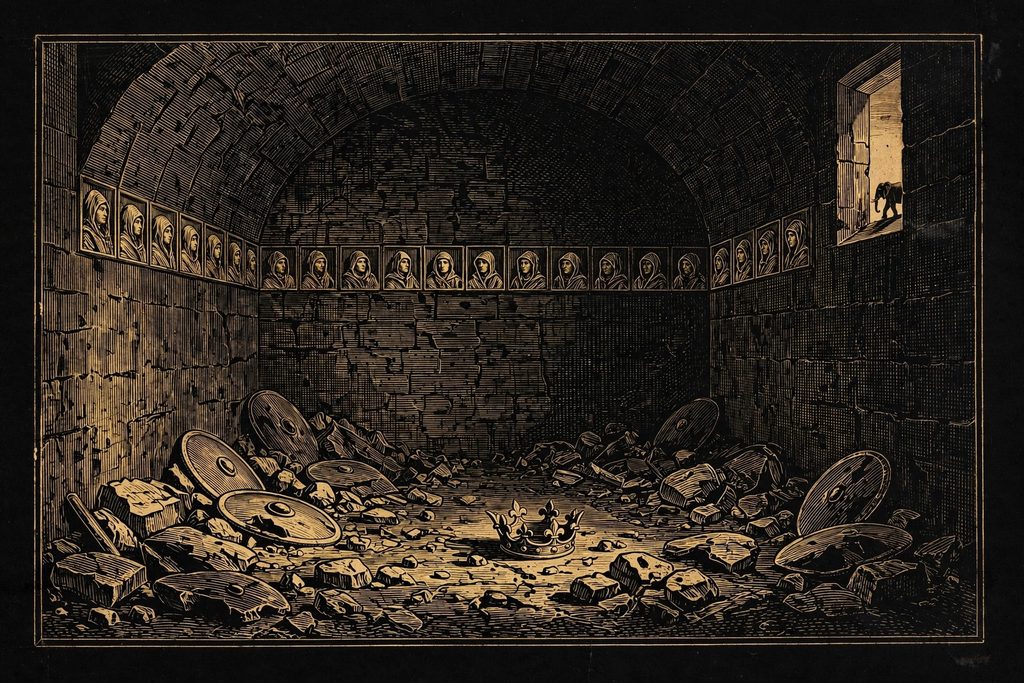
Its history became legendary. Herds of elephants besieged the fortress and killed many of its dwarves. A mining accident flooded it. A channel of magma, dug to fight the elephants, was turned on them and burned a trading caravan by mistake. Fires filled the halls with smoke, and dwarves went mad. In the end, every dwarf died except one child, who survived alone in a room full of bones and was named the last ruler of Boatmurdered.
The chronicle is still read today, and it helped make both the game and the format of the collaborative online playthrough famous. The game remembered it too. The music that plays when a fortress is lost takes its title from Boatmurdered’s name in the dwarven language. A history written by players about a simulated world entered the world’s own record, the clearest sign that in Dwarf Fortress, the line between playing a civilization and preserving one has almost disappeared.
The ancestor of them all
The ambition to record a society completely, person by person and event by event, has real ancestors, and two of them would have pleased the dwarves.
The first is Icelandic. Landnámabók, the Book of Settlements, records the colonization of Iceland in the late ninth and early tenth centuries. It names around four hundred original settlers, where they landed, what land they claimed and who their descendants were, together with thousands of other people and places. It was first compiled in the twelfth century and survives in later medieval versions. It is not a story but a register, a record of who came, where they settled and how their families continued. Alongside it stand the Icelandic family sagas, which follow feuds, grudges and alliances across generations with the patience of an archive.
The second is carved in stone. In Rome, Trajan’s Column, dedicated in 113 CE, tells the story of the emperor’s wars against the Dacians in a continuous spiral frieze around two hundred metres long, with some two and a half thousand figures. Soldiers march, build camps, cross rivers and fight battles, all carved into the column in sequence. It is a chronicle meant to be read by walking around it, exactly as a visitor to a successful dwarven fortress reads the history of the place in the engravings on its walls.
Dwarf Fortress combines both traditions. Its world generation is a Landnámabók of procedural settlers and their descendants. Its engraved halls are a Trajan’s Column for every fortress. And like both, it assumes that the deeds of ordinary people deserve to be recorded, because history is made of them.
The pattern
Dwarf Fortress stands at the head of a family of works the Institute calls history engines, games that produce historical records rather than tell prepared stories. Its influence runs wide. The creators of Minecraft have cited it as an inspiration. Strategy games such as Crusader Kings generate dynasties whose histories are written by play. Caves of Qud generates the lives of ancient rulers and the legends told about them. RimWorld describes its own director as a storyteller.
Three features define these engines. The first is simulation before narration. The world produces events, and stories are found in them afterwards. The second is persistence. People, objects and places keep their histories, so an artifact made by one dwarf can turn up centuries later in a goblin’s hoard. The third is the player as chronicler. Because no author decides what matters, players choose which events to retell, and their retellings, from Boatmurdered to countless forum stories and videos, become the culture around the game.
The Institute’s other Human Archive studies show players building cultures on top of designed worlds. Dwarf Fortress goes one step further. Its worlds have no designed history at all. Everything in them, from the oldest war to the last poem written in a fortress library, happened inside the simulation or in the minds of the people who played it. It is the purest case yet of a civilization made entirely by the act of remembering it.
Findings
- Dwarf Fortress produces history rather than telling it. Before play begins, the game simulates centuries of a world’s history and records every civilization, war, figure and artifact in Legends mode.
- Every dwarf is a recorded individual. Each has a family, friends, preferences, memories and grudges, and the fortress grows from seven settlers into a community with elected and noble institutions.
- The fortress records itself in stone. Engravings depict real events from the world’s history, memorial slabs lay the dead to rest, and legendary artifacts made in strange moods carry their own histories across the world.
- Fallen fortresses become archaeological sites. Ruins, carvings and artifacts remain after a fortress dies, and players can later reclaim them or explore them in Adventure mode.
- Its most famous history was written by players. The Boatmurdered succession game of 2006 and 2007 turned one doomed fortress into a legend that the game itself later honoured.
This Excavation draws on Dwarf Fortress and its community, on the Boatmurdered chronicle, on the Icelandic Landnámabók and family sagas, and on Trajan’s Column in Rome.
The Institute collects field evidence from people who have kept these worlds. If you have a fortress whose history deserves to be remembered, send us your account.
Sources
- Dwarf Fortress (2006 to present), Bay 12 Games, created by Tarn and Zach Adams, with the Steam edition (2022) published by Kitfox Games.
- Boatmurdered, a Dwarf Fortress succession game on the Something Awful forums (2006 to 2007), preserved by the Let’s Play Archive.
- Tanya X. Short and Tarn Adams (eds.), Procedural Storytelling in Game Design (2019), CRC Press.
- The Book of Settlements, Landnámabók, translated by Hermann Pálsson and Paul Edwards (1972), University of Manitoba Press.
- Filippo Coarelli, The Column of Trajan (2000), Editore Colombo.