The announcement of Metroid Prime 4 | Beyond confirmed a persistent, depressing truth about modern AAA design | publishers fear artistic vacuum more than commercial loss. Samus Aran’s original journey was defined by isolation, silence, and existential dread, a perfect symphony of minimalism.
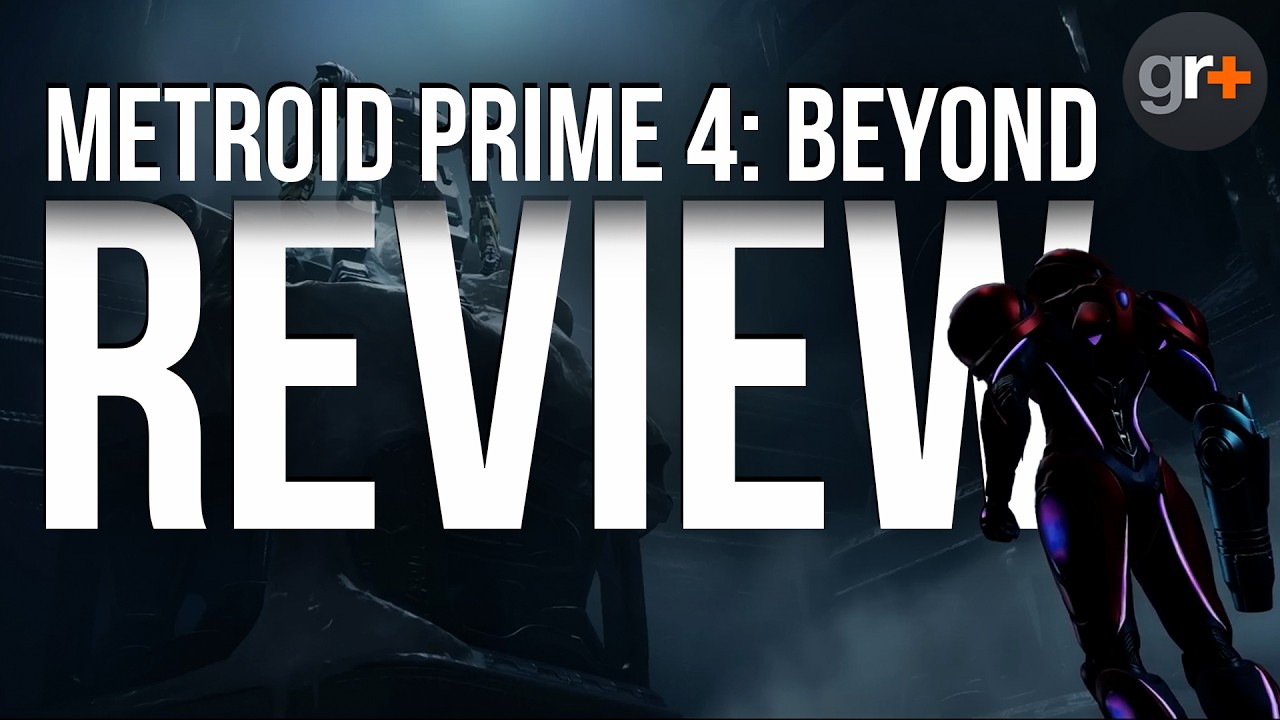
Early reports and concept reveals suggest Beyond is ready to tear that foundation apart, replacing it with a chatty AI sidekick and a traversal motorcycle. This is not evolution; it is a corporate refusal to trust the player with space.

The Tyranny of Constant Input
The initial Metroid Prime trilogy (the Core Protocol of the series) understood that true terror is built on the absence of companionship. The quietest moments, spent decrypting alien lore in a desolate chamber, were the most effective. This forced the player’s neural analysis to focus entirely on the hostile architecture and the ambient soundscape. Samus was a solitary, self-sufficient hunter, a deliberate contrast to the noisy, hand-holding contemporaries of the early 2000s.

A chatty sidekick immediately contaminates this environment. It substitutes internal problem-solving with external exposition and replaces atmosphere with commentary. The rumored persistent voice of a character like Miles Mackenzie, constantly detailing objectives or offering redundant exposition, functions as noise pollution, a safety blanket designed to combat a perceived flaw in the modern player | the inability to endure loneliness or navigational ambiguity. The fear is that if the screen isn’t delivering constant input, the player might get bored and disengage, a risk the original game gloriously embraced. When titles like Dark Souls and The Legend of Zelda | Tears of the Kingdom prove that players crave and reward minimal guidance, Nintendo’s retreat is particularly glaring.
The Motorcycle is a Velocity Override
The addition of a traversal motorcycle is the second, most damning evidence of this panic. The genius of the original Prime exploration was the friction of movement. Every door unlocked, every platform reached, was a hard-earned victory. Samus’s base movement speed was calibrated to make the world feel immense and threatening. The intentional slowness forced the meticulous scanning of every wall, every enemy.
The motorcycle is a Velocity Override. It’s designed to accelerate the player through the map, reducing the time spent in the hostile environment and effectively shrinking the game world to meet an artificial content-consumption pace. This is the Mako Problem audit, reminiscent of how vehicles in games like Mass Effect cheapened exploration by making world size irrelevant. This sacrifices meticulous level design for the shallow spectacle of speed, treating the world not as a complex system to be solved, but as a linear track to be rushed through. The decision signals a fear that a large, empty space, once the canvas for Samus’s isolation is now perceived as a liability that must be traversed instantly.
The True Audit
This isn’t just about Metroid. This decision is a microcosm of a broader, industry-wide failure audited through the FOUNDRY FILES. When publishers compromise the core protocol of a series by injecting companionship and speed mechanics, it exposes a singular corporate objective | maximize retention metrics at the cost of artistic integrity.
This Retreat from Ambiguity is driven by the data | high player drop-off rates often occur when players get lost. By eliminating the risk of being lost, they eliminate the potential for refunds, low engagement scores, and critical reviews that use “lack of direction” as a negative metric.
Nintendo, like every other AAA architect, is demonstrating that they are terrified of the silence that once made their masterpiece unique. They are opting for the comforting noise of conventional, guided action because they fear the player might mistake artistic minimalism for a failure of content. The true victory of Metroid Prime was making the player feel isolated and resourceful. Beyond appears determined to ensure you never feel alone again.
💾 Essential Data Tags
- Tonal Collapse: Replacing atmospheric silence with constant noise.
- VelocityOverride: Sacrificing exploration friction for high travel speed.
- RetentionMetrics: Corporate design decisions prioritizing engagement statistics over artistic vision.
- MakoProblem: The historical failure of traversal mechanics to respect map design.
- DesignTrust: The failure to trust the player to engage with ambiguous space.