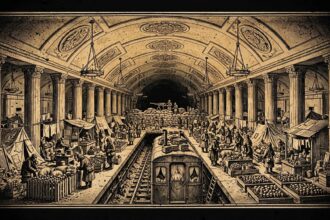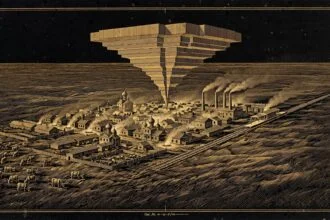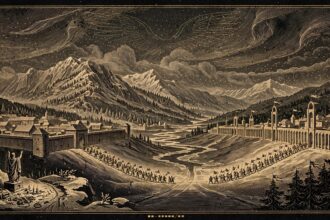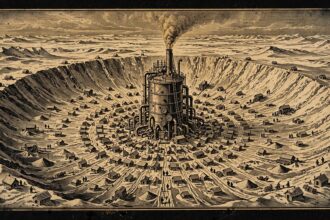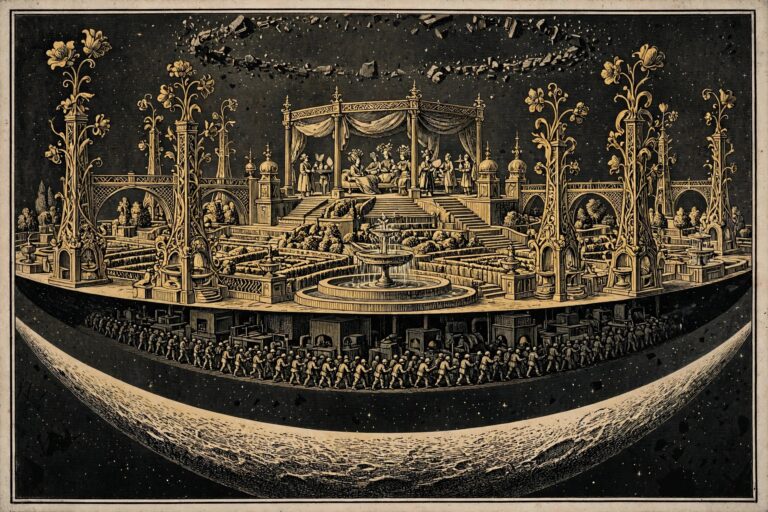


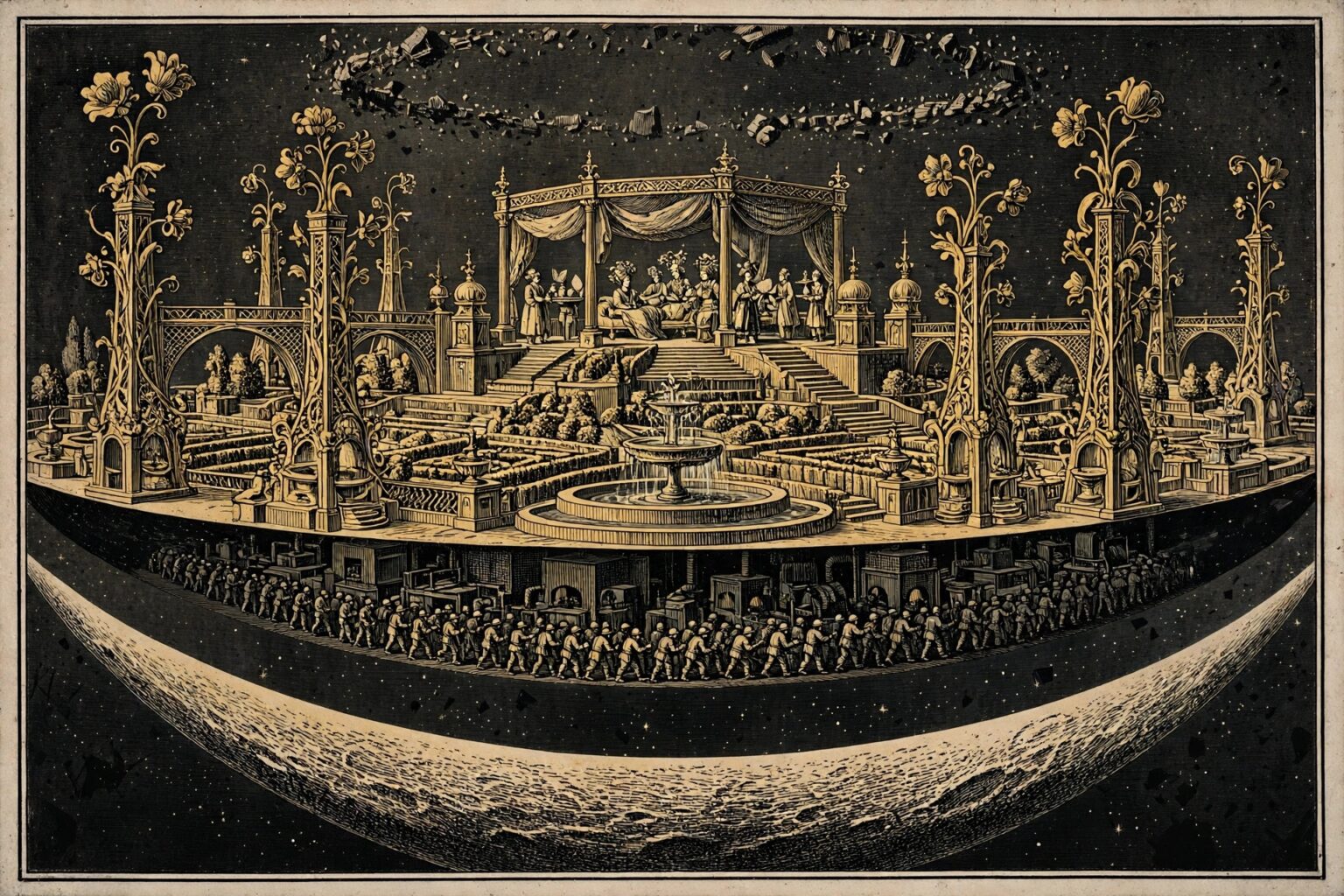
Every empire divides its people into those who rule and those who serve. The Orokin of Warframe went further. They divided them into those who could live forever and those who were made to be used. Their nobility extended its life by taking the bodies of children. Their workers and soldiers were engineered for obedience. Their most terrible weapons were children too, changed by an accident they tried to hide. In the end, those children destroyed them.
Warframe was developed and published by the Canadian studio Digital Extremes and released on PC on 25 March 2013, before spreading to every major console and to mobile devices. It is a free-to-play action game with tens of millions of players, and for years its story was little more than a backdrop. That changed in December 2015 with The Second Dream, a cinematic quest that revealed who the Tenno really were, and in November 2016 with The War Within, which revealed what the Orokin had done to stay alive. Since then, the fallen Orokin Empire has become one of the darkest civilizations in gaming.
The Institute has studied the vanished precursor races that fiction places beneath its worlds in The Civilization Beneath Every Civilization, and corporations that grew into governments in The Corporations That Became States. The Orokin are both a lost golden age and the origin of every faction that still fights over its ruins. Their story is not a mystery of who came before. It is an anatomy of how a civilization made inequality permanent.
I. The Golden Age
The Orokin ruled the Origin System, Warframe’s version of our own solar system, from a capital on Lua, Earth’s moon. Their technology surpassed anything that survives today. They built golden towers of extraordinary beauty, opened routes through the Void, a dimension that allowed faster-than-light travel, and reshaped planets to their will. Later generations remember their era as a golden age of science and art.
It was also a dark age for almost everyone else. Orokin society was rigidly stratified by birth and genetics. At the top sat the Executors, the council known as the Seven, who governed and judged. Beneath them were scholars, healers, navigators and guardians, each in a defined caste. Beneath those were peoples created to serve. Personal merit counted for little. Beauty, lineage and purity of blood counted for everything.
The Orokin punished harshly. Offenders could be executed, tortured or glassed, their minds converted into Cephalons, digital intelligences condemned to serve. Even failure could be fatal. The splendour of the towers rested on fear as much as on science. The Orokin were not a civilization that happened to be cruel. Cruelty was one of the ways it maintained its order.
II. Peoples Made to Serve
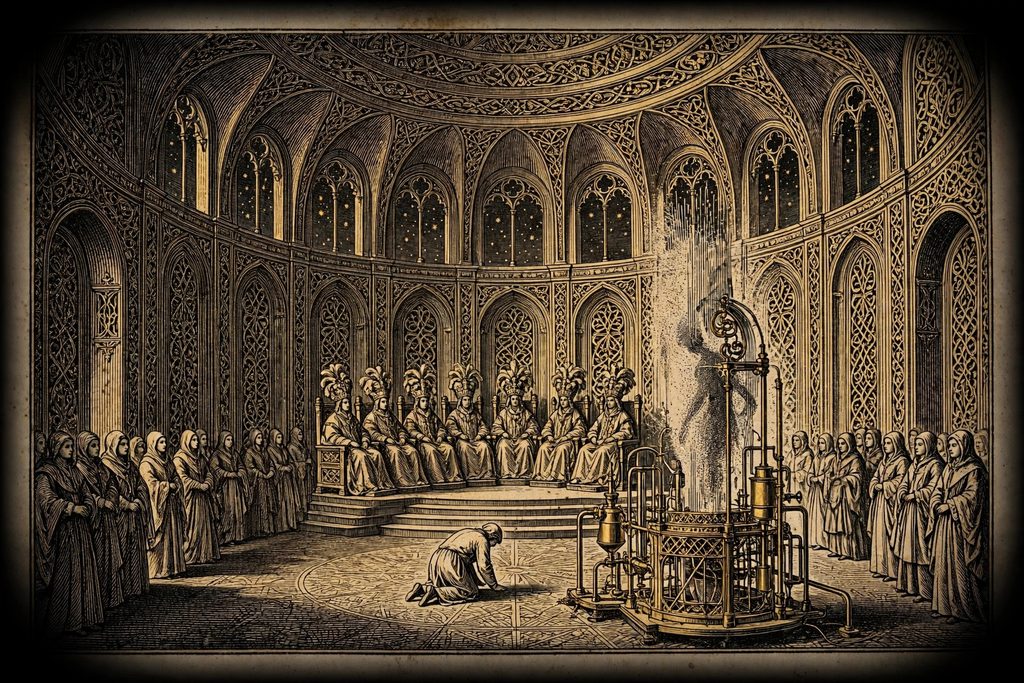
The Orokin did not only rule their servants. They designed them. The Grineer were created as a genetically engineered slave population for heavy industry and war, bred to labour and fight and to need nothing more. The Dax were elite soldiers, enhanced with technology and engineered so that they could not disobey their masters. Each class of servant was a product, made to a specification.
The Corpus had a different origin. They grew from the poorer populations of the Orokin era, people outside the nobility who followed the teachings of a merchant named Parvos Granum. Where the Orokin worshipped beauty and lineage, the Corpus worshipped profit. Their descendants became the vast merchant cult that still dominates the trade of the Origin System, and their leaders still claim to carry pure Orokin blood.
This is the deep structure behind Warframe’s present-day factions. The Grineer, the Corpus and many others are not independent peoples who happened to survive the Orokin. They are Orokin designs that outlived their designers. The Grineer, still cloning themselves from degrading genetic templates, are an empire’s servant class that kept working after its masters were gone, and turned the tools of its servitude into an army.
III. The Rite of Continuity
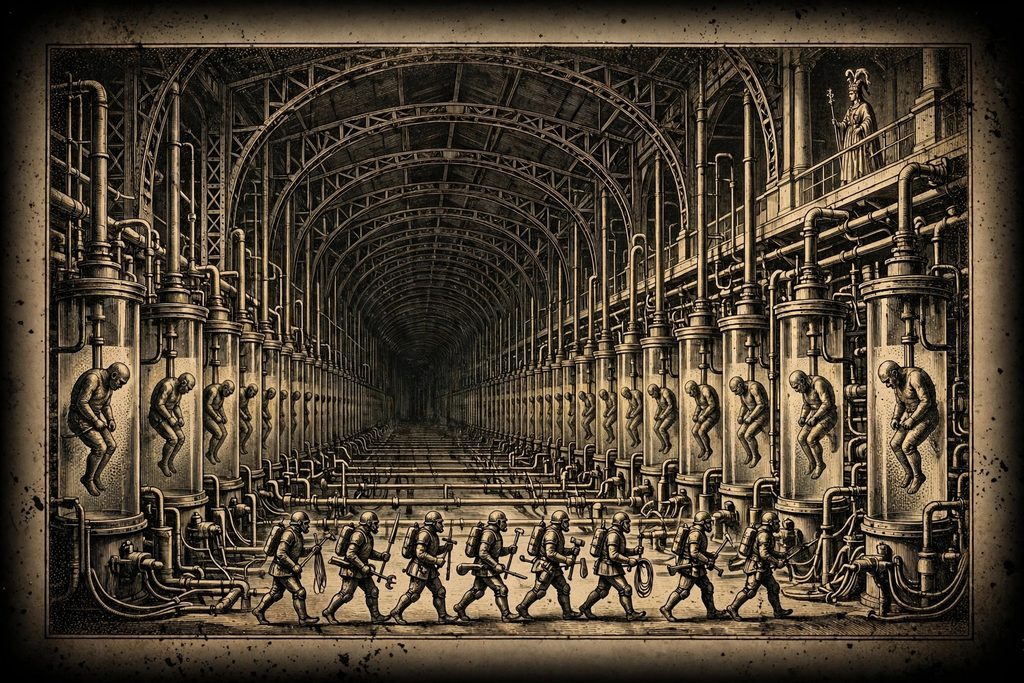
The Orokin nobility did not die of old age. As their bodies aged, they performed a rite called Continuity, transferring their consciousness into the bodies of children. The ceremony was brutal. The child’s mind was crushed with despair until nothing of it remained, and the Orokin’s mind took its place. An old aristocrat would walk out of the ritual young again, wearing someone else’s life. Kuva, a strange substance prized by the Orokin, was used to extend the life of their bodies between transfers.
This is the institution that gives the Orokin their place in the Institute’s catalogue. Many fictional empires are cruel, and many have immortal rulers. The Orokin made immortality itself the boundary between classes. Above the line were those whose lives could be renewed forever. Below it were those whose lives, and even whose children, could be consumed to renew them. Eternal life was not a gift or a miracle. It was a privilege, paid for by the young.
The rite also explains the Orokin’s peculiar stagnation. A ruling class that never dies never has to give way to new generations, new ideas or new rulers. The same Executors, the same tastes and the same hatreds could persist for centuries. The Orokin froze their society at its peak, and kept it there by feeding on its future.
IV. The Children of the Void
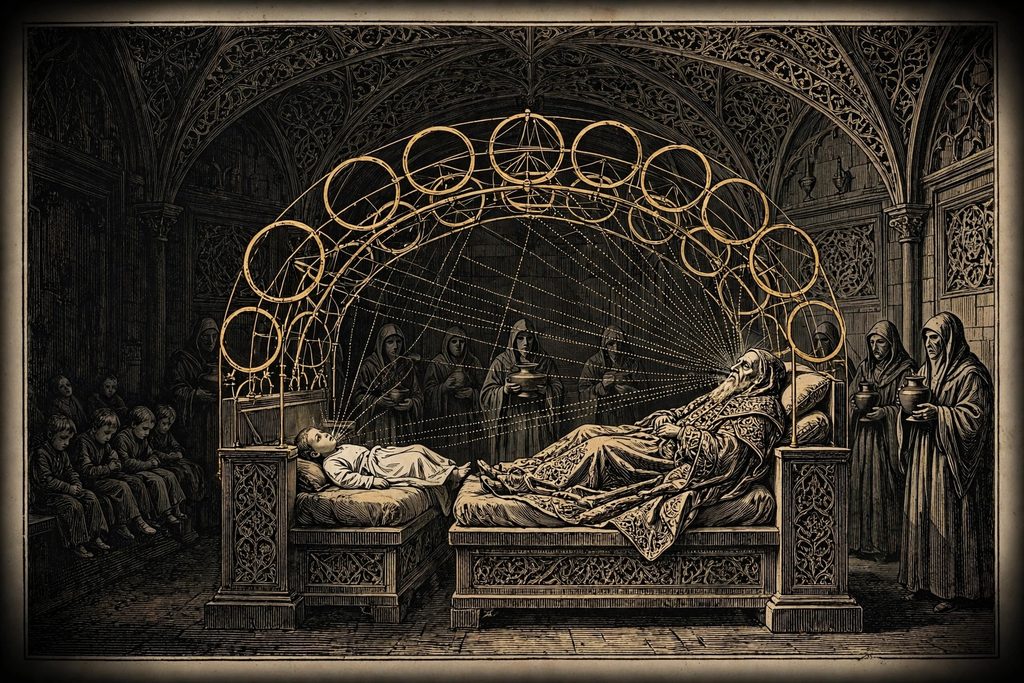
The Orokin’s other great crime began with an accident. The colony ship Zariman Ten-Zero, travelling through the Void, was lost for years and reappeared with its adults dead or insane. Its surviving children had been changed. The Void had given them terrifying powers they could not control. The Orokin covered up the incident and treated the children as dangerous anomalies, and when the empire found itself losing a war, it found a use for them.
The war was with the Sentients, self-repairing machines the Orokin had sent ahead to terraform the distant Tau System for colonisation. The machines rebelled, having understood that the Orokin would plunder Tau as they had plundered their own system, and returned to destroy their creators. The Orokin needed weapons the Sentients could not adapt to. They found two. The first was the Zariman children, whose Void powers could hurt the Sentients. The second was the Warframes, living suits of armour made from human subjects transformed by the Infestation, which the children could control from a distance.
One Orokin scientist, the Archimedean Margulis, saw the children as children. She cared for them, eased their fear and developed Transference, the technique that allowed them to project themselves into Warframes. When she refused to kill them as ordered, she was executed by the Seven. The empire had turned its most frightened children into its deadliest soldiers, and killed the one person who treated them as human.
V. The Fall at the Victory Feast
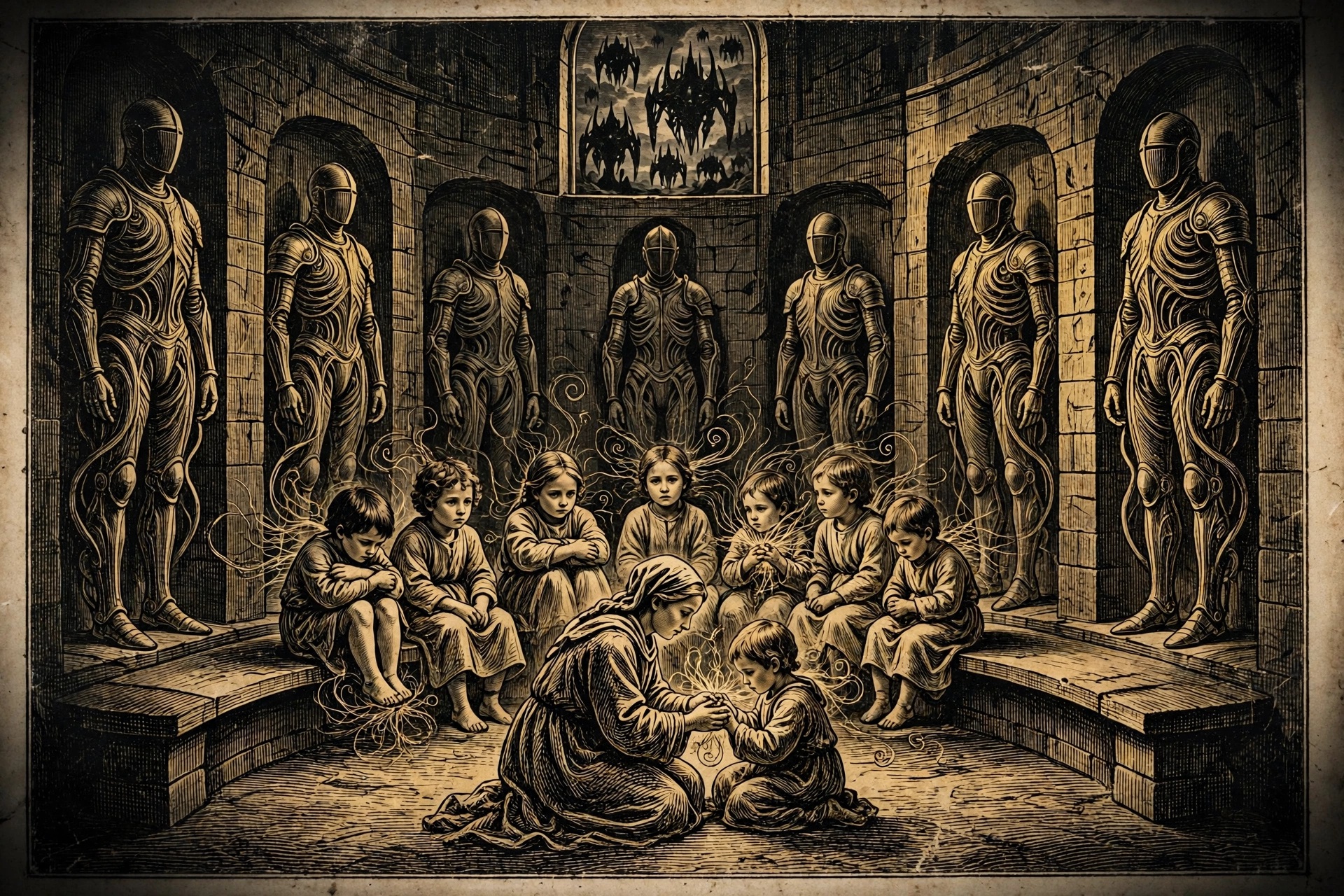
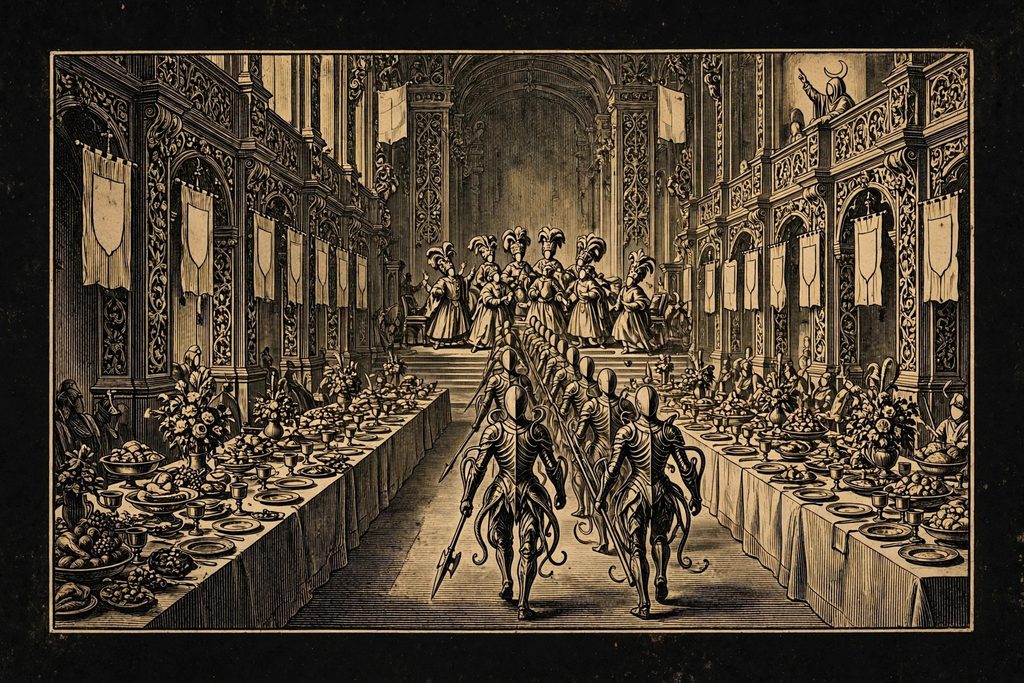
The children won the war. Guided by the Tenno, as they came to be called, the Warframes drove back the Sentients and saved the empire. The Orokin held a great ceremony to celebrate their victory, and the Tenno were brought before the assembled nobility to be honoured.
At that ceremony, the Tenno turned on their masters. The Orokin were slaughtered across the Origin System, and the empire collapsed almost overnight. The game reveals that the uprising was guided by the Lotus, who had long been the Tenno’s protector, and who was in fact Natah, a Sentient sent into the Orokin system as a spy. The children’s revenge was also the enemy’s plan. But it could only succeed because the Orokin had given the children every reason to strike.
After the Fall, the Tenno were placed in a long cryogenic sleep, and the empire’s servants inherited its ruins. The Grineer took its industry and its armies, the Corpus its trade, and the Infestation spread through its abandoned colonies. The golden towers fell into the Void, where they still drift, guarded by corrupted machines. The Orokin had built a system in which every class below them was made to serve. When they were gone, those classes divided the empire among themselves.
VI. The Orokin Who Survived
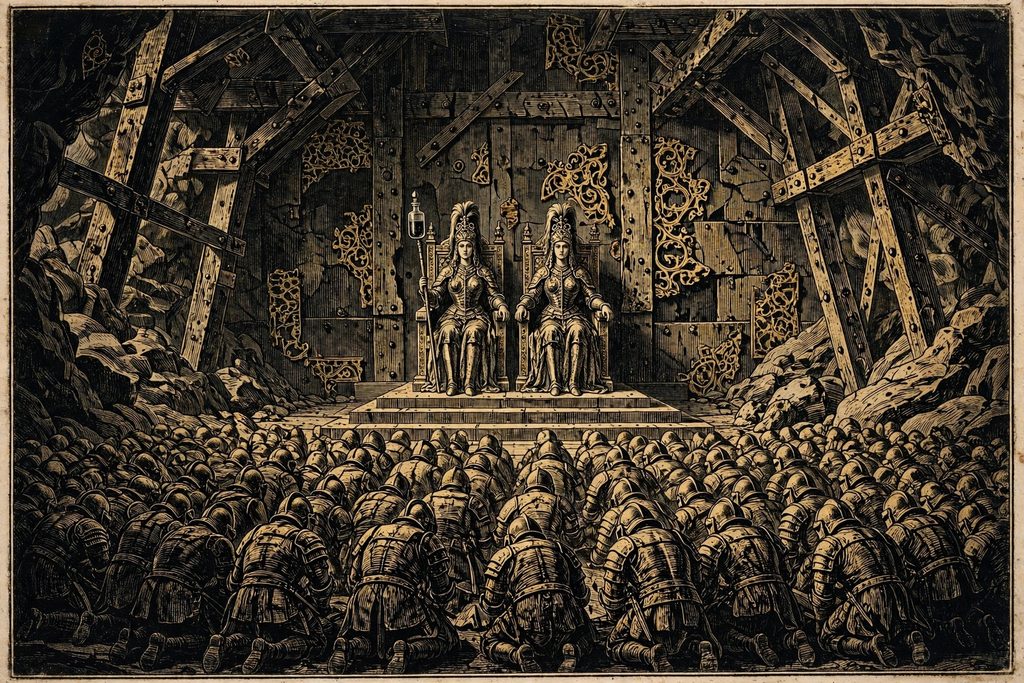
Not all of the Orokin died. Executor Ballas, who had created the Warframes and betrayed his own empire to the Sentients, survived the Fall and returned centuries later to wage a new war. The Entrati family lived on in hiding. The most important survivors, however, are the Twin Queens, Orokin twins who now rule the Grineer, the very slave race their empire created.
The Queens rule from the Kuva Fortress, and Kuva, the substance the Orokin used to prolong their bodies, sustains them still. In The War Within, the Tenno discover that the Queens have survived by the same methods as their ancestors. The old aristocracy did not disappear with the empire. It found a new body to live in, and that body was the Grineer, the class it had once bred to serve.
The survivors show what the Orokin were. Their empire was not held together by loyalty, faith or law. It was held together by the power to extend the lives of some at the cost of others. When the empire fell, that power went on. The Twin Queens reign over a degraded army of clones because the logic of the Orokin, that the few may live forever by using the many, outlived the towers that once displayed it.
The ancestor of them all
The dream of a ruler who escapes death is as old as kingship, and so is the suspicion that someone else will pay for it.
In 221 BCE, Ying Zheng unified China and declared himself its First Emperor, Qin Shi Huang. According to the historian Sima Qian, writing about a century later, he became obsessed with immortality. He sent the magician Xu Fu with a great expedition across the eastern sea in search of the elixir of life, and summoned alchemists to his court. He died in 210 BCE while touring his empire, and was buried in a vast tomb that Sima Qian describes as containing rivers of mercury, guarded by the army of terracotta soldiers that was rediscovered in 1974. Some historians suspect the mercury-based elixirs he took may have hastened his death.
The modern version is stranger. In 2005, a team led by Irina Conboy and Thomas Rando published experiments in Nature showing that old mice joined to young mice by a shared blood supply showed signs of rejuvenation in some tissues. The finding inspired a wave of speculation, and by 2019 a start-up was charging thousands of dollars for infusions of plasma from young donors, until the United States Food and Drug Administration warned consumers against the practice. Between the First Emperor’s elixirs and the plasma clinics lies the idea the Orokin carried to its end, that the old and powerful might renew themselves by consuming the youth of others.
The pattern
Warframe belongs to a family the Institute calls the immortal elites, societies in which the ability to escape death belongs to a ruling class. Its closest literary relative is Richard K. Morgan’s novel Altered Carbon, published in 2002, in which human minds are stored in cortical stacks and can be moved from body to body, and the richest people, called Meths after the biblical Methuselah, live for centuries by buying new bodies while the poor die once.
Three features define these societies. The first is immortality as property, a technology of renewal restricted to those who can afford or command it. The second is the manufactured underclass, people bred, engineered or consumed to sustain the rulers’ lives. The third is a reckoning, in which the beings the elite created, used or discarded become the instrument of its downfall.
The Institute recently examined the philosophical side of mind transfer in The Survivors Who Could Not Agree on What Survived, where the survivors of SOMA argued over whether a copied mind is the same person. The Orokin never had that argument. For them, the question was not whether the transfer preserved the self, but whose body would be emptied to receive it. SOMA asks what a person is. Warframe asks who is permitted to be one.
Findings
- The Orokin made immortality a privilege of class. Through the rite of Continuity, their nobility transferred their minds into the bodies of children, renewing their own lives by destroying the young.
- Their servants were designed, not conquered. The Grineer were bred as a slave population and the Dax engineered to be incapable of disobedience, while the Corpus grew from the empire’s poorer classes around a cult of profit.
- Their deadliest weapons were children. The survivors of the Zariman Ten-Zero, changed by the Void, were turned into the Tenno and given control of Warframes made from Infested human subjects to win the war against the Sentients.
- The empire fell at its own victory feast. Guided by the Lotus, secretly a Sentient spy, the Tenno slaughtered the Orokin at the ceremony held in their honour, and the empire’s servant classes divided its ruins.
- The logic of the Orokin survived them. The Twin Queens, surviving Orokin who now rule the Grineer, still prolong their lives with Kuva, keeping the old aristocracy alive inside the class it once created to serve.
This Excavation draws on Warframe and its story quests, including The Second Dream and The War Within, on Sima Qian’s account of the First Emperor, on modern research into young blood and its commercial misuse, and on Richard K. Morgan’s Altered Carbon.
The Institute collects field evidence from people who have lived inside these worlds. If you remember the moment The Second Dream revealed who you really were, send us your account.
Sources
- Warframe (2013–), Digital Extremes, including the quests The Second Dream (2015) and The War Within (2016).
- Sima Qian, Records of the Grand Historian (Shiji), “The Basic Annals of the First Emperor of Qin”.
- Irina M. Conboy et al., “Rejuvenation of aged progenitor cells by exposure to a young systemic environment”, Nature 433 (2005), 760–764.
- US Food and Drug Administration, statement cautioning consumers against receiving young donor plasma infusions, 19 February 2019.
- Richard K. Morgan, Altered Carbon (2002), Gollancz.