
It’s rare for a single social media post to ignite a firestorm across the gaming community, but that’s exactly what happened when former Kotaku journalist Alyssa Mercante took to her microblog. In a statement that was equal parts provocative and analytical, she linked the rise of the “soulslike” genre to what she called “pseudo-intellectual fascist ideologies” within geek culture.
Her claim wasn’t just a casual take; it was a dissection of the modern gamer. She posited that games like Dark Souls, Elden Ring, and Sekiro appeal to a specific male audience—a group she labeled “beta nerds”—who crave a rigid hierarchy and a sense of superiority over their peers. This wasn’t just about enjoying a challenge; it was about the culture that surrounds it, characterized by the infamous “git gud” philosophy.
The post sparked immediate and passionate debate, revealing a deep chasm in the gaming world. For many, it was a long-overdue critique of a genre’s toxic underbelly. For others, it was a gross oversimplification and a mischaracterization of a community that simply appreciates a genuine challenge and intricate game design. Regardless of where you stand, her words force us to look beyond the pixels and polygons and examine the culture we’ve built around the games we love.
Deconstructing the Gamer Archetypes
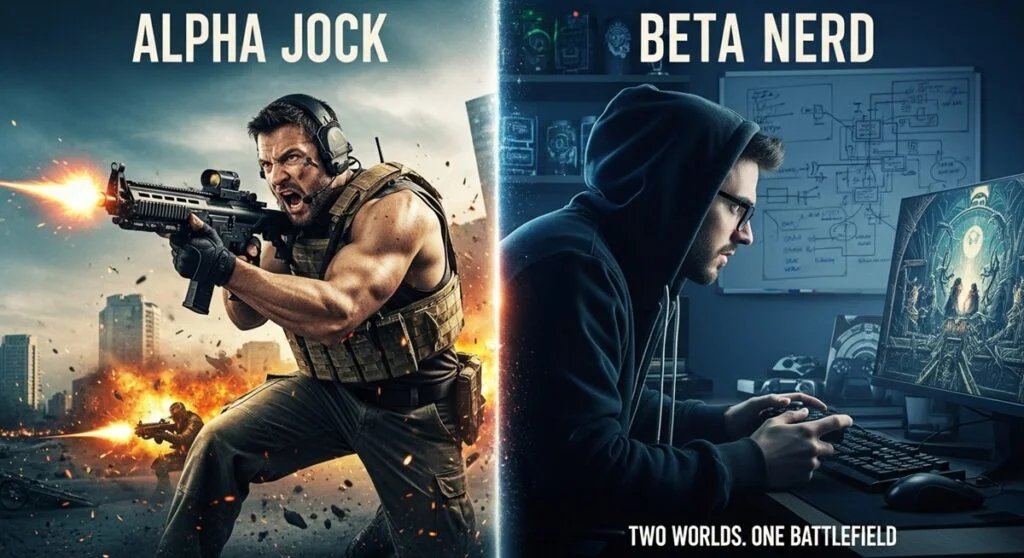
Mercante’s argument hinges on a sharp, almost stereotypical, division of the gaming populace into two distinct groups. Understanding her perspective requires us to first understand these archetypes.
The “Alpha Jock”
This group, according to the post, is drawn to fast-paced, action-oriented titles. They live for the thrill of a quick match in a first-person shooter like Call of Duty. Their focus is on instant gratification, competitive drive, and the kind of aggressive energy often associated with traditional sports. Mercante suggested this archetype’s preference aligns with “jingoism”—a term that, in this context, implies an aggressive and uncritical patriotism, or in a gaming sense, a fervent loyalty to their chosen genre or playstyle.
The “Beta Nerd”
In contrast, the “beta nerd” is the soulslike aficionado. This group, she argued, seeks out artificial complexity and a sense of exclusivity. The core appeal isn’t just the difficulty, but the perceived intellectual and skill-based superiority that comes from mastering it. The “git gud” mantra—a dismissive phrase often used to tell struggling players to simply get better—was presented as the cornerstone of this elitism. This philosophy, she claimed, fuels an obsession with a hierarchy where “casual” players are looked down upon.
This framework, while certainly controversial and a broad generalization, highlights a real tension in gaming culture. On one side, there’s the desire for a quick, competitive rush. On the other, there’s a deep dive into complex systems and a community built around shared struggle and eventual mastery. The critique lies in whether this shared mastery fosters genuine community or simply fuels an insular, exclusionary culture.
The Intrigue of Challenge vs. The Problem of Elitism
To truly grasp the controversy, one must separate the game genre itself from the player culture it has cultivated.
The Art of “Soulslike” Design
There’s no denying the artistic and design brilliance behind games like Dark Souls. They are known for their intricate level design, subtle environmental storytelling, and highly rewarding combat mechanics. The difficulty isn’t arbitrary; it’s a core component of the experience, forcing players to learn, adapt, and overcome. The satisfaction of finally defeating a boss after dozens of attempts is an unparalleled emotional high, and it’s a feeling that resonates with millions of players worldwide. For many, the “git gud” mindset is simply an acknowledgement of this core design philosophy—that the game is tough, but fair, and the path to success is paved with perseverance, not shortcuts.
The Shadow of Exclusivity
However, Mercante’s critique zeroes in on a darker aspect of the community. The “git gud” philosophy, while sometimes used in good faith, can also be a shield for toxicity. It can be a way to dismiss valid criticisms of a game’s design, or worse, to gatekeep the genre and make newcomers feel unwelcome. When a community uses a game’s difficulty as a litmus test for a player’s worth, it fosters the very elitism that Mercante describes. This isn’t a problem with the games themselves, but with how some members of the community wield their expertise as a tool for superiority.
The debate is less about whether soulslikes are good or bad games, and more about whether the culture that has grown around them has become exclusionary. The comments on the original post were a testament to this divide, with passionate defenders of the genre arguing its merits, while others pointed to their own negative experiences with a dismissive community.

Beyond the Binary | The Nuance of Modern Gaming
The reality of the modern gaming landscape is far more complex than any simple two-archetype model can capture. The lines between “alpha jock” and “beta nerd” are often blurred. Many gamers enjoy both a quick-fire round of a shooter and the methodical exploration of an intricate RPG.
Furthermore, the conversation around game genres and their social impact is constantly evolving. Mercante’s own mention of avoiding gacha games—a genre often criticized for its manipulative monetization and psychological hooks—hints at a broader discussion. The conversation isn’t just about who plays what, but about how games, as cultural products, shape our behavior, our communities, and our perceptions of each other.
The soulslike debate serves as a powerful reminder that our digital worlds are not isolated from our real-world beliefs and ideologies. The challenges we choose to overcome, the communities we choose to join, and the language we use all reflect deeper truths about ourselves. While a single tweet can’t definitively answer these questions, it can certainly force us to ask them.