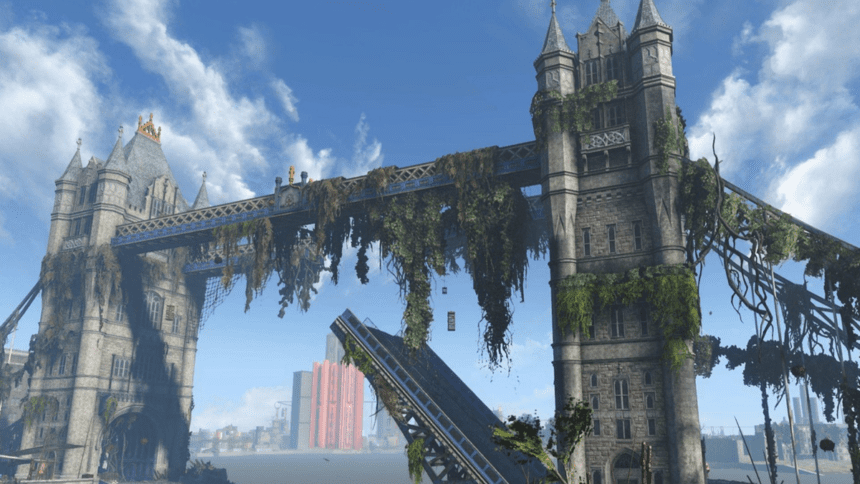
In late July, the dedicated Team FOLON finally unveiled Fallout London, an expansive story mod for Fallout 4 that was over five years in the making. Despite the project’s ambitious scope, which often made its release seem unlikely, the creators managed to overcome the challenges. We have explored the expansion and are now ready to share our thoughts.
Bethesda games are highly favored by mod creators due to their robust mod support. This has led to significant transformations in games like The Elder Scrolls 4 | Oblivion, The Elder Scrolls 5 | Skyrim, and Fallout 4, with fans crafting weapons, armor, new locales, and even fully-voiced missions, resulting in a wildly creative expansion of the original games. While many of these mods can be experienced in just a few hours, their creators are realistic about their scope.
However, the most ambitious and expansive mods often require years, or even decades, of development. For instance, Skyblivion, a fan-driven remake of Oblivion using Skyrim’s assets, has been in development since 2012. Similarly, work on Skywind, which aims to rebuild Morrowind using The Elder Scrolls 5’s engine, also began in 2012. Despite being remakes, both mods are yet to announce a release date, as they do not necessitate the creation of new content.
Consequently, there were significant doubts regarding the release timing of Fallout London, particularly in light of Team FOLON’s promises. They pledged to deliver 15 districts of Britain’s capital on a vast map, on par with Fallout 4 and its Far Harbor expansion. The promises included 200 quests, 20 factions, 7 companions, complete voice acting for all dialogues, an original soundtrack, and new weapons, armor, and animations—all for free. Such ambitious undertakings often challenge even professional development teams, leading to skepticism about the ability of fan developers, driven purely by passion, to fulfill these promises.

Fallout London has indeed been released, and it’s functioning, albeit with some effort. It’s more than just a mod; it’s a full-fledged game complete with its own setting, narrative, voice acting, quests, and items. It’s an extremely ambitious project, and its creators are likely keen to avoid further criticism. Nonetheless, various aspects of their creation are marred, whether due to inexperience or the limitations of Fallout 4.
The fan-made game is set in the year 2237, nestled between the stories of Fallout 1 and Fallout 2. Knowledge of these narratives is not required, as this installment marks the first Fallout to venture beyond the United States, into Europe. Consequently, everything is altered | Vault-Tec Corporation and its shelters, the Pip-Boy, and the iconic monsters are absent. London has its own unique post-apocalyptic challenges, monsters, and human factions.
The protagonist, or heroine, of Fallout London awakens in an unfamiliar underground laboratory, evidently having been the subject of various experiments. The facility comes under attack, the player manages to escape, and is then directed to board a train heading to the surface. The hero has lost his memory, and following the train crash, he sustains two severe injuries that diminish his abilities. Now, guided by the enigmatic stranger’s instructions, you must attempt to unravel your past while simultaneously seeking doctors who can aid in your recovery.

Bethesda games’ overarching plots have never captivated me, and the creators of Fallout London didn’t reach for the stars either. However, we appreciate their effort | they attempted to craft a narrative akin to a spy thriller, reminiscent of Cyberpunk 2077 | Phantom Liberty. The story centers on various factions vying for control over London, manipulating the player, making it hard to discern whom to trust. The narrative is inconsistent | at times it accelerates, hinting at a climax, then suddenly it plateaus, presenting a series of tedious tasks. The finale mirrors the game’s overall tone—grandiose and ambitious, yet occasionally overwrought, unnecessarily complex.
Nonetheless, this often goes unnoticed. Fallout London’s scope and detail are impressive | the developers have authentically reconstructed the ravaged British capital, crafted dozens of quests, provided voiceovers, and with the fresh setting, the mod almost feels like a new installment in the series. It may be superficial—substituting Pip-Boy with another wrist computer, raiders with hooligans, and radroaches with mutated jerboas—but the core gameplay remains unchanged | players traverse the wasteland, gather loot, vanquish foes, and enhance their character.
Exploring London is fascinating for several reasons. First, the city’s unique and sometimes maze-like layout can easily ensnare you, forcing you to search for detours for minutes on end. While it seems little thought was given to navigational ease, which can be frustrating, it also instills a sense of true exploration as you discover new pathways. Second, the focus is on urban exploration rather than traversing barren landscapes | London’s streets are claustrophobic, with walls and tight spaces ever-present. In this aspect, the experience is akin to the Metro series, particularly with the frequent need to venture into the underground.

For the expansion, the developers crafted numerous new assets such as posters, objects, notes, music, and more. The currency is unique here | subway tickets are used instead of Nuka-Cola caps, and these tickets also grant access to turnstiles and certain routes. There’s an abundance of information about how London weathered the disaster. Players can hack terminals, peruse notes, and undertake side quests that unveil the local backstory. We cannot claim that this content is significantly lesser than Bethesda’s work.
The side quests are quite varied. At times, a mission may lead to a fascinating site where the remnants of humanity tell a story from a bygone era. Other times, you might spend 15 minutes searching for a specific item only to end up disheartened. Generally, it’s akin to the latest Fallout | it’s unpredictable whether another distress signal is worth the effort. Nonetheless, the developers deserve commendation for their diligence and sometimes exceptional effort, blending various ideas and genres. For instance, one might encounter dramatic scenes or chilling horror missions.
The journey is also made more enjoyable by intriguing companions. Although I did not encounter all the available ones, two amused me with their comments and would occasionally start conversations, sharing their histories. Similar to Fallout 4, they sometimes obstruct paths and lack overall intelligence, but it’s evident that considerable effort went into their creation.

Most of the time, Fallout London not only impresses with its ambitious execution but also with its meticulous attention to detail. Take tea crafting, for instance, which is cleverly integrated as a way to create mods for weapons and armor. The radiation storms and weather changes are even more striking than in Fallout 4. The addition of ladders and the revival of nearly a hundred perks in the leveling menu show a commendable effort.
The mod has also improved upon Fallout 4’s infamous dialogue system, where the protagonist’s responses were limited to “Yes,” “No,” and “Sarcasm.” In Fallout London, comprehensive voice lines provide insights into missions or characters, and sometimes offer alternative solutions to challenges. The plot also exhibits some degree of non-linearity | the outcomes of certain missions influence the narrative and alter entire quest lines.
However, when assessing Fallout London more critically and without the leniency granted to a free mod, viewing it instead as a game worthy of investing dozens of hours, the picture isn’t as rosy. For the time being, we would hold off on a playthrough, despite the likelihood that the game’s major issues may not be addressed by the creators in the future.

A significant shortcoming of Fallout London is its mission structure. It appears the creators were concerned about players finishing the mod too quickly, leading to many quests involving multi-stage, monotonous treks across the map. For instance, acquiring a document from a character often means clearing not just one, but multiple dens of ruffians. The story campaign resembles a recursive loop, where completing one quest triggers the start of three more, complicating the understanding of who we’re assisting and our ultimate goals, though this does become clearer towards the end.
This issue is compounded by the technical aspects of Fallout 4 and the mod. London is split into several sections, each requiring a separate loading time for fast travel, and multiple loads when accessing the subway. Consequently, a significant portion of quest time is consumed by loading screens, even on an SSD.
Moreover, the developers seldom provide a way to reach destinations quickly; if you need to travel, it’s often across the entire city. The latter half of the game feels like a continuous loading screen simulator, discouraging long-distance travel on foot. While forums suggest a well-known mod can reduce loading times in Fallout 4, the unstable technical state of London dissuaded me from trying out additional mods.
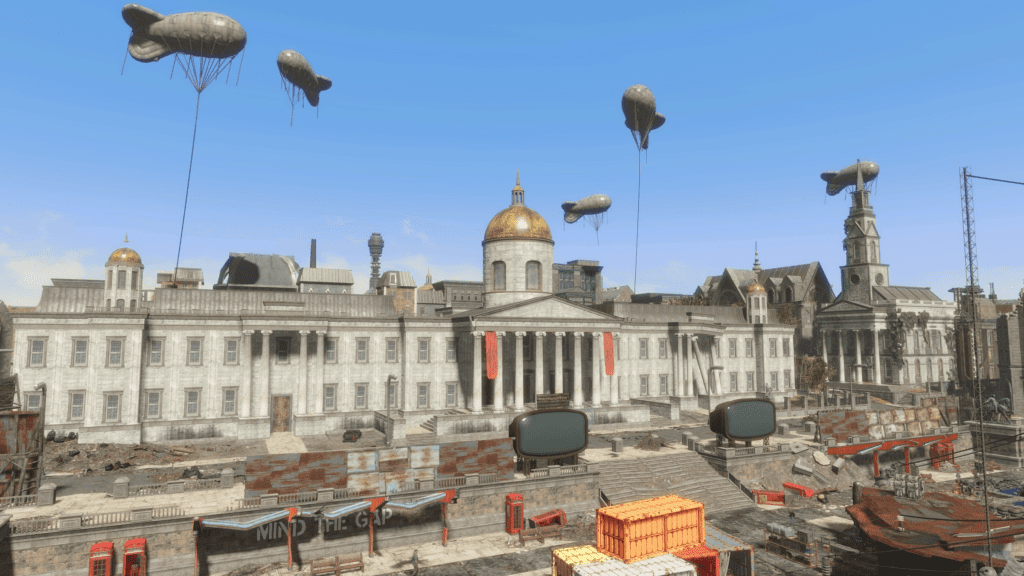
The game is riddled with bugs of varying severity. NPCs often engage in nonsensical dialogue or act inappropriately, such as complaining about a “suspicious rustle” during a shootout or attempting to negotiate in the face of imminent danger. At times, they fail to load entirely, leaving London feeling deserted and forcing me to spend extra time discerning whether the issue lies with the script, the character, or something else. Our familiarity with Bethesda’s previous games has been the only thing preventing us from abandoning the game entirely, as it has allowed us to troubleshoot or recognize when a reboot is necessary.
We consider ourselves fortunate; based on forum discussions, many players experience far worse performance with Fallout London, enduring constant crashes and corrupted saves. While we’ve managed to navigate the mod despite these hurdles, others have resorted to installing additional patches and conducting numerous experiments.
The developers have vowed to release updates, but certain elements, such as the voice acting, are beyond repair. Although the overall quality is acceptable, some performances are painfully overdone, resembling theatrical monologues rather than the gritty exchanges one would expect from gang leaders. The exaggerated delivery of many characters detracts from the realism, even when considering the fictional nature of the work.
As Fallout 4 approaches its tenth anniversary, its age is becoming increasingly apparent. Attempts to present large-scale or cinematic experiences within the game often fall short. The Bethesda engine has not aged well, especially when compared to modern titles like Cyberpunk 2077 | Phantom Liberty, which makes it challenging to play without a sense of amusement. For instance, where Cyberpunk 2077 might present a character’s breath halting in anticipation, Fallout 4 offers a robot’s awkward gait and subpar animations. While this is not a reflection on the modding community’s efforts, it is a testament to the limitations they face, despite their best intentions.
Despite its shortcomings, the scope and quality of Fallout London’s creators’ work are commendable. Even when the game crashes, it soon compensates with an engaging quest. If an actor delivers a poor performance, the subsequent dialogues make you forget you’re playing a fan mod. Sometimes, you might spot buildings that seem cloned, yet their interiors are impressively designed, not for quests, but for their own sake.
It’s also interesting to note the game’s unique feature | the nuances and nods to British culture. Forum discussions suggest that non-Londoners may miss out on certain aspects, from local slang to jokes about post-apocalyptic products. Brits seem to relish these details, enjoying the numerous in-jokes. But fear not if you’re only vaguely familiar with England; all the iconic landmarks are present – Big Ben, Piccadilly Circus, Tower Bridge, Buckingham Palace, and more.
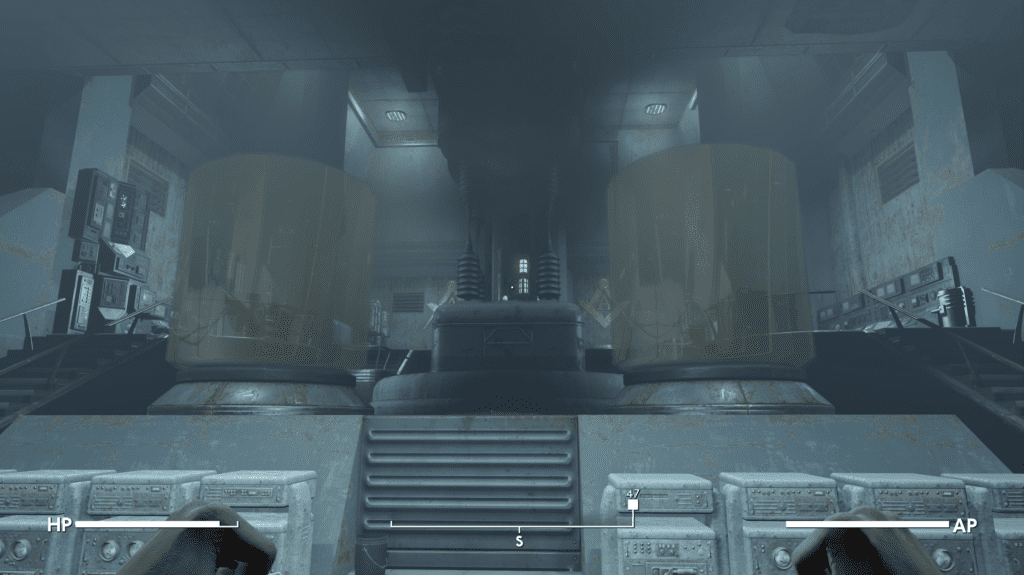
Fallout London has proven to be significantly more challenging than Fallout 4, evident in the stronger enemies and the game design itself. The adversaries deal substantial damage, and with scarce medical supplies, even the normal difficulty level often leads to death. The creators boldly incorporate puzzles without hints, leading to moments where we found ourselves stuck, unsure of the next steps. While bugs and cryptic solutions can mar the experience, the game remains resilient to breaking, and cheats can circumvent particularly odd sections.
Overall, Fallout London clearly demonstrates the immense effort invested in its development. In certain aspects, it rivals the work of Bethesda, which had vastly more resources and expertise. For avid fans of the series looking to delve back into the post-apocalyptic world, Fallout London is recommendable, provided you’re willing to tackle some technical issues or await future patches.
The extension serves as a reminder of Bethesda’s outdated engine and methodology. Following Starfield and London, even the most devoted fans might concede that a fundamental overhaul is necessary. If The Elder Scrolls 6 continues under the same paradigm, it would be disheartening news. By the hypothetical year 2026, such a game could be antiquated even in its conceptual phase.
Fallout London stands out as one of the most remarkable story mods in video game history. It feels reductive to label it merely as a “mod”; it’s a full-fledged game built upon the assets and engine of Fallout 4. Despite being marred by technical issues—some likely to be resolved, others inherent to Bethesda’s engine—it’s an impressive feat.
Fallout London is available at no cost, yet post-launch, Team FOLON initiated a donation page. The creators deserve accolades for their achievements, despite any lack of experience or resources.