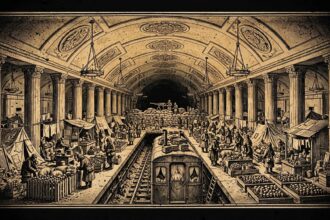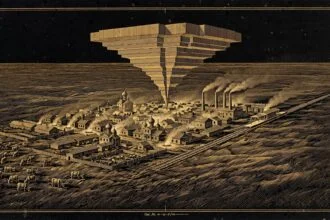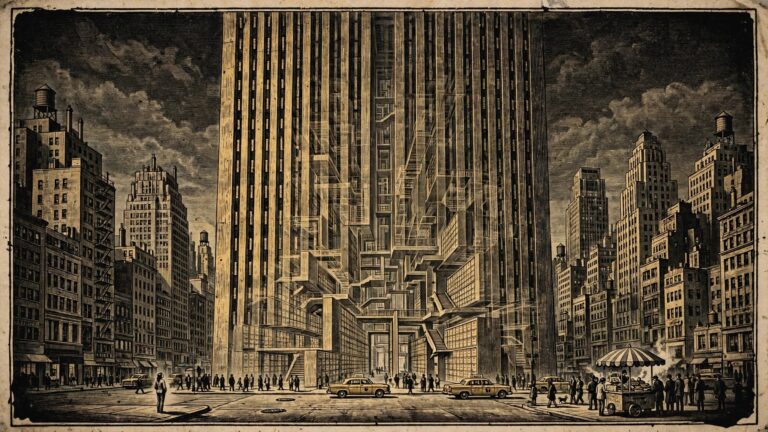


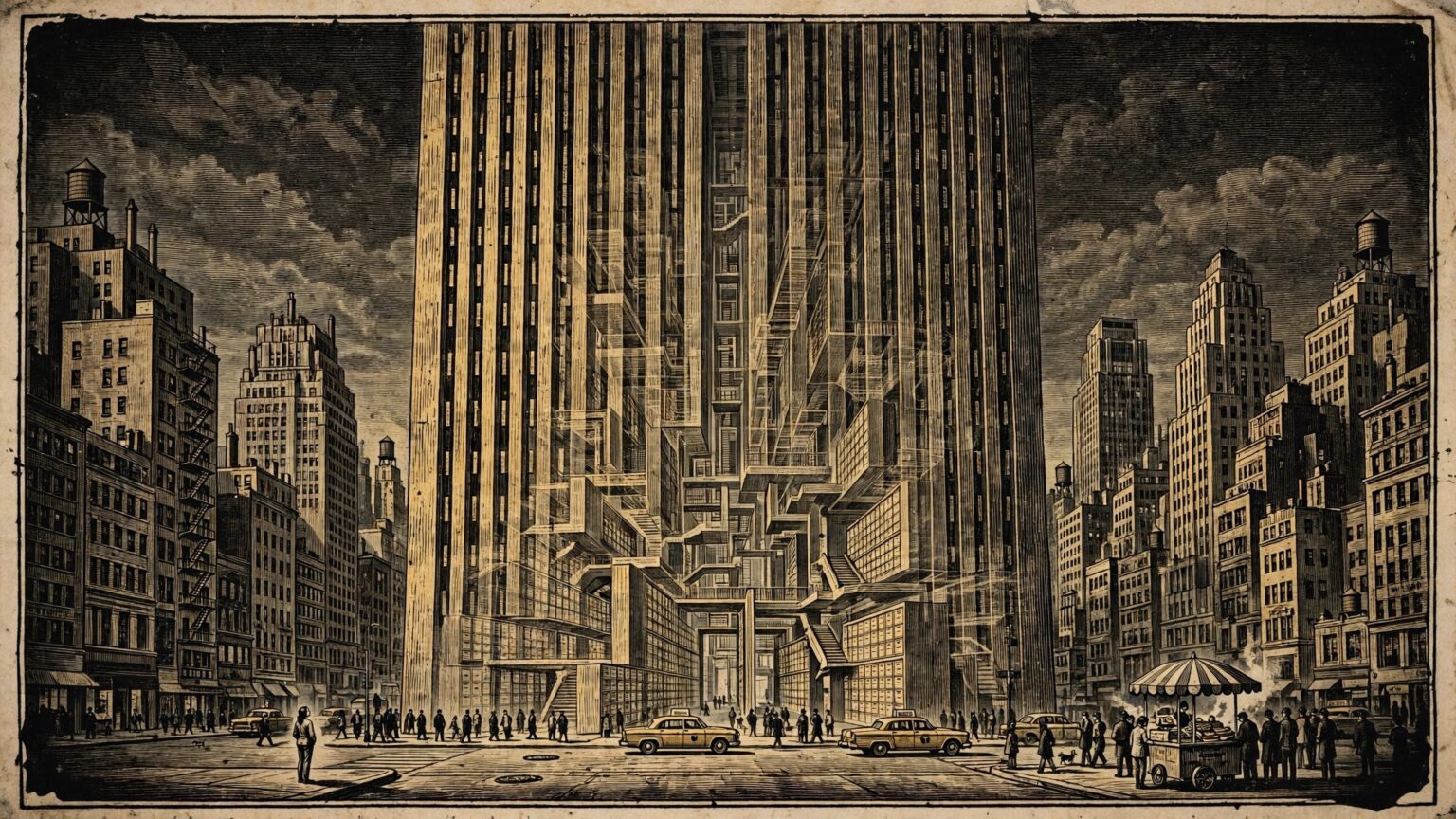
There is a skyscraper in New York that almost nobody sees. People walk past it every day without noticing it. It is not on any tourist map. Inside, it is far larger than it is outside, its corridors shift when no one is watching, and its rooms hold a refrigerator that will kill anyone if it is not stared at, a gun that chooses its owner and a slide projector that opens doors into other worlds. Every one of these things has a file number, a containment protocol and a responsible officer.
This is the Oldest House, headquarters of the Federal Bureau of Control, the secret agency at the heart of Control, released in 2019 by the Finnish studio Remedy Entertainment and written by Sam Lake. Its world continued in two expansions and, in 2025, in the co-operative spin-off FBC: Firebreak. It is one of the strangest and most admired settings in modern games, and at its core it is not a story about monsters. It is a story about paperwork.
The Institute has studied an agency undone by the zone it was built to contain in The Wilderness That Rewrote Its Visitors. The Federal Bureau of Control is its institutional cousin, a government department that has spent decades trying to make the impossible fit into forms. This Excavation examines how it works, and what it reveals about every institution that tries to govern what it cannot understand.
I. The Building That Chose Its Tenants
The Federal Bureau of Control investigates what it calls the paranatural, events and objects that break the laws of physics. It has existed in some form since at least the 1950s, and it is known to the public, if at all, only as a rumor. In the 1960s it found its headquarters, or the headquarters found it. The Oldest House is what the Bureau calls a Place of Power, a building that obeys its own rules, invisible to anyone who is not meant to find it.
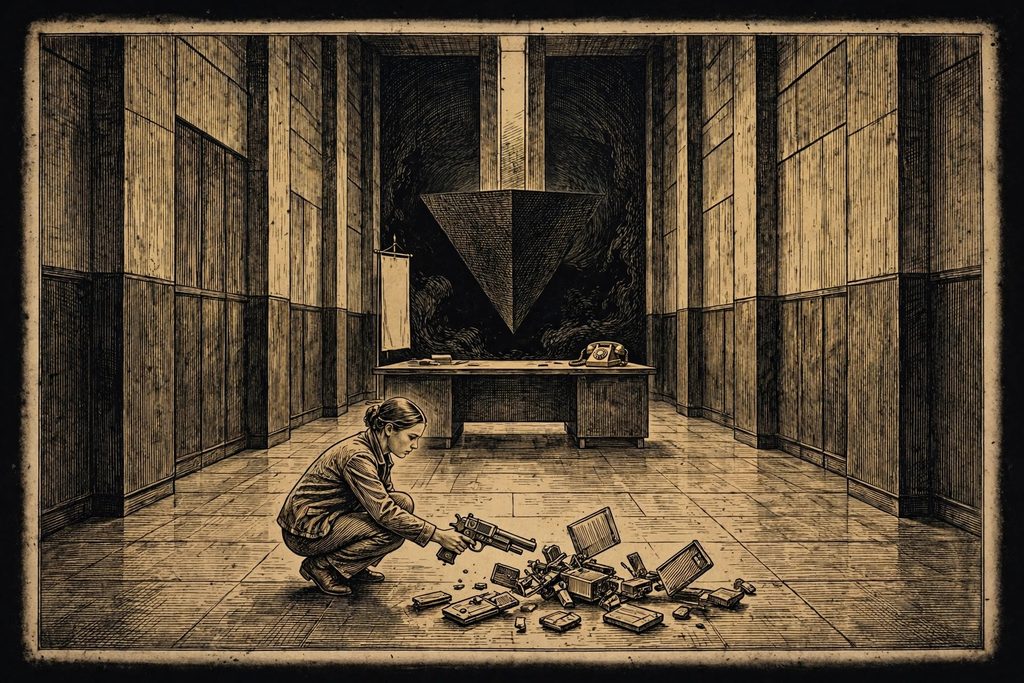
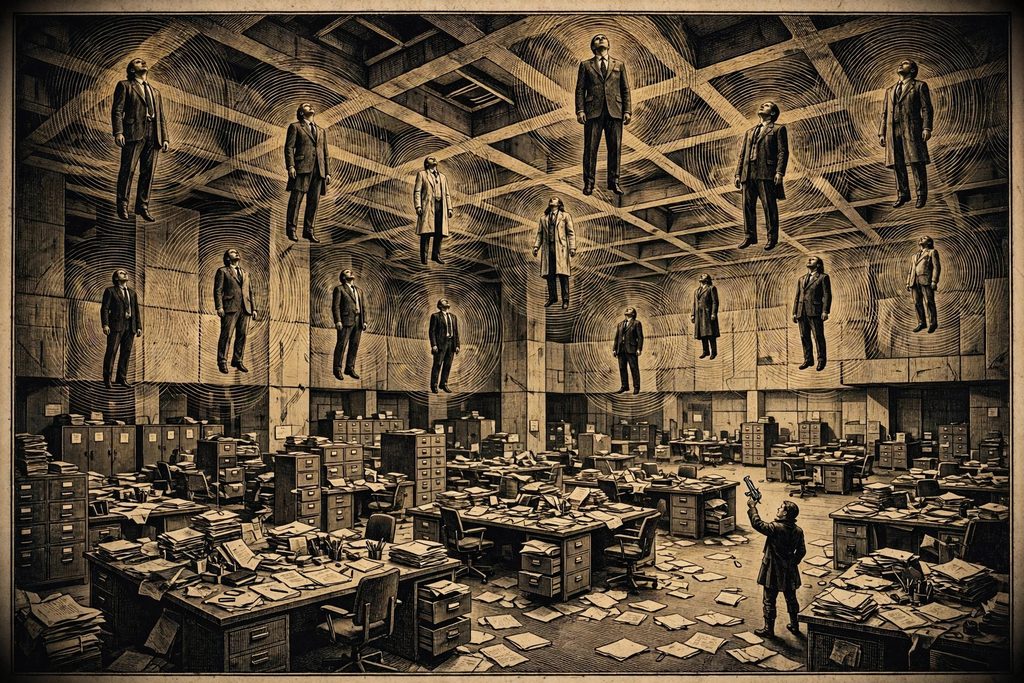
The game begins when a young woman named Jesse Faden walks into the Oldest House looking for her brother, who was taken by the Bureau after a paranatural event in their childhood town of Ordinary, Maine. She finds the building in lockdown, its staff floating in the air and chanting, and the Director of the Bureau dead in his office. Beside him lies his gun, the Service Weapon, an Object of Power that changes shape. Jesse picks it up. The weapon accepts her, and a voice from beyond the walls declares that she is now the Director.
This is the Bureau’s founding fact. Its highest office is not filled by election, appointment or seniority. It is filled by an object and confirmed by an entity called the Board, which speaks from a dimension the Bureau calls the Astral Plane. The most bureaucratic organization in fiction is ultimately ruled by a gun and a voice that nobody fully understands.
II. A Taxonomy of the Impossible
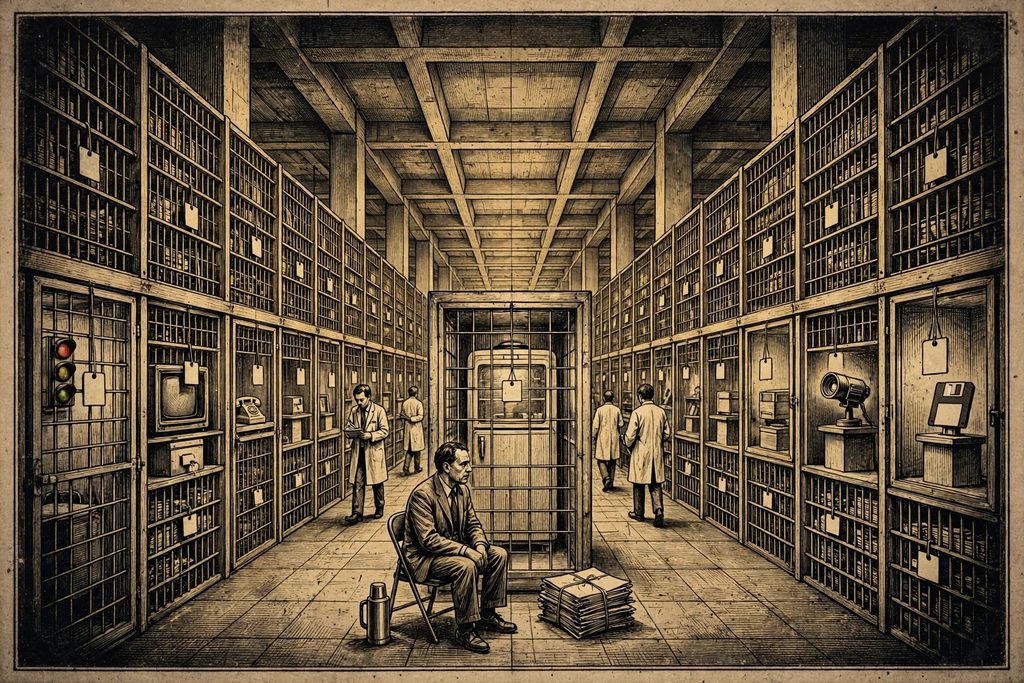
The Bureau’s first instinct, faced with the impossible, is to classify it. A paranatural event is an Altered World Event, or AWE. An ordinary object that has acquired strange properties is an Altered Item. An object with deeper power that can bond with a person, like the Service Weapon, is an Object of Power. Places where the rules break are Places of Power. Every category has its own procedures, its own forms and its own sector of the building responsible for it.
The Altered Items are the most memorable part of this system, because they are so ordinary. A refrigerator in the Containment Sector must be watched constantly by an agent, because the moment no one is looking at it, it kills. Other everyday things in the Bureau’s care, a floppy disk, an old television set, a slide projector, have turned out to be Objects of Power, ordinary shapes holding something they cannot contain. The Bureau’s response is to give each one a number, a containment protocol and a note in a file.
This is the anthropological center of Control. Every institution survives by turning the world into categories it can manage. The Bureau has simply applied that habit to the one domain where it should be impossible. Its staff do not pray to the paranatural, fight it with magic or flee from it. They write it down. They file it. And to a remarkable degree, it works.
III. The Paperwork
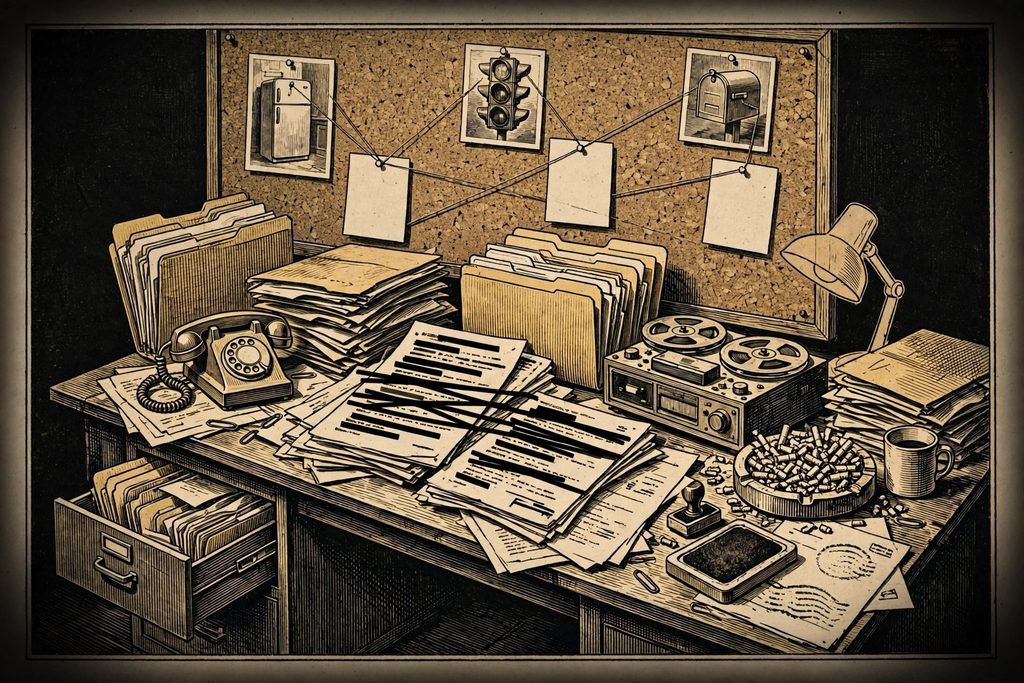
Much of what the player learns about the Bureau comes from its documents. The Oldest House is full of them. Research reports, incident logs, internal memos, recordings of interviews and training videos lie on desks and in filing cabinets throughout the building. Many are partly redacted, with black bars covering names and details, as if the player had obtained them through a freedom of information request. The game tells its history through the archive of an agency.
The documents reveal a working culture. Departments compete for resources. Researchers complain about safety rules. Supervisors issue warnings about Altered Items in the break room. A head of research named Casper Darling records enthusiastic lectures about his discoveries, full of scientific excitement about things that should terrify him. A senior officer named Helen Marshall, a stern veteran of the agency, distrusts every new director. The Bureau has office politics, budget disputes and employee rivalries, all conducted inside a building that rearranges its own corridors.
The most unsettling element is how normal the paperwork makes the impossible feel. A memo about a deadly object reads like a memo about a broken printer. The Bureau has domesticated the paranatural by turning it into routine, and routine is how institutions survive. Control suggests that the same is true of every bureaucracy, which survives by making the extraordinary ordinary, one form at a time.
IV. The Building That Will Not Hold Still
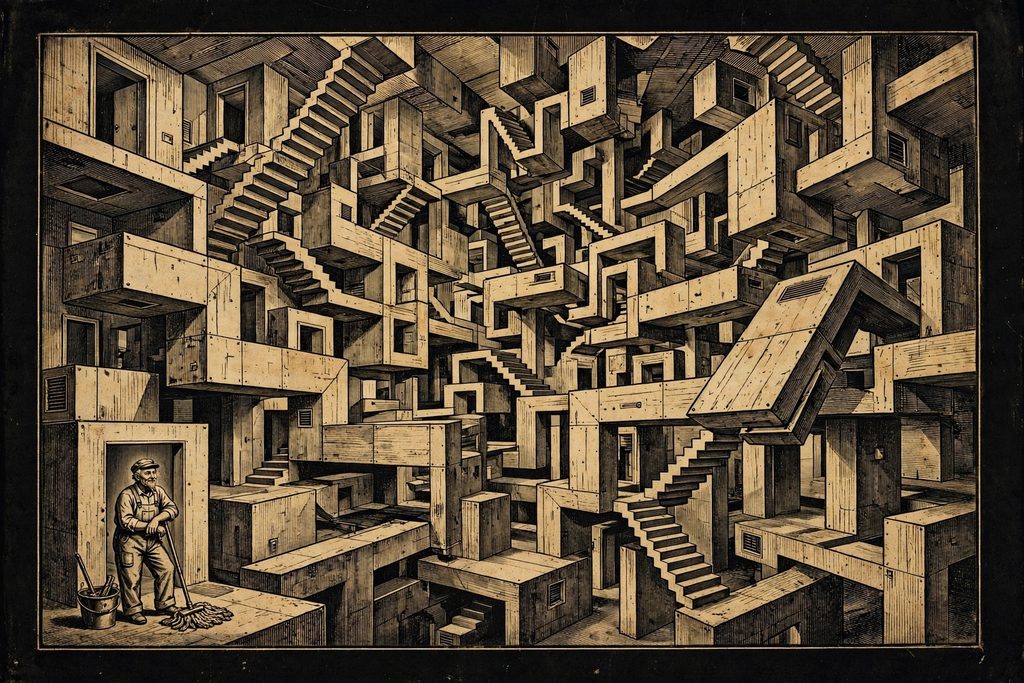
The Oldest House is not a passive headquarters. It is alive, or something close to it. Its architecture moves. Walls shift, corridors appear and disappear, and certain sectors can only be reached when the building allows it. Agents speak of it with a mixture of familiarity and fear, as sailors speak of the sea. The Bureau may occupy the Oldest House, but it does not own it.
Its most famous space is the Ashtray Maze, a section of the Maintenance Sector whose walls fold and rearrange themselves in constant motion, a labyrinth that cannot be mapped. Its most famous inhabitant is Ahti, a cheerful Finnish janitor who hums to himself, speaks in proverbs and appears wherever he is needed, even in places he could not possibly have reached. The Bureau’s records barely mention him. Players have long suspected that he is something far older than the Bureau, perhaps older than the building itself.
The relationship between the Bureau and its building is the relationship between every institution and the world it governs. The agency imposes order, sectors, procedures and maps. The building quietly ignores them. Control’s architecture is a reminder that bureaucracy is always a thin layer of order laid over something that does not care about it.
V. The Hiss
The crisis that opens the game is an invasion called the Hiss, a resonance from another dimension that takes over the minds and bodies of the Bureau’s staff. Possessed agents float in the air with their arms outstretched, chanting the same strange words together. Others become hostile, attacking anyone who has not been taken. The Hiss spreads through the building like a corrupted signal, turning the Bureau’s own people into its instruments.
Its origin lies in the Bureau’s own ambition. The previous Director, Zachariah Trench, and the head of research, Casper Darling, had led expeditions through the slide projector into another dimension, and from there brought back things the Bureau did not understand. The Hiss came in through the door they opened. The agency that contained the impossible for decades was finally breached by its own research program.
This too is an institutional story. Every organization built to contain a danger is tempted to use it. The Bureau did not fall because it neglected its procedures. It fell because its leaders believed they could study the most dangerous thing in their care safely, and went further than the rules allowed. The Hiss is the paranatural form of a very ordinary failure, the moment when an institution’s curiosity outruns its caution.
VI. The Director’s Choice
By the end of the game, Jesse Faden has restored the Bureau, freed her brother and pushed back the Hiss. She is now the Director of an agency she did not choose to join, appointed by a Board she cannot see, carrying a weapon that chose her. The Bureau’s procedures resume. Containment holds. The building settles. And yet the central questions of the institution remain unanswered. Who, or what, is the Board? What does it want from the Bureau? Why does the Oldest House allow the agency to stay?
Control leaves the Bureau where many real institutions live, functioning, competent and fundamentally uncertain of the forces it serves. Its staff keep filing their reports because the alternative, facing the paranatural without procedure, is unbearable. The world of the game has since grown into a shared universe with Remedy’s other works, connecting the Bureau to the strange events of Alan Wake, and in 2025 the co-operative FBC: Firebreak sent new teams of Bureau employees back into the Oldest House to deal with what was still loose inside.
The lesson of the Bureau is that order is not the opposite of the impossible. It is a way of living with it. Every civilization that has faced forces beyond its understanding has built institutions to manage them, and every such institution has discovered that it can manage, but never control.
The ancestor of them all
States have always tried to turn the uncanny into procedure, and the most thorough of them was Rome.
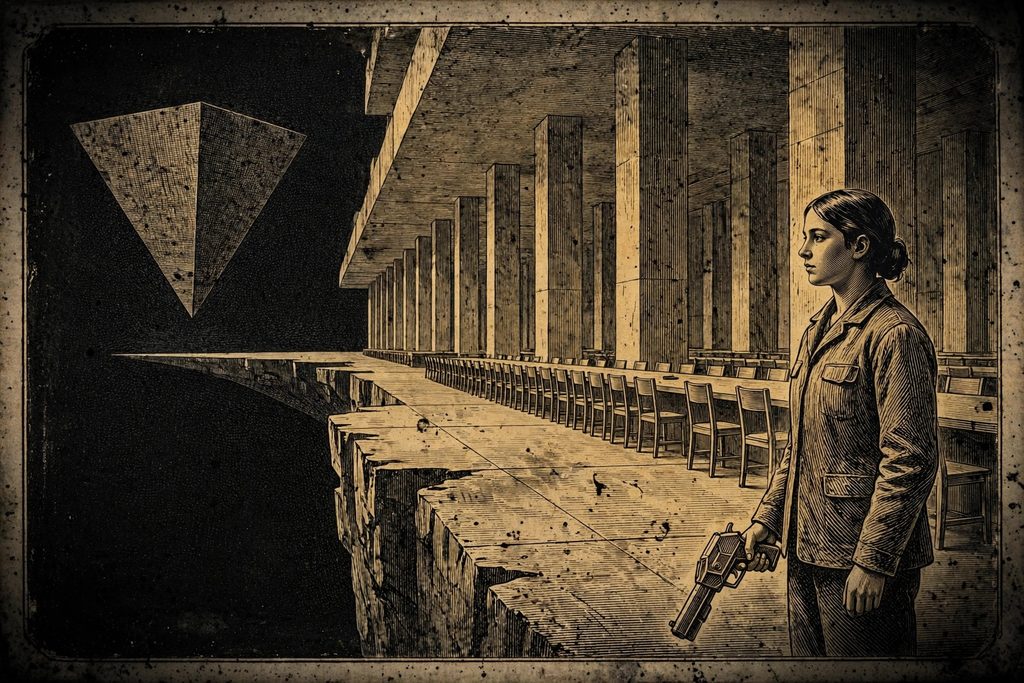
In the Roman Republic, strange events were not left to rumour. A rain of stones, a statue that sweated blood, a lamb born with two heads or a bolt of lightning striking a temple was a prodigium, a sign that the peace between Rome and its gods had been disturbed. Prodigies were reported to the Senate, which decided whether each one was a public matter. If it was, the Senate ordered the appropriate priests to identify the remedy, and the state carried out the rites of expiation. The historian Livy records these prodigies year after year, a list of the paranatural kept as carefully as a list of consuls.
At the heart of the system lay the Sibylline Books, a collection of prophetic verses that the Romans believed had been bought by one of their early kings from a mysterious prophetess. The books were kept in the temple of Jupiter on the Capitol and guarded by a college of priests, who could consult them only when the Senate ordered it. They were Objects of Power in the fullest sense, dangerous, sacred, consulted rarely and under strict procedure. When the temple burned in 83 BCE, the books were lost, and the Senate sent envoys across the Mediterranean to collect replacements.
Much later, the Catholic Church built a similar machine for miracles. From 1587, the office known as the Promoter of the Faith, popularly called the devil’s advocate, was charged with challenging every claimed miracle in the process of making a saint. The supernatural was admitted, but only through investigation, testimony and paperwork. The Federal Bureau of Control is the descendant of both, a state office that accepts that the impossible is real and insists that it be processed correctly.
The pattern
The Bureau belongs to a family of fictional institutions the Institute calls the agencies of the impossible. Their best-known modern ancestor is the SCP Foundation, a collaborative online fiction begun in the late 2000s, in which thousands of writers have documented anomalous objects in the clinical format of containment reports. Before it came the Bureau for Paranormal Research and Defense of Hellboy and the Men in Black, and the Southern Reach of Jeff VanderMeer’s novels stands beside it as a darker cousin.
Three features define these agencies. The first is classification, a taxonomy of the impossible that turns every anomaly into a category with a number and a protocol. The second is secrecy, the conviction that the public must not know, maintained through redaction, cover stories and controlled information. The third is contamination, the slow discovery that the institution has been changed by what it contains, that its rules, its leaders or its building belong in some way to the anomaly.
What sets the Federal Bureau of Control apart is its candour about the last of these. The Southern Reach is ruined by Area X. The Bureau is governed by its anomalies from the start. Its director is chosen by a gun, its policy is set by a voice from another plane and its headquarters is a building with a will of its own. Control imagines an institution that has made peace with the fact that it is not in charge, and keeps working anyway.
Findings
- The Bureau governs the impossible through procedure. The Federal Bureau of Control classifies paranatural phenomena as Altered World Events, Altered Items, Objects of Power and Places of Power, each with its own containment rules.
- Its highest office is filled by the paranatural. The Director is chosen by the Service Weapon and confirmed by the Board, an entity that speaks from another plane.
- Its history is told through its archive. Redacted reports, memos, recordings and training videos reveal an agency with office politics, budgets and rivalries conducted inside a living building.
- Its crisis came from its own ambition. The Hiss entered through doors opened by the Bureau’s own research expeditions, an institutional failure in paranatural form.
- Its ancestors are Roman and ecclesiastical. The Roman Senate’s procedure for prodigies, the guarded Sibylline Books and the Church’s devil’s advocate all turned the supernatural into a matter of official process.
This Excavation draws on Control and its expansions, on FBC: Firebreak, on the Roman historians of prodigies, on the history of the Sibylline Books and on the procedures of canonization.
The Institute collects field evidence from people who have worked inside these worlds. If you ever spent an hour reading memos in the Oldest House instead of fighting, send us your account.
Sources
- Control (2019), with The Foundation and AWE (2020), Remedy Entertainment, written by Sam Lake.
- FBC: Firebreak (2025), Remedy Entertainment.
- Livy, Ab Urbe Condita, the annual lists of prodigies (late first century BCE).
- Mary Beard, John North and Simon Price, Religions of Rome (1998), Cambridge University Press.
- Bruce MacBain, Prodigy and Expiation, A Study in Religion and Politics in Republican Rome (1982), Collection Latomus.