





EXCAVATION Nº 0005 · OBSERVATORY
World: Contemporary Japan, Persona series
Period: 1996 to 2026 (real world)
Status: Active
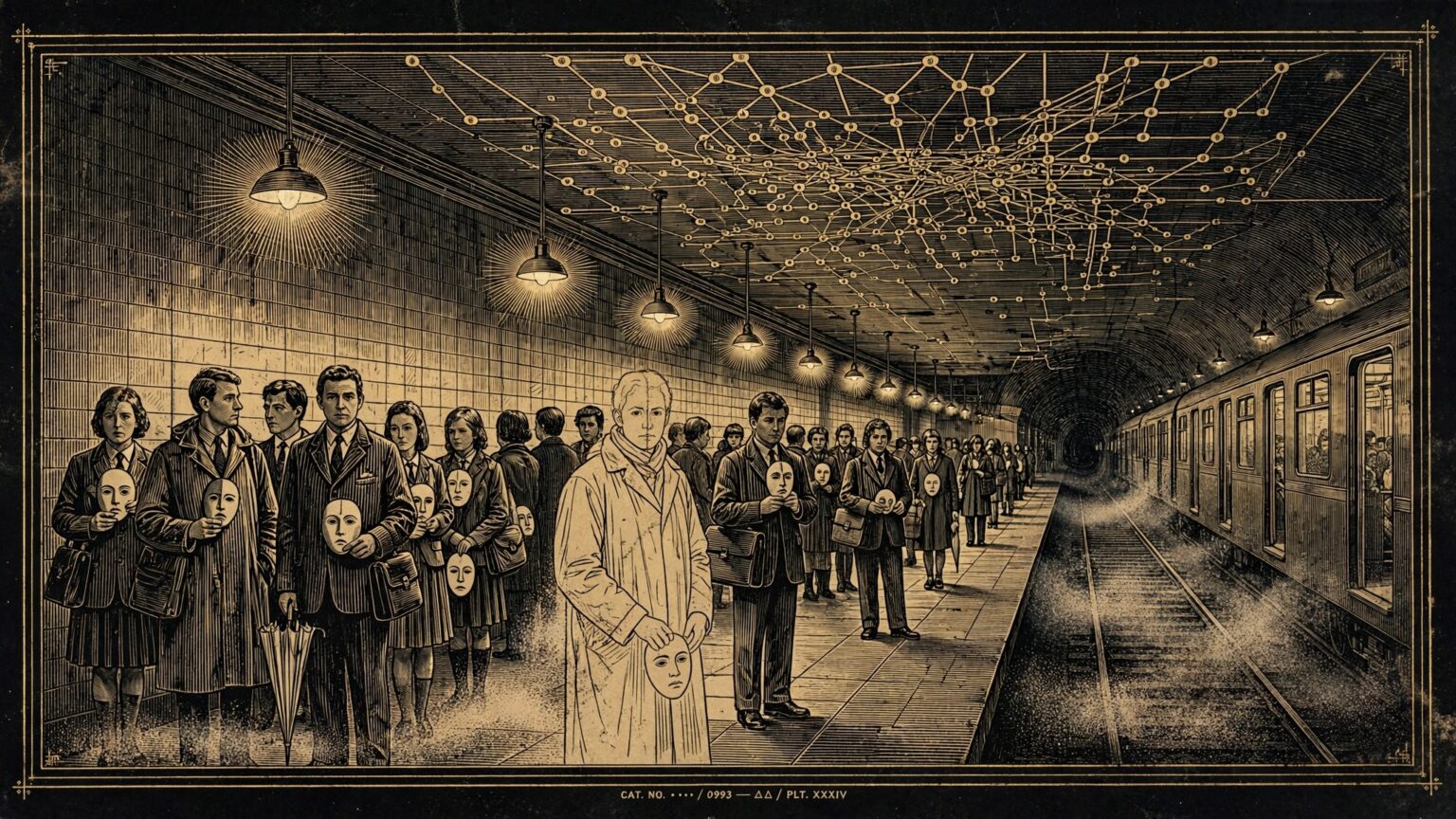
At about eight in the morning on 20 March 1995, five men boarded five trains on three lines of the Tokyo subway. Each carried plastic bags wrapped in newspaper. All five trains were heading toward Kasumigaseki, the station beneath Japan’s government ministries. The men pierced the bags with the sharpened tips of their umbrellas and stepped off. The liquid inside was sarin. Thirteen people died, a fourteenth after twenty-five years of illness, and thousands more needed treatment. The men belonged to Aum Shinrikyo, a doomsday cult whose members included graduates of the country’s best universities.
Eighteen months later, in September 1996, a Tokyo developer called Atlus released a PlayStation game about high school students who discover a second self hidden behind their faces. In Japan it was called Megami Ibunroku Persona. In the West it became Revelations: Persona. This month the series turns thirty.
The Observatory studies fictional worlds as instruments. A seismograph does not explain an earthquake, but it records one, and the record can be read long after the ground has gone still. Persona is one of the longest-running instruments ever pointed at a single country. Across five main entries it has taken regular readings of Japan in the decades after its economic miracle ended. This Excavation reads them in order.
I. The Year the Ground Opened
The sarin attack was the second disaster of 1995. On 17 January, the Great Hanshin earthquake had destroyed much of Kobe and killed more than six thousand people. Television showed an elevated expressway lying on its side, a symbol of engineering confidence tipped over in a single morning. Two months later, the attack in the subway showed that the danger could also come from inside society, planned by educated people in the heart of the capital.
Both shocks landed on a country already falling. On the last trading day of 1989, the Nikkei stock index closed at 38,915, the peak of an asset bubble so large that the grounds of the Imperial Palace were popularly said to be worth more than all the land in California. The bubble burst in 1990. By the mid 1990s, the period had a name, the lost decade. It later became the lost decades, plural. The Nikkei did not climb back above its 1989 peak until February 2024, thirty-four years later.
Japan’s share of world output was close to 18 percent in the mid 1990s. Today it is around 4 percent. Persona was born at the top of that slope, and it has recorded the descent ever since.
II. The Mask
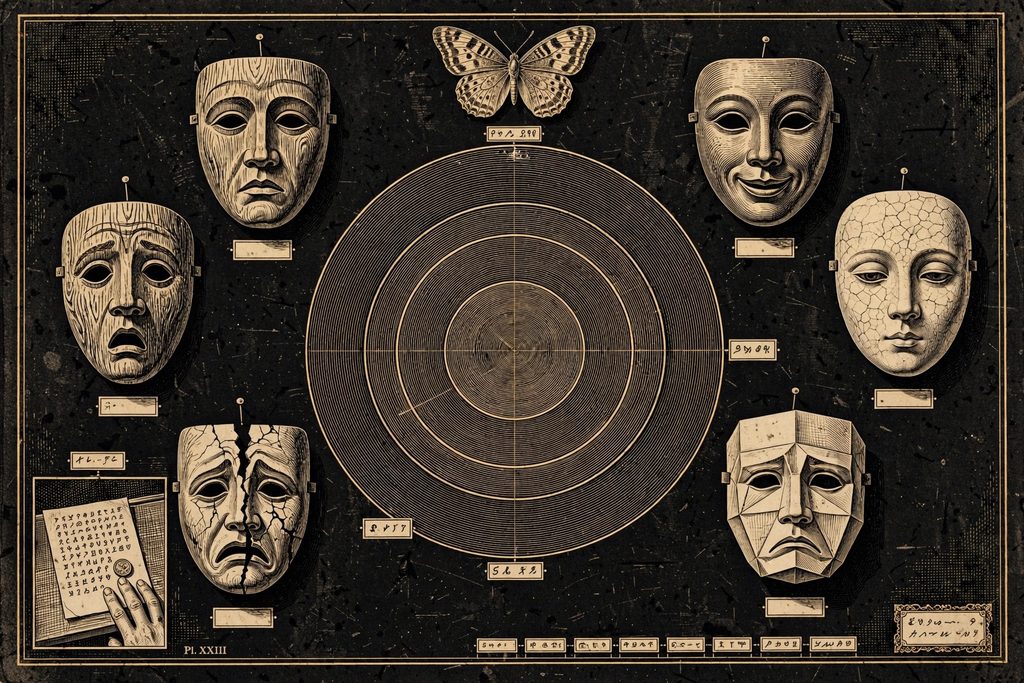
The first game opens with a group of students playing a fortune-telling parlour game called “Persona”, a schoolyard ritual in the tradition of Kokkuri-san, Japan’s answer to the ouija board. Something answers. A being named Philemon grants them the power to summon the selves within them, and the game’s name is taken from Carl Jung. In Jung’s psychology, the persona is the mask a person wears for society, and the shadow is everything that mask conceals. Philemon is Jung’s too. It was the name of the winged spirit guide Jung described meeting in his private visions, later published as The Red Book.
Japanese culture already had words for this division. Honne is what a person truly feels. Tatemae is the face they show in public. In a society that prized harmony and conformity, and that had just watched its guarantees of stability fail, a game about a hidden and powerful inner self landed on a generation primed to hear it. The timing fitted another pattern too. Japan’s occult boom had been building since the 1970s, fed by magazines devoted to the paranormal, playground urban legends and a bestselling book predicting the end of the world in 1999 from the prophecies of Nostradamus. Aum Shinrikyo had drawn heavily on that same appetite for apocalypse.
The Western release is a reading in its own right. For North America, Atlus renamed the town of Mikage-cho as Lunarvale. It changed character names, so that Maki became Mary, and it altered characters’ ethnicities and appearances. It also cut an entire story route, the Snow Queen quest. The publishers assumed that Western players could not read a Japanese adolescence. The instrument’s first reading was partly erased before it reached other countries. The 2009 remake restored almost everything.
III. The Rumor Machine
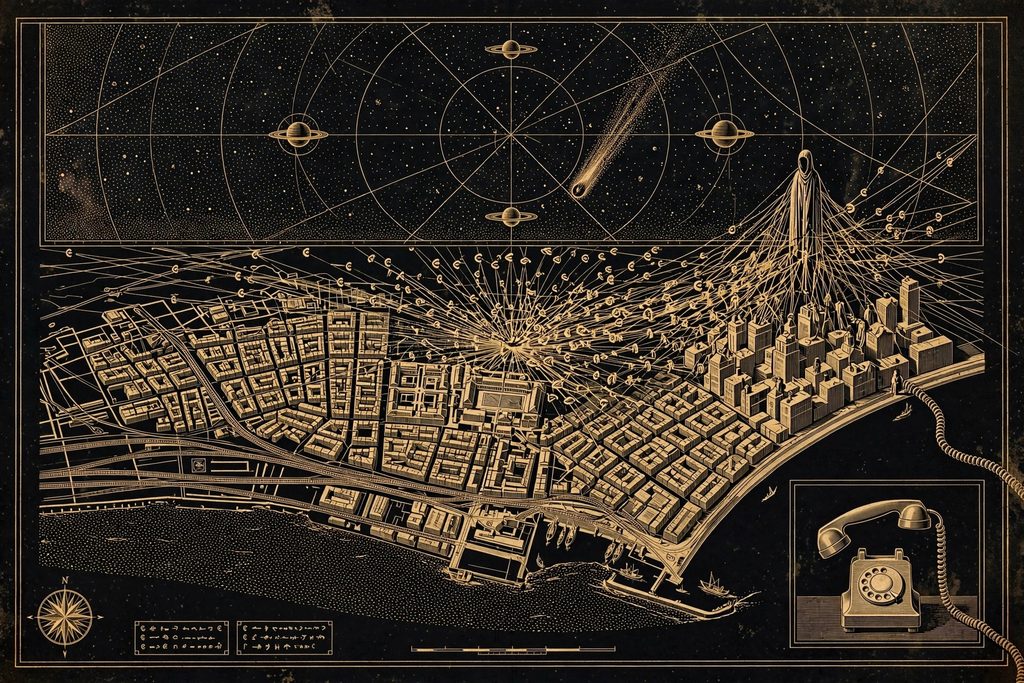
Persona 2 Innocent Sin arrived in June 1999, in the very year the Nostradamus bestsellers had marked for the end of the world. Its city, Sumaru, runs on a single rule. Rumors become real if enough people believe them. A whispered story about a shop makes the shop exist. A schoolyard legend about a masked figure called Joker, who grants wishes and punishes those who fail him, produces an actual killer. A prophecy called the Oracle of Maia, foretelling the world’s end during a planetary alignment, starts to come true because the city believes it. In the game’s climax, the rumor machine resurrects a battalion of Nazis led by a revived Führer, simply because enough people had heard the story.
Read as an instrument, the game records something precise about the late 1990s. The disasters of 1995 had shown that belief could kill. Aum’s apocalypse was a story its followers accepted before it became an attack. Persona 2 turned that lesson into a game mechanic, in which collective belief produces reality and nobody is responsible for it. The Institute has traced a similar dynamic among the faiths of the Wasteland, where prophecy and catastrophe feed each other. One month before the game’s release, in May 1999, a Japanese forum called 2channel went online. It would become the country’s largest anonymous rumor mill.
The sequel, Eternal Punishment, followed in 2000. Innocent Sin itself stayed in Japan for twelve years. Atlus later said the main reason was a shortage of staff, though its Nazi imagery and cultural density are often cited too. It finally reached English-speaking players in 2011 as a PSP remake.
IV. The Dark Hour
When Persona 3 was released in 2006, under the direction of Katsura Hashino, the lost decade had lasted fifteen years. A generation had graduated into what the Japanese press called the employment ice age. Companies froze hiring, and permanent jobs were replaced by temporary contracts. Young adults drifted into part-time work as freeters. From 1998 to 2011, more than thirty thousand people in Japan took their own lives every year.
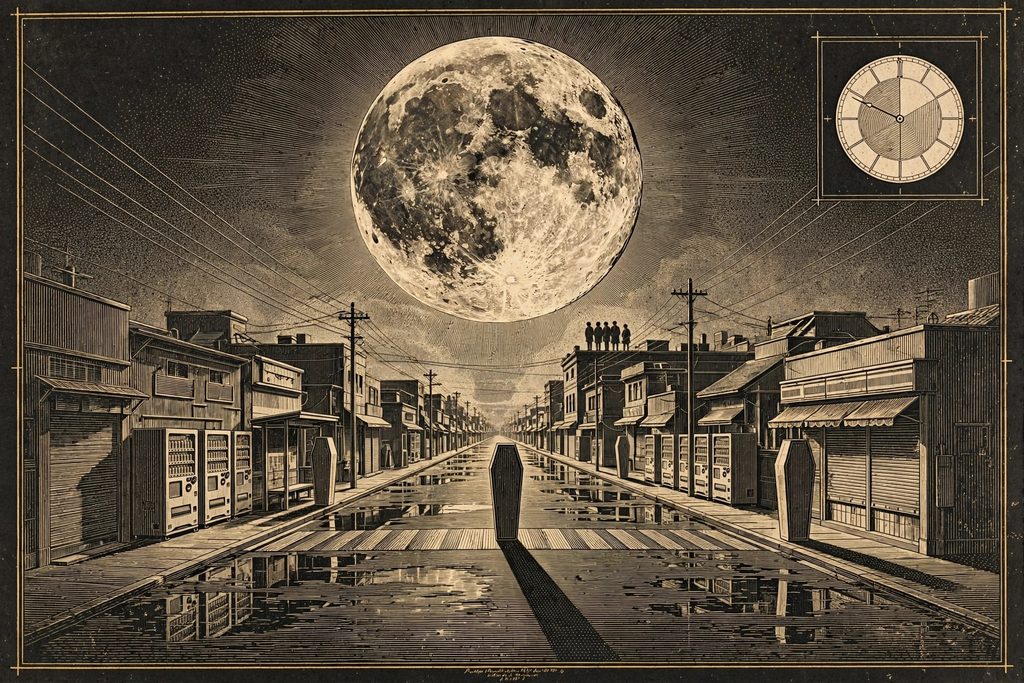
Persona 3 recorded all of this with unusual directness. Every night at midnight, a hidden twenty-fifth hour arrives, the Dark Hour. Ordinary people are sealed inside coffins without knowing it, and monsters roam the silent city. By day, a spreading illness called Apathy Syndrome leaves its victims standing motionless in the streets, drained of any will to go on. The heroes summon their personas by pointing a gun-shaped device called an Evoker at their own heads. It is an image of facing death deliberately in order to find the strength to live. The game’s central theme is memento mori, remember that you will die.
Persona 3 also introduced the system that defined everything after it. Social Links turn relationships into power. A persona grows stronger when the player spends time with other people, such as a classmate, a grieving child or an old couple who run a bookshop. In a genre built on solitary strength, Persona 3 made a claim that read almost as a policy proposal for an isolated generation. Strength comes from other people.
V. The Fog
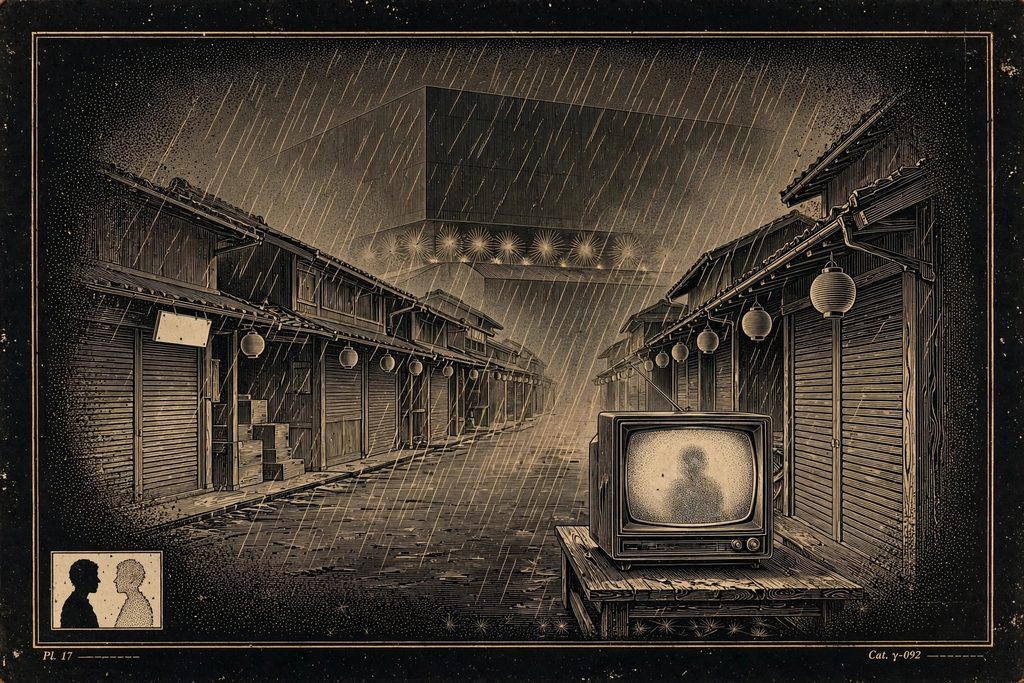
Persona 4, released in 2008, moved the instrument out of the city. Its setting, Inaba, is a small rural town in decline. A new superstore called Junes has opened on the outskirts, and the old family shops of the local shopping street are closing one by one. This was the real story of rural Japan in those years, as population and commerce drained toward the cities and small towns aged and emptied.
On rainy nights, a mysterious programme called the Midnight Channel appears on switched-off televisions and shows the next person in danger. The victims are pulled into a world inside the television, which is shaped by what the town thinks of them. That world is full of fog, and each victim meets their shadow there. These are exaggerated versions of the selves they refuse to admit to. One is a pop idol exhausted by her own public image. Another is a boy afraid of what his interests say about him to others. Each shadow opens with the same line, “I am thou, thou art I.” The characters can only win by accepting their shadow as themselves.
Here the instrument recorded the power of television, and in particular the daytime wide shows that turned private lives into public spectacle. Their verdicts often arrived before the facts did. It also recorded the retreat inward that Japan was now naming openly. The psychiatrist Tamaki Saitō had popularised the word hikikomori in 1998 to describe young people who withdraw from society completely. By 2023, a government survey estimated that almost one and a half million people between fifteen and sixty-four were living that way. Persona 4’s answer was the same as Persona 3’s, delivered in brighter colours. The fog lifts only when a person stops hiding from themselves and lets others in.
VI. The Heist
By the time Persona 5 arrived in September 2016, stagnation was no longer a crisis. It was the climate. The Nikkei still stood far below its 1989 peak, and a whole generation had never known anything else. The fifth reading of the instrument is the angriest.
Its heroes are the Phantom Thieves, teenagers in Tokyo who break into the distorted inner worlds of corrupt adults and steal the desires that drive them. Their targets form a precise list of the institutions young people had learned to distrust:
- a sports coach who abuses his students and is protected by his school
- a celebrated artist who steals the work of his pupils
- a gangster who blackmails high school students
- the head of a restaurant chain who works his staff to exhaustion
- a politician who has bent the state around his own ambition
The fourth of those targets was not an invention. Japan had a name for companies that exploit their workers, burakku kigyō, black companies, and a word for death from overwork, karōshi. In October 2016, weeks after Persona 5 was released in Japan, the government published its first white paper on karōshi.
The game’s final argument goes further than any list of villains. Its ultimate enemy is a god born from the public’s own wish to be ruled, sustained by millions of people who would rather accept injustice than risk the discomfort of changing anything. The heroes’ real opponent is apathy, the same quality that Persona 3 had shown as an illness. What had been a symptom in 2006 had become, by 2016, a form of government. The message travelled far beyond Japan. Persona 5 became the series’ biggest success worldwide, taken up by young players in many countries who recognised the same feeling that the system had been decided before they arrived.
The ancestor of them all
Persona began as a spin-off. Its parent series, Megami Tensei, grew out of Aya Nishitani’s 1986 novel Digital Devil Story. In that novel, a student programmer uses a computer to summon demons. The series found its identity with Shin Megami Tensei in 1992, in which Tokyo is destroyed by a missile strike and rebuilt as a battlefield between law and chaos. It is a game about the end of the world, written in the last years of the bubble.
Persona’s decisive move was to turn the camera inward. The apocalypse moved from the skyline to the school hallway, and from gods and nations to the inner life of teenagers. Japan after 1995 needed exactly that change of focus. Its catastrophes were no longer imagined bombs. They were slow, private and social.
The instrument is still running. Persona 3 was rebuilt as Persona 3 Reload in 2024, and a remake of Persona 4 was announced in 2025. Katsura Hashino, who directed the three central entries, left the series behind to make Metaphor ReFantazio in 2024. It is a fantasy about a kingdom choosing its ruler through an election, the logical next step for a creator whose last Persona ended with an attack on the public’s desire to be governed.
The pattern
Read in order, the five main Persona games trace a single movement. The enemy moves outward, one ring at a time:
- In the first game it lives inside the self, as the mask and the shadow behind it.
- In the second it lives in the crowd, as rumor that becomes reality.
- In the third it lives in a whole generation, as apathy and the pull of death.
- In the fourth it lives in the media, which decides who people are before they can decide for themselves.
- In the fifth it lives in institutions, and finally in the public’s willingness to be ruled.
The series’ colour schemes followed the same path. The blue of Persona 3 was the colour of death and night. The yellow of Persona 4 was the colour of truth and daylight. The red of Persona 5 was the colour of revolt.
The answer the series gives has not changed in thirty years. Every entry since Persona 3 has made it a mechanic, and every earlier one hinted at it. No one survives the shadow alone. Strength comes from other people. For a country that spent three decades watching its social bonds weaken, that is less a game design than a diagnosis.
Findings
- Persona was born in the aftershock of 1995. The first game arrived eighteen months after the sarin attack, into a country that had just learned its guarantees of safety could fail.
- Each entry records a different stage of the lost decades. The mask, the rumor, apathy, the media and the institutions form a clear sequence, and each matches the social mood of its release year.
- Localization is part of the record. The erasure of the first game’s Japanese identity, and the twelve-year delay of Innocent Sin, show how uncertain the West once was about reading Japanese youth.
- The enemy moved outward. Across thirty years, the threat in Persona shifted from inside the self to the structures of society.
- The remedy stayed the same. From 2006 onward, strength in Persona has come from relationships, a direct answer to the isolation the instrument kept recording.
This Excavation draws on the games themselves and on the documented social history of Japan since 1990. Read more about how the Institute works.
The Institute collects field evidence from people who lived inside these worlds. If Persona reached you at a moment when you needed it, send us your account.
Sources
- Revelations: Persona (Atlus, 1996), Persona 2 Innocent Sin (Atlus, 1999), Persona 2 Eternal Punishment (Atlus, 2000), Persona 3 (Atlus, 2006), Persona 4 (Atlus, 2008) and Persona 5 (Atlus, 2016).
- Shin Megami Tensei (Atlus, 1992), and Aya Nishitani, Digital Devil Story (1986).
- Revelations: Persona and Persona 2: Innocent Sin, Wikipedia, for release history and localization changes.
- Tokyo subway sarin attack, Wikipedia.
- Haruki Murakami, Underground (1997), interviews with survivors of the attack and members of Aum Shinrikyo.
- C. G. Jung, The Relations between the Ego and the Unconscious (1928), and The Red Book (2009).
- Tamaki Saitō, Social Withdrawal (1998).
- Cabinet Office of Japan, survey on social withdrawal (2023).
- Ministry of Health, Labour and Welfare of Japan, White Paper on Karōshi (2016).